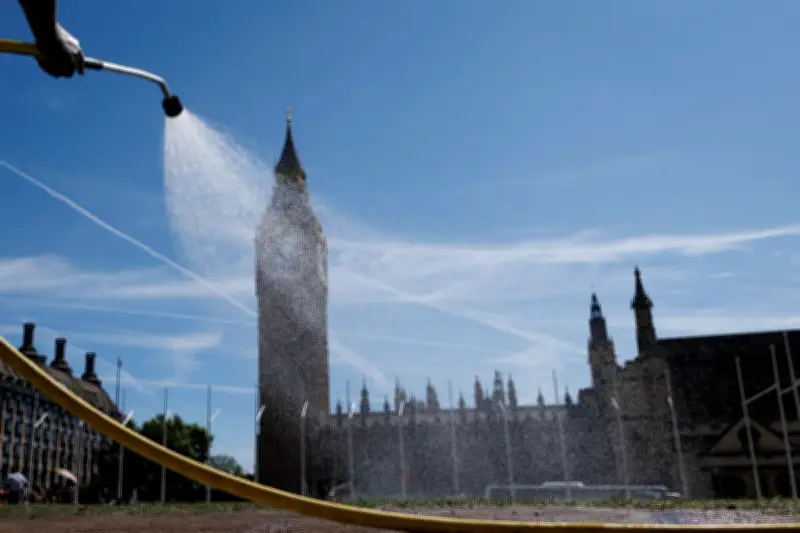
The number of days exceeding 30°C in London has more than quadrupled in the most recent decade (2016-2025) compared to the 1961-1990 baseline, according to the Met Office's annual State of the UK Climate report for 2025. The study highlights a dramatic shift in the capital's weather, with record high temperatures recorded this year and the urban heat island effect preventing nighttime cooling.
Heatwave Deaths and Wildfire Risks
The first two heatwaves of 2026, in May and June, are estimated to have caused 1,000 deaths across London, its commuter belt, and the wider South East, with hundreds of those deaths attributed to climate change. The London Fire Brigade has warned of an extreme risk of wildfires, urging residents to create firebreaks around their gardens. Over the weekend, blazes erupted in Walthamstow—where flames tore through approximately 30 gardens and damaged several properties—as well as in Stratford and Orpington.
Record-Breaking Heat in 2026
As London and other parts of the country experience a third heatwave in 2026, the Met Office noted that the UK has already recorded as many 30°C days this year as in the infamous hot summer of 1976. There have been 24 days in 2026 when temperatures exceeded 30°C somewhere in the UK: seven in May, eight in June, and nine in July. This equals the number of 30°C-plus days in 1976, a year remembered for severe heatwave and drought conditions that led to standpipes in streets, crop damage, and parched landscapes.
The 20th-Century Climate Has Gone
In its major report, the Met Office stressed that the UK's 20th-century climate has now disappeared, with once-extreme conditions becoming increasingly normal. The report shows that 2025 was the UK's warmest year in records dating back to 1884, marking the sixth time the record has been broken in the 21st century. The last four years have all been among the top five warmest on record, and the latest 10-year period (2016-2025) was 1.33°C warmer than the 1961-1990 average.
Regional Temperature Changes
The hottest day of the year is now 4.5°C warmer than it was a few decades ago in parts of the South East, including London. Temperatures were expected to hit 35°C at some point this summer. Mike Kendon, Met Office climate information scientist and lead author of the report, said: 'In the South East we are seeing the emergence of new warmer climates. The number of days of over 30°C has quadrupled in areas such as Greater London.' He added: 'In our northern upland areas we are losing the climatologically coldest habitats from the tops of our mountains. We are right now living in a time of historic and unprecedented change and in terms of temperature, on annual, seasonal, monthly and daily timescales, this evidence shows climate of the 20th Century has now gone.'
Rainfall and Sea Level Rise
The report also showed that most of England and Wales received less than half the average rainfall in spring, with some areas receiving less than a third. Since 1901, sea levels around the UK have risen by about 20.1 cm, and the rate of rise is accelerating. The study was led by the Met Office, with contributions from the UK Centre for Ecology and Hydrology, the National Oceanography Centre, and the Woodland Trust's Nature's Calendar.