
Labour's attempt to appease farmers furious over the inheritance tax raid and a lack of support has been slammed as a 'misguided word salad'. The Government published its new Farming Roadmap in late June, outlining steps over the next five years to bolster the sector, with a view to 2050. This includes proposals for the agricultural sector to play a leading role in cutting carbon emissions by increasing the production of oilseeds and pulses, including lentils.
Farmers Reject Net Zero Vision
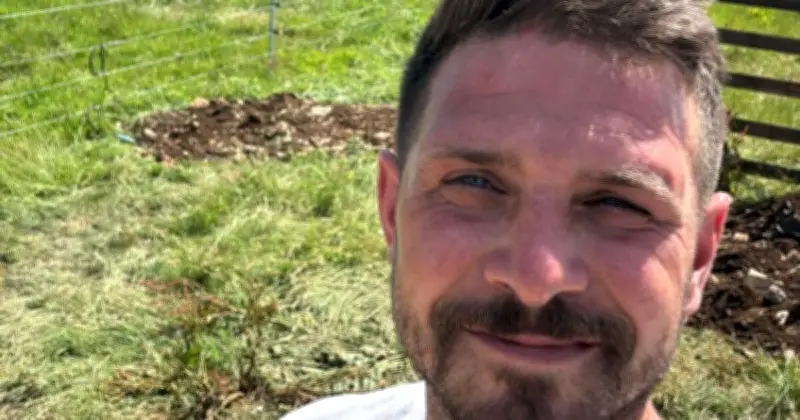
Livestock farmers have told the Daily Express that this vision is another example of Westminster not understanding the sector, and say they have lost all hope in Labour delivering any of its promises. Joshua Gay, 31, whose family has run an arable, beef and pig farm in Bath for four generations, said his primary objection was that 'far from' all farmland was capable of growing the crops advocated for in the roadmap.
'A lot of farmland in this country isn't suitable for that kind of use,' he said. Factors including steep gradients, nutrient-poor soils and proximity to watercourses can all prohibit the redesignation of grazing land. 'We grow those crops here, and the truth is they're just not financially viable,' he added. 'The price increases to fertiliser and agrochemical sprays mean we're actually shifting away from arable. We were growing 500 acres four years ago, and now we're probably only growing 300.'
Livestock Farming and Decarbonisation
Gay also disagreed with the idea of a link between reduced livestock farming and decarbonisation, suggesting it was 'misguided' at best and 'ridiculous' at worst. 'We're doing a lot of environmental schemes which you can't do on arable land,' he said. 'Generally, beef, although they say it's high emission, works well with insects and other wildlife. With arable, you pretty much want one thing from the ground and everything else dead.'
Charles Goadby, 48, who farms in a partnership with his two brothers in Warwickshire, focusing on livestock, wheat, oilseed rape, barley and potatoes, suggested the Government was taking a 'tunnel vision' approach. 'It's easy to look at one outcome and forget the secondary outcomes,' he said. 'In the UK, really two-thirds of the farmland we've got is marginal grassland, which isn't capable of growing crops.'
'Livestock produce a huge array of other things - you've got your textiles, cosmetics and fats,' he added. 'But the biggest thing is the muck and manure they produce. Relying on that means making huge savings on chemical fertiliser, which is highly dependent on fossil fuels.' Goadby added that net zero 'is a worldwide problem, not a UK problem', and warned that it could be counterintuitive to reduce livestock production in a country with high standards and have to 'import from countries that are less efficient'.
Political Criticism and Farmer Despair
Victoria Atkins, Shadow Environment Secretary, also criticised Labour for producing a document that 'fails scrutiny'. She told this paper: 'This Government has overseen the highest number of farm closures on record, with damaging tax rises, the shock removal of vital support schemes and drastic cuts to the farming Budget. Farmers need practical support, certainty and a Government that understands the challenges of growing food, not a word salad lecturing them to grow more pulses instead of rearing livestock. Unless the Government sorts out the mess it has made of farming policy, this 'roadmap' will be a roadmap to nowhere for struggling farms.'
Chad Stevens, 37, who runs a mixed arable and livestock farm in North Yorkshire with his wife, said parts of the roadmap, including guidance on adapting to climate change and maintaining domestic supply chains, look positive. 'But farming has been burned so many times in the last 10 years that we've got very little faith in any of these policies coming to fruition,' he said. 'I am really frightened for the future of farming. Our 200-acre farm is not profitable enough to support itself and a family, which it should be able to do. I don't know what that means for us in the future. I don't have any confidence in us turning a profit any time soon.'
Stevens said it was the way of politics for 'some sector of society' to be targeted disproportionately, suggesting farming had filled that role for the Labour Government. 'It feels like an attack from every angle,' he said. 'They didn't think, 'we've clobbered them for inheritance tax, that's put some people out of business, we'll stop there'. We've had costs rising across the board, and no support.'
Industry and Government Responses
Tom Bradshaw, president of the National Farmers' Union, praised the Government for taking a position on the future of UK agriculture, but criticised the roadmap for 'falling short on action and even shorter on the means of delivery'. 'It sets out a multi-year direction for farming, yet there is no long-term funding to go with it,' he said. 'Intent alone won't deliver a secure and affordable supply of homegrown food for the nation, nor will it care for 70% of England's landscape.'
Announcing the roadmap, Environment Secretary Emma Reynolds said: 'Farmers feed our nation and manage the land that shapes our countryside, yet their contribution has never been valued in the way it deserves. Our roadmap marks a shift away from only looking to the next harvest and towards a plan that gives farmers the long-term clarity they need to innovate, invest and grow with confidence for generations to come. I have spent every day in this role rebuilding our relationship with farmers brick by brick because they're such an important part of our economy, our society and our environment. We are looking at how farming is valued economically and socially to ensure it receives the recognition it deserves.'
Addressing backlash to the promotion of arable farming, a spokesperson for the Department for Environment, Food and Rural Affairs said: 'This is nonsense. This Government is backing our farmers to produce a wide range of food that people across the UK want to buy and eat, obviously including meat. We also want to reduce reliance on imports – exactly what farmers have been asking for. The Farming Roadmap sets out a path to a food system that produces sustainable, healthy and affordable food, while ensuring the right outcomes for consumers, farmers and food producers.'




