The Royal Botanic Gardens in Kew has launched a £1 million public appeal to help save its historic Palm House, which is in urgent need of renovation after almost 180 years.
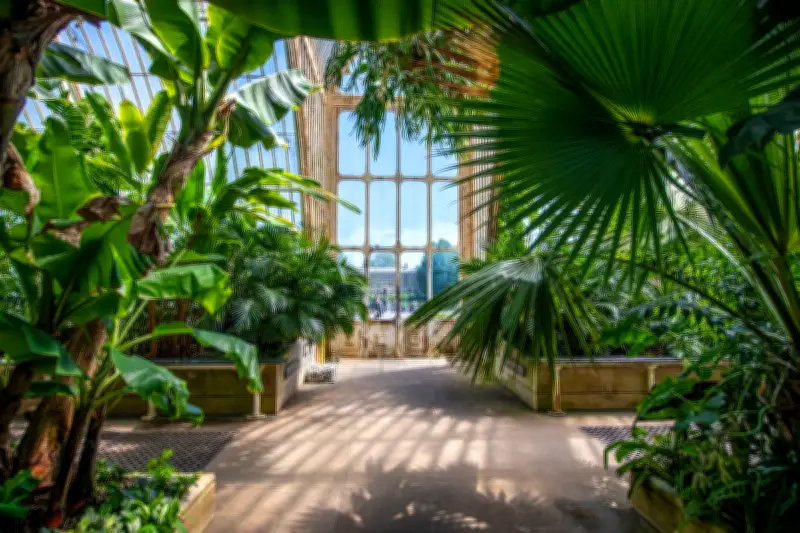
One of the world’s most famous glasshouses, the Palm House has welcomed visitors since 1848 and is home to an extraordinary collection of tropical plants from around the globe.
Designed by architect Decimus Burton and built by iron-founder Richard Turner, the Victorian glasshouse was a revolutionary feat of engineering. Shipbuilding techniques were used to create its vast curved wrought-iron structure, giving the building the appearance of an upturned ship’s hull.
Restoration cost and funding
But almost 180 years of extreme heat and humidity have taken their toll, leaving the Grade I-listed structure in need of major renovation.
The restoration project is expected to cost £66 million. While Kew has already secured approximately half of the funding, it is now calling on the public to help raise the next £1 million towards safeguarding the Palm House and its collections.
“For generations, the Palm House has been a place where people encounter the extraordinary diversity of life on Earth. It is a building that has inspired wonder for almost 180 years, but its future cannot be taken for granted,” director of the Royal Botanic Gardens Richard Deverell said.
“We have reached an important milestone, with half of the funding already secured thanks to generous philanthropists, grants and individuals.
“Now we are asking the public to help us raise the next £1 million. Every donation, however large or small, will help protect this extraordinary building and the collection within it for generations to come.”
A living laboratory and conservation hub
Beyond its architectural significance, the Palm House is a living laboratory, housing tropical species from around the world, including plants that are endangered or extinct in the wild.
Among its most remarkable inhabitants is Encephalartos altensteinii, the Eastern Cape giant cycad, believed to be the world’s oldest potted plant. It arrived at Kew in 1775 and has been growing there ever since.
The plants housed in the Palm House also support Kew’s research into preventing biodiversity loss, improving food security and finding new ways to protect the future of the planet.
During the 19th century, the Palm House functioned as a “green engine” of the British Empire. More than just a public attraction, it was a living laboratory where economically important plants were studied, cultivated and propagated — work that played a part in reshaping agriculture and trade around the world.
Future plans and public support
Today, that imperial role has given way to a focus on global conservation, with the Palm House serving as a sanctuary for threatened plants and a centre for scientific research.
The forthcoming restoration will also transform the environmental footprint of the historic glasshouse.
Work, due to begin next year, will include new glazing, renewable heating systems and rainwater harvesting tanks. Kew aims to make the restored Palm House the first carbon-neutral glasshouse of its kind.
The scale of the project means the Palm House will close for four to five years, before reopening in the 2030s.
Members of the public can support the restoration by donating directly to the appeal, sponsoring a pane of glass or sponsoring a tropical plant species.
Donations of up to £300,000 will be matched, with all money raised going towards the Palm House Renovation Project.
To find out more visit kew.org/appeal.