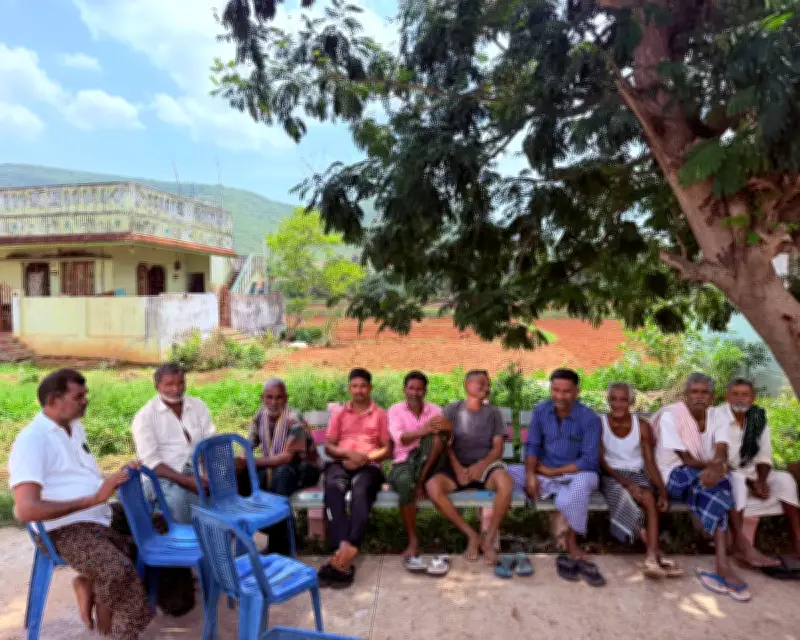
Farmers in the small Indian village of Tarluvada are protesting against Google's $15bn AI datacentre, which they say has led to the government taking back their smallholdings. The project, located in the southern state of Andhra Pradesh, is set to be Google's largest 'hyperscale' AI datacentre outside the US, a development officials promised would bring jobs, soaring real estate prices, and generous compensation.
Promises and Suspicion
When government officials arrived in Tarluvada last year, they described the project as a 'golden opportunity' that would turn the village into a world-famous tech hub. However, few residents had heard of AI or knew what a datacentre was, and local jubilation quickly turned to suspicion. Protests have erupted globally over AI datacentres, from California and Texas to Scotland and Australia, and communities in Andhra Pradesh are now gathering in opposition, fearing crippling environmental and economic costs.
'We have learned that America does not want the problems of datacentres and so now Google is bringing them here,' said BRB Naidu, Tarluvada's village head, who admitted he was torn about whether the datacentre would bring prosperity or ruin. 'Many in the village are very worried. But the government has refused to answer our questions.' Naidu pointed to a nearby hillside where bulldozers recently stripped the land bare of trees, adding, 'The work just continues every day.'
Scale and Environmental Clearances
The state government, allied with Indian prime minister Narendra Modi's party, has been accused of obfuscating the true scale of the AI hub to push the project through quickly and avoid stringent environmental scrutiny. Google has partnered with the Adani Group, one of India's largest conglomerates, to build the project. Publicly announced as a 1GW project, state environmental clearances reveal permission has been granted for 2.51GW – the power equivalent of two large nuclear reactors at full output, amounting to upwards of 30% of the current energy consumption of Andhra Pradesh, a state home to more than 55 million people.
Activists fear meeting the datacentre's vast energy demands will drive up fossil fuel emissions. While Google has pledged to help generate 'new, clean energy', currently 75% of the country's electricity grid runs on coal. The state government argues AI datacentres are essential to India's growth and digital competitiveness, citing that India generates nearly 20% of the world's data but hosts only about 3% of global datacentres.
Local Opposition and Legal Challenges
Google's project will encompass three separate datacentres around the state capital of Vizakhapatnam, with one site a few metres from reserve forest, a drinking water reservoir, and a wildlife sanctuary home to endangered species such as leopards. Despite the expansive footprint, the state government issued environmental clearances in just nine days, with no public consultation. Three petitions challenging the approval have been filed to India's National Green Tribunal (NGT), alleging the government's risk assessment was 'grossly inadequate, scientifically unrealistic, and misleading'. A public litigation has also been filed in the Andhra Pradesh high court.
'This datacentre will be unprecedented in scale but there was no public hearing and no substantial evaluation of the ecological damage or the economic cost for local communities,' said VS Krishna, an activist with Human Rights Forum, which filed the NGT cases. Krishna alleged their campaign had been met with deliberate silencing, including videos and social media pages being taken down; the government did not respond to this allegation.
Land and Livelihood Concerns
In Tarluvada, temperatures regularly reach about 45C in summer, and there are concerns the datacentres – documented emitters of heat – could make this worse. The mass deforestation of more than 100 acres could drive up temperatures further. Google said the project would have 'no expected impact' on the local community and would use air-cooling instead of water, so it would have no impact on local drinking water supplies.
Venkat Surynarayana, 40, a farmer, said officials 'never mentioned anything about risks of pollution or water or heat, they didn't even tell us what the project was.' He claimed attempts to get answers from the local administration had been met with police threats and that protesters had been routinely detained. 'When we raised our voices, they ignore us and then they shut us down,' he said. 'But if this is not stopped, it could be the end of Tarluvada.'
For the state government, the deal with Google is a source of pride, part of a policy to make Andhra Pradesh India's most advanced tech hub. 'Artificial intelligence is becoming foundational infrastructure for the global economy,' said Sribharat Mathukumilli, a local MP with the ruling state government, who rejected environmental concerns. The subsidies and incentives offered to Google, from tax breaks and discounted land to cheap electricity and water, are estimated to amount to 220bn rupees ($2.2bn) over 20 years.
'Our objective is not simply to host a datacentre, but to create an AI and digital ecosystem,' said Mathukumilli. Late last year, the state granted permission for another 1GW AI datacentre, to be built by Reliance Industries. Google insisted its design choices have been tailored to local conditions and that it had 'engaged deeply' with local communities, claiming it would generate thousands of jobs around Vizakhapatnam.
However, swathes of villagers allege they were forced to give up land against their will. T Applaraju, 40, was one of 520 local families who had land taken back that the government had allocated to him 20 years ago. He claims he was given no notice until April this year, when security guards for the Adani Group erected fences and blocked locals from entering plots they had farmed for years. 'They took land that we thought belonged to us, it's a big shock,' he said. 'Why are Google building this here and not in America?'
The state government claims no lands were forcibly taken and that it gave 'generous compensation' to those eligible. The Adani Group says all necessary legal approvals were given. But many of the 47 farmers from the impoverished Dalit community who were compensated are unhappy. P Venkat Rao alleged he was pressured into giving up his only acre of land and received $40,000 in compensation, but the promised replacement land and one job per family had not materialised. Without land to farm, Rao described the compensation as 'worthless'. 'I am a farmer, without my land I am nothing,' he added. 'They have taken my livelihood and broken their promises.'