
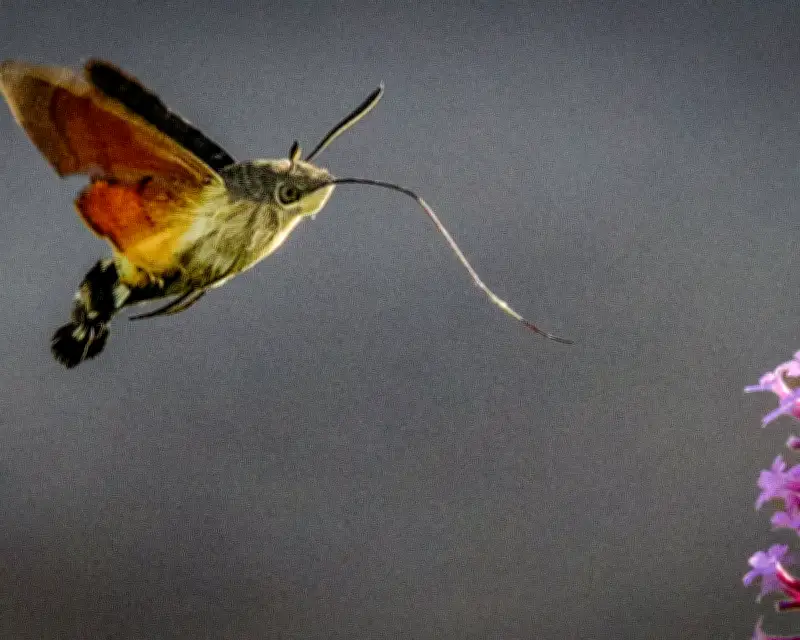
Luke Burstow had just sat down to dinner in his Sussex garden when a speedy visitor whizzed by – a “grey lump with orange wings”. It was a hummingbird hawk-moth, a flying insect that migrates to the UK from continental Europe and north Africa.
“I was like: ‘Wow!’” said the software project manager. “I didn’t even know they existed.” Burstow and his wife spotted the moth enjoying buddleia flowers on 30 June. After quickly Googling the species, he ran inside to grab his camera and managed to take photos, marvelling at how, even with a fast shutter speed, the moth’s wings – which beat roughly 80 times per second – still appeared slightly blurry.
Social Media Buzz
Burstow is one of many UK wildlife watchers who have described seeing the moth on social media lately. “This made my day,” wrote one Reddit user after their sighting.
Expert Predictions
Butterfly and moth experts told the Guardian that 2026 could be a bumper year for hummingbird hawk-moths in the UK after a boom in sightings during recent weeks. Hot weather and strong winds appear to have brought many of the insects here from more southerly climes.
“We’ve had a big increase in sightings and inquiries about the hummingbird hawk-moth sent to us this year,” said Richard Austin, a recording schemes officer at the charity Butterfly Conservation. “We expect it is going to be a great summer for them.” Austin cautioned, however, that it was too early to compare their numbers with previous years.
Hummingbird hawk-moths may be spotted all around the UK, including in Northern Ireland and even northern Scotland. Warm southerly winds associated with recent heatwaves could have helped bring high numbers of the moths to the UK, said Richard Harrington, an honorary fellow of the Royal Entomological Society. “It may also be that their food plants are drying out in their Mediterranean breeding areas,” he added.
Sunny weather in the UK has perhaps encouraged people to spend more time than usual in their gardens, raising the chances that they will spot one of the moths, said Ray Barnett, a council member at the British Entomological and Natural History Society. “I’m in Bristol and there’s lots of people recording it locally,” he said.
Climate Impact
There’s a chance the hummingbird hawk-moths could stick around, should the UK continue to experience milder winters due to global warming, Barnett added. Hibernating adults that make it through the British winter may go on to reproduce in the UK on a regular basis. Hummingbird hawk-moth larvae feed on plants including lady’s bedstraw and hedge bedstraw, which are common wildflowers in the UK.
“If these weather patterns continue, then [the moth] is going to survive winters regularly,” said Barnett. “It’s almost becoming a resident species rather than a purely migratory species.”




