
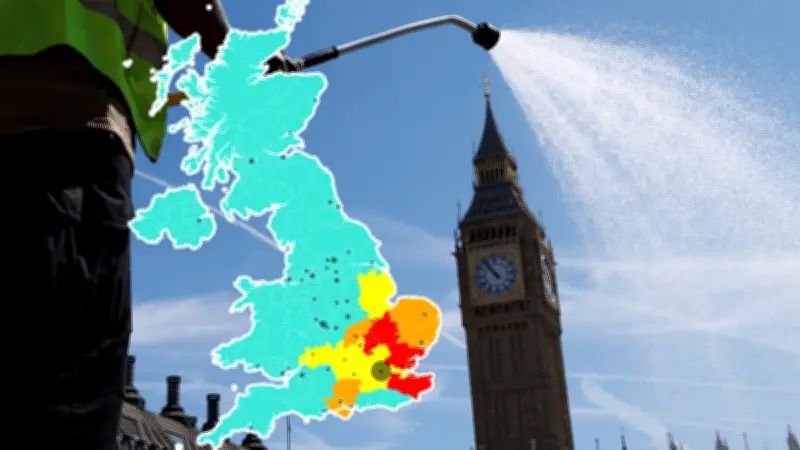
Millions of households across the UK are now subject to hosepipe bans as a third heatwave intensifies, with temperatures in London soaring to 34°C on Thursday. The Met Office forecasts daily highs remaining above 29°C until at least the end of next week, with no significant rainfall expected until late next week. Water companies are closely monitoring resources and implementing restrictions as drought conditions worsen.
Water companies impose bans across southern England
South East Water became the first company to announce a ban on July 3, affecting customers in the Kent region, including Maidstone, Sevenoaks, Tunbridge Wells, and Canterbury. Cambridge Water followed with its first temporary ban in 30 years for parts of Cambridgeshire. Southern Water introduced restrictions covering 24 towns across Hampshire and the Isle of Wight, while Anglian Water implemented its first hosepipe ban in a decade on Friday morning, affecting areas in Bedfordshire, Buckinghamshire, Cambridgeshire, Norfolk, and Essex.
London remains under advisory, not ban
Thames Water has not issued an official hosepipe ban for London, but the company urges customers to avoid using hosepipes or sprinklers during heatwaves. The interactive map from The Standard shows that bans are now closing in on the capital, with neighbouring counties already affected.
What the ban means for households
Under temporary hosepipe bans, households are prohibited from using hosepipes for non-essential tasks such as watering gardens, filling paddling pools, or washing cars. However, hosepipes may still be used for the welfare of animals and pets. Violating the ban can result in fines of up to £1,000.




