
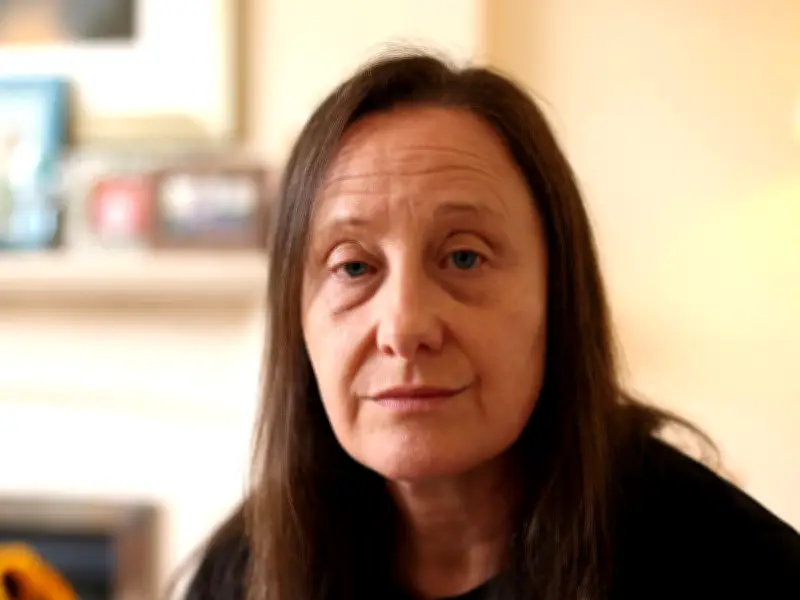
Julie Maughan, the mother of eight-year-old Heather Preen who died after contracting E.coli on a Devon beach, has made a direct plea to Prime Minister Sir Andy Burnham to prevent any other family experiencing the same tragedy.
“Put public health before profit, simple as that,” said Maughan. “You have to do everything you can. Somebody could die again, and how is that going to be on your watch and you have done nothing to stop this? The thought of having another child die, or significant harm for doing what comes naturally, playing in water, is horrific.”
Summer holidays and sewage concerns
Her appeal comes as families across the country head to the coast for the start of the summer holidays. New data from the charity Surfers Against Sewage shows privatised water companies in England have used storm overflows near bathing waters for 116,000 hours since mid-May. Storm overflows are designed to act as relief valves when the sewerage system is at risk of being overwhelmed.
According to the group, one of the worst offenders is South West Water. It claims the company has breached Environment Agency guidance for discharges into or near 20 bathing sites in its area since May, lasting a combined 26,425 hours.
Giles Bristow, chief executive of Surfers Against Sewage, said: “Summer holidays should mean fun in the water, not a gamble with your health. But that’s the reality while our water industry keeps dumping raw sewage into our seas and rivers.”
Heather’s story
South West Water was at the centre of allegations after the tragic death of Heather in 1999. Julie, husband Mark Preen and their two daughters began a beach holiday in Dawlish when the schools broke up. The getaway turned into a nightmare when, on a day at the beach, they came to a sewage outflow pipe and Heather accidentally put her foot into what was coming out.
As featured in the Channel 4 docu-drama Dirty Business, the youngster later fell ill and was confirmed to have E. coli O157, the most aggressive strain. Though most people recover, in rare cases it can lead to hemolytic uremic syndrome (HUS), a life-threatening form of kidney failure. Heather died on August 8.
Heather loved collecting shells, and some from the beach before she fell ill are still dotted around Julie’s home near Bromsgrove. “For me, there are the last things she touched, they’re the last things she held. That week before all it happened, she had the best of time. So those shells don’t represent her death, they represent the joy and remind me of how happy she was before all this happened. I have the most horrendous memories of Heather in intensive care, so these shells remind me of when she wasn’t.”
Julie’s marriage did not survive the grief – she separated from Mark, who later took his own life.
Campaigning for change
Since her daughter’s death, Julie has campaigned tirelessly and worked with Surfers Against Sewage to create a safety guide for schools and families on knowing the risks of sewage pollution and how to stay safe. She urges families to check the Safer Seas and Rivers Service app (SSRS), developed by SAS, which provides real-time water quality data for the UK’s coastline and inland waters, alerting water users when there is a sewage discharge impacting water quality.
“It’s really important we raise awareness you have to check, check and check again to keep yourself safe,” says Julie. “Check the app and check the water quality and be mindful that water is fluid, it changes, so how it was in the morning is not necessarily the same in the afternoon. Check where the combined storm overflows are.”
She added: “Don’t assume this is just about bathing, it is all forms of contact with water, even rock pooling. Cover cuts. And if you do have any illness following contact with water, don’t assume it’s food or something else. If you’ve got diarrhoea go to the doctor and let them know you’ve been in contact with water because a lot of cases are being missed because people are putting it down to other things.”
Julie emphasised she does not want people to stop going on holiday, but feels angry that little has changed. “I don’t want people to not go on holiday. The seaside is a beautiful place to go, that’s why we took Heather. We never went abroad. It’s really sad that you can’t just get into the water, which children love to do, because of the actions of others, as it’s potentially dangerous.”
“I’m also very angry because we shouldn’t be here. Is it going to take another death before people stop and think, ‘we need to change, this has to stop, it isn’t acceptable?’ If sewage was being discharged in a public swimming pool, there would be public outrage, if it was being discharged on a playground, or a playing field, there would be public outrage. Someone would go to jail.”
Lack of evidence and call for signage
The root cause of Heather’s death will always remain a mystery because at the time South West Water and the Environment Agency did not take samples from the water. However, the coroner’s recommendations included using ultra violet treatment at South West Water’s Dawlish sewage plant, and a suggestion to erect a sign to warn people of sewage outflows at the beach.
Julie supports bringing water companies back into public ownership but believes warning signs would help protect beach and river goers straight away. “We need signage, live data on the beach to warn people, as they do in other countries,” she says.
Julie felt that for a long time her daughter’s death was forgotten by others, only for the Channel 4 film to bring fresh attention. She is haunted by the nature of Heather’s death: “It destroyed her kidneys, it destroyed her gut and it destroyed her brain stem.” She believes water bosses and others in authority may act differently if they saw first hand what can happen. “They need to sit in an intensive care unit, watching someone die from this horrendous infection,” she said. “They might think twice about letting people go into the water. I get very animated and heated because these people must have families, have children, and yet they are allowing sewage to be discharged into water.”
Julie spoke amid speculation Sir Andy Burnham is considering some form of renationalisation of embattled Thames Water. There is also anger around payouts to water bosses through “retention” perks after a ban on bonuses at failing firms. “I want to know another job elsewhere where you can fail and still be paid,” is Julie’s view. “How do you get paid all that money when you are not succeeding? There’s also a moral aspect to it.”
Julie admits this time of year is particularly difficult, coming up to the anniversary of Heather’s death. She is angry that 27 years on, so little has changed. “Don’t make me do this again next year,” she said. “This needs to be done now. A little girl died.” To Sir Andy, she said: “That should be enough to make you think, ‘what can we do to prevent this? We’re going to put this right Julie’, that’s what I want to hear.”
Responses from South West Water and Water UK
South West Water said in a statement: “The loss of a child is devastating, and we recognise the lasting impact this has had on those closest to her. At the time, there was an extensive and multi-agency investigation involving public health authorities, the Environment Agency and other relevant bodies. The Outbreak Control Team (OCT) report concluded that, despite intensive investigations, no cause for the outbreak was identified. The inquest documentation confirms that no definitive source of infection was established. The inquest report also noted that E. coli O157 is a bacteria commonly carried by animals, particularly cattle and dogs.”
On Surfers Against Sewage’s claims, it said: “We manage more than a third of England's designated bathing waters and helping to protect them is a priority for us. Storm overflows play an important role in preventing homes and communities from flooding during periods of heavy rainfall, but we're investing £760million to reduce their use across the South West and are on track to meet new Environment Act bathing waters standards by 2030, five years ahead of the national deadline.”
Industry trade body Water UK said: “No sewage spill is ever acceptable, and water companies are investing £24billion to improve the environment by 2030, prioritising action at bathing waters and other sensitive sites. The quality of English bathing water remains high with 87% achieving a ‘good’ or ‘excellent’ rating. This is a stark contrast to the 1990s when less than a third of bathing waters would have met today's standards.”




