
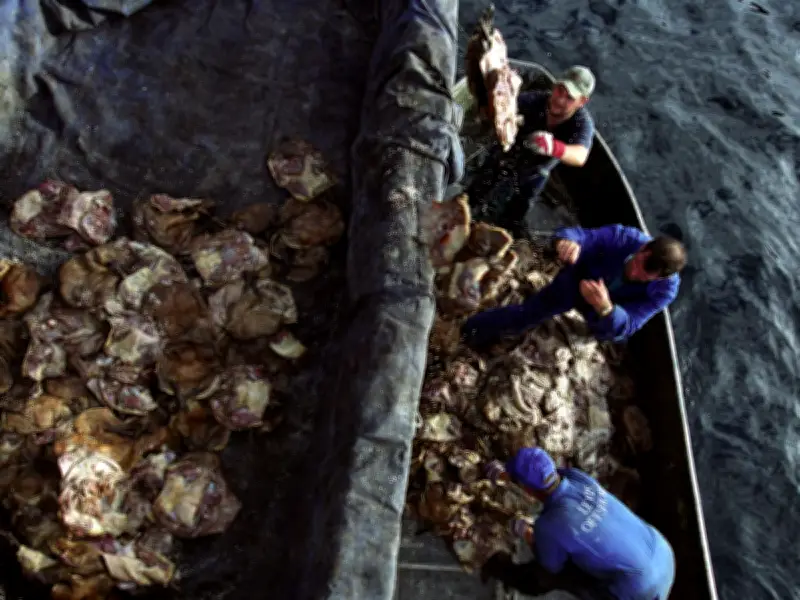
The thousand-year-old tradition of hunting baby gannets, or guga, on the remote island of Sula Sgeir is under threat after a wildlife agency's ruling. The annual harvest, carried out by the 'Men of Ness' from the Isle of Lewis, was cancelled this year by NatureScot, citing potential adverse conservation impact on local gannet populations.
Locals defend cultural practice
Locals have faced an unprecedented barrage of abuse and threats online after animal rights groups launched a campaign to outlaw the practice, calling it cruel and inhumane. Murdo MacRitchie of the Save Our Guga Harvest group said a total ban would be the equivalent of 'banning turkeys at Christmas'. He told the Sunday Mail: 'They shout at us from 700 miles away to stop, without actually having come up and spoken to anybody. We've been eating the guga all our days. Certainly, I've been eating it since I was a very young child. It's cascaded down the generations and I've passed it on to my own son. For us, the best way I could put it is imagine if somebody cancelled turkey for Christmas, or banned everyone from eating steak. It's that embedded in our culture. I know it's unique to here, but it's as much a feature here as steak, chicken or turkey.'
Guga is traditionally served with potatoes and a glass of milk, with the meat known as both gamey and fishy due to the gannets' diet. Murdo added: 'It's a once a year harvest and you sit with your family to enjoy it. My mother passed away last year and that was one of our last memories, sitting with her, ourselves and my son – three generations sitting around the table enjoying it. It's part of our DNA.'
Activists push for ban
This year's planned harvest met with fierce opposition from groups like London-based Protect the Wild. Founder Rob Pownall stood in both the recent Makerfield by-election against Andy Burnham and May's Holyrood elections dressed in a giant guga suit to raise awareness. Animal rights groups say the traditional methods used are barbaric, with hunters spending around 10 days in the Sula Sgeir bird colony and yanking chicks from their nests with long poles fitted with nooses, then killing them with blows to the head.
Locals insist the method of dispatch is backed as humane by NatureScot scientists. But the national wildlife agency ruled this year's hunt – which sought licences for both 500 and 2000 gannets – could not go ahead. Harvests did not take place in 2022, 2023 and 2024 due to bird flu. A total of 485 birds were taken at the 2025 hunt. NatureScot used new 25-year modelling in making its decision this year, concluding 'an adverse impact is possible' on seabird populations – but left the door open for approving new licences in future years.
Political and community backlash
Western Isles MP Torcuil Crichton has questioned the decision, and whether the outcome had been 'reverse-engineered'. It comes as NatureScot itself faced considerable pressure to ban the hunt, with activists scaling and spraypainting its offices in Inverness in March, costing the taxpayer-funded agency £110,000 in repairs and security. The Labour MP said: 'I've invited board members to come to Ness and engage with the community. Their observations are as valid and scientific as anyone doing a desktop exercise in Edinburgh or Glasgow.' Crichton blasted activists who he claimed had 'punched down on an already marginalised community', adding: 'They cast aspersions on the people of Ness, with terrible aspersions personally about some people online.'
Residents said they were shocked to see the tradition compared to vicious bloodsports like fox hunting or badger baiting. Local author and historian Donald S Murray said the campaign against them had been 'almost colonial'. He added: 'I do question the morality of a gentleman standing for an election in Edinburgh and proclaiming he's there to abolish the guga hunt. I find that condescending.' Murray, who published a book about the hunt in 2008, told how the Port of Ness, which overlooks both the North Atlantic and the Hebridean strait known as The Minch, is notorious for massive waves and storms. Historically, that made hunting guga a food necessity. The author said: 'It goes back a thousand years and a lot of it was dictated by the waters around them. It was easier for them to go out to Sula Sgeir than it was to fish because of the dangers of fishing. Lewis lost more men to drowning than fighting during World War I.'
Anti-hunt campaigners respond
However, anti-hunt campaigners insist the custom is no longer necessary for food and that, while it can be commemorated, the killing should stop. They added they did not condone abuse and pointed out they've also faced their share of online pile-ons and threats. Devon Docherty, Protect the Wild's Scottish campaign manager, said: 'There is already a Scottish Parliament petition to outlaw the guga hunt sitting at over 100,000 signatures, one of the largest petitions in the parliament's history. It shows a huge public appetite for change. I think a lot of people didn't realise it was happening and are simply quite shocked that this is happening in Scotland. The Scottish public are opposed to what we see as recreational hunting, unnecessary hunting of wildlife. They think it's cruel, they think it's a relic of the past and they want it to change.'
On the question of whether the method of killing is humane, she added: 'Birds nesting there on the island will be witnessing the full process from the capture, the killing, the butchering, the slaughtering. That's actually not even permitted in industrial slaughterhouses. You're not allowed to do that in view of other animals because they're sentient, they're intelligent, they know what's going on and it causes fear and suffering.' Her view was backed by Jason Rose, CEO of animal rights charity OneKind, who said: 'Culture and tradition is not written in stone. It's up to us as a society what we think is appropriate. And I think attitudes have shifted quite a bit, our understanding of animal sentience has changed quite a bit. I keep hearing people say the method of killing is quick, it's a blow to the head. But that misses the point, The activity takes days, sometimes weeks. It involves wading into a colony of sentient creatures, living beings that have feelings and will be anxious, stressed and confused. They will feel helpless. And they are seeing, in front of them, other young animals being taken, hoiked by their neck then bashed in the head with a stick, sometimes several times. The Scottish Animal Welfare Commission wrote to the Scottish Government saying there's no humane way of carrying out this activity.'




