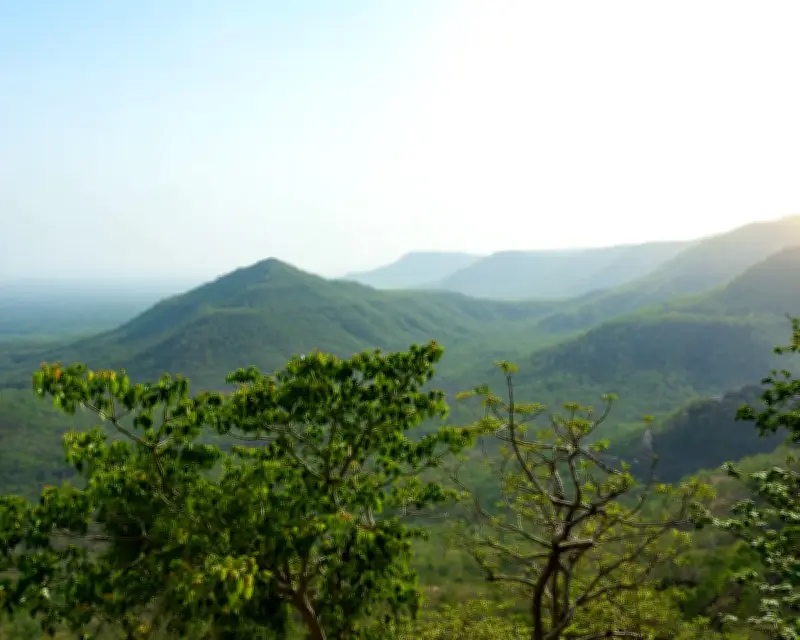
The Green India Mission, India's flagship environmental initiative to expand forested areas, has achieved only 2.43% of its initial 2014 pledge, according to the government's auditors, who described the progress as "negligible." The shortfall of 97.57% has raised concerns, especially as the UK Met Office warned that 2027 could be the hottest year on record due to a strong El Niño, putting India's monsoon and agriculture at risk.
Discrepancies in Forest Cover Data
The government's 2023 report claimed forest cover has grown since 2021, but independent assessments have found lower or reduced forest cover. The discrepancy stems from the inclusion of smaller orchards, coconut and rubber plantations in the calculation. Pooja Choksi, founder of Ficus Research Consulting, said, "A lot of the discrepancies are coming from how and what we are counting as forests. We have broadened the definition to include a lot more." The government defends its methodology as internationally accepted.
Accelerated Forest Land Diversion
Over the past five years, India approved diversion of forest land for development projects covering an area roughly the size of Hong Kong, with the pace accelerating. Mining accounted for 22% of all diverted land, followed by roads and irrigation. Nearly a quarter of all diversions since 2021 are in Madhya Pradesh, the state with the largest forest area, followed by Odisha and Arunachal Pradesh.

The Great Nicobar Project and Compensatory Afforestation
The Great Nicobar Project, proposed in the Andaman and Nicobar Islands, would divert 13,075 hectares of forest land and cut down at least 700,000 trees for a port, airport, township, and power plant, costing over $6.89 billion. Geoscientist CP Rajendran wrote in The Wire that the project is "geologically impossible" due to sea-level rise and sinking land. Compensatory afforestation, often used to offset such diversions, is criticized by experts like Choksi, who said, "We need to move away from this very one-dimensional view that everything is green cover." She noted that a natural forest with 100 species has greater ecological value than a plantation with 20 species.
India's biennial forest report, due in 2025, is still awaited, leaving the true health of India's forests uncertain.