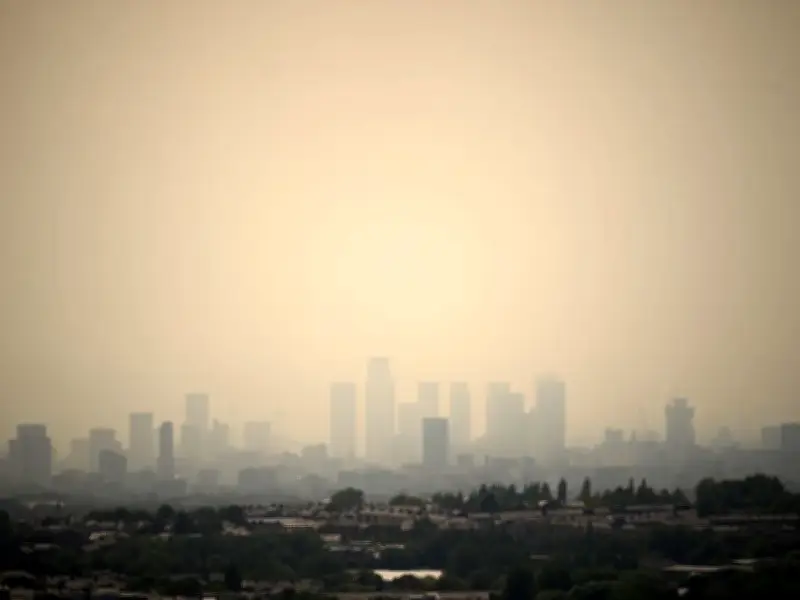
The huge raging wildfires that broke out near Greater Manchester this summer are finally extinguished. Hundreds of firefighters battled blazes at Dovestone and Swineshaw, Tintwistle and Saddleworth with two major incidents declared in July. As the blazes took hold of the vast moorland areas, parts of Greater Manchester, including in some areas miles away, were left covered in smoke.
The wildfires smouldered amid several heatwaves, with very little respite from hot and dry weather. Miles of scorched moorland and devastated wildlife has been left behind.
Tintwistle Moor
During one of the first heatwaves of the year on June 24, a wildfire started burning on Tintwistle Moor. The vast, scenic moorland sits above Woodhead Road near Glossop, on the border of Tameside and Derbyshire. Crews from the Derbyshire Fire and Rescue Service (DFRS), as well as partner agencies, worked tirelessly to contain the blaze in dry and hot conditions as huge plumes of smoke billowed from the moorland. After making good progress, they left the scene on July 2 and handed over to landowner United Utilities and the wider Peak District Fire Operations Group.

People were urged to keep away from the area. But a week later on July 9, the fire service received a 'high volume' of 999 calls about smoke. They returned to Tintwistle Moor to deal with a flare-up in a woodland area by the Didsbury Intake. As the warm weather continued, the fire continued to spread and smoke billowed across Greater Manchester and surrounding areas. People were urged to keep their windows and doors closed as the smoke reached areas miles away. At one stage, data revealed that air quality in Stockport - several miles from the fires at Tintwistle and Dovestone, had been worst affected by smoke blowing over from the fires.
By July 10, the wildfire had affected around 2.6 million square metres of moorland - the equivalent of more than 350 football pitches. Due to its size and the complexity of the operation, a major incident was declared on July 12. A multi-agency response was co-ordinated with firefighters from across the country deployed through National Resilience arrangements. The wildfire continued to spread as crews and residents hoped for rain. Crews worked to tackle hotspots on 'challenging terrain' for weeks. On July 31, the fire service said the blaze was estimated to have burned 606 hectares of woodland - equivalent to 900 football pitches.
Major incidents stood down
On Monday, August 3, the major incident was stood down after 'significant progress' was made in bringing the blaze under control over the previous 23 days. The A628 Woodhead Pass was closed off for almost two weeks. Firefighters remained on the scene 'extinguishing any deep-seated pockets of heat and reducing the risk of re-ignition'. Hotspotting operations 'remained a key focus across the moor'. On Monday of this week (August 24), the fire service formally stood down its operational response at Tintwistle Moor after more than eight weeks. The fire is now finally out.
This brought to a close one of the longest-running incidents in terms of operational deployment that DFRS has ever attended, the service said. Area Manager Nathan Steven said the 'complex and significant' incident demonstrated the 'incredible dedication of people' from right across the service. "While our firefighters worked tirelessly on the moor, colleagues in control and support teams played a vital role behind the scenes, helping to sustain the response while ensuring we continued to deliver services to our communities throughout the incident", he said. "I would like to extend my sincere thanks to everyone involved, including colleagues from across the Service, partner agencies, other fire and rescue services, landowners, farmers, gamekeepers and local communities. The scale and duration of this wildfire presented significant challenges, and the response would not have been possible without the collective efforts of many organisations and individuals working together."

Responsibility for the moorland has now been handed back to United Utilities. But the work hasn't ended, with DFRS continuing to work with the landowner providing advice and support as recovery activity continues across the moor. The fire at Tintwistle is reported to have covered an area the size of a small town. It led to a catastrophic loss of wildlife and caused worry for those living in nearby communities. Drone pictures taken earlier this week showed scores of burnt woodland and moorland, the devastation left behind. No cause has been established for the wildfire, and we may never know exactly what started it.
Dovestone and Swineshaw
At just before 8.45pm on Saturday, July 11, a fire broke out on moorland at Dovestone near Greenfield in Oldham. The blaze started close to the popular Dovestone Reservoir beauty spot. Greater Manchester Fire and Rescue Service (GMFRS) crews raced to the scene as the blaze spread and sent large, thick plumes of smoke billowing across Oldham and other parts of the region during a heatwave. Multiple fire engines, specialist wildfire officers, a burns team and drone units were deployed with landowner United Utilities also supporting the major multi-agency response. The area was closed off to the public as crews battled the blaze. On July 13, GMFRS declared a major incident with around 70 firefighters, 11 fire engines and four wildfire units on the scene. On July 15, GMFRS responded to a separate fire at Swineshaw near Glossop. This moorland fire formed part of the major incident and also required a multi-agency response.
The fire service issued a warning over the amount of smoke billowing from the blaze, and the wildfire at Tintwistle. "Smoke from the wildfires may continue to affect some nearby communities", they said on July 15. "If you can see or smell smoke, remain avoiding affected areas where possible. Stay indoors and keep windows and doors closed. Once smoke has cleared from your area, ventilate your home by opening windows and doors. People are also encouraged to keep hydrated during the current warm weather and follow any existing health management plans if they have asthma or other respiratory conditions."
GMRS and partner agencies continued to work at Dovestone and Swineshaw over the following days in 'extremely challenging conditions', though the day and night. The fire service said much of the fireground was 'deep within remote and inaccessible moorland'. On July 18, fire chiefs said they had seen people visiting the area and lightning BBQs despite repeated warnings to stay away. A week later, on July 26, rain fell over the region for the first in weeks but this was 'not enough to significantly change the position' at Dovestone and Swineshaw. The emergency response was moved to a 'prolonged and consolidation' phase as conditions 'remained dry and challenging'. On August 3, after more than three weeks, the major incident was stood down.
The area around the body of water was closed for over a month following the fire that destroyed a large area of moorland. An area the equivalent of more than 1,250 football pitches of moorland burned in the fire, leaving a blackened scar on the rural landscape and devastating wildlife. The fire service now 'remains in recovery' following the significant wildfires. Firefighting operations at Dovestone and Swineshaw have concluded, but recovery activity remains ongoing. This includes servicing and returning equipment, repatriating National Resilience assets, addressing operational backlogs and restoring capability following a prolonged period of exceptional demand, the fire service said. Recovery work will continue over the coming weeks as the service works towards a full return to business as usual.
Ben Levy, Head of Response at GMFRS, said: "A huge thank you to everyone who has supported the response and recovery effort during these major incidents. These incidents have placed extra demands on teams across the organisation, but colleagues, partner organisations and volunteers have stepped up time and again, showing incredible commitment, flexibility and professionalism throughout. Thanks to their hard work and dedication, GMFRS has been able to respond to significant incidents across Greater Manchester, support communities elsewhere in the UK through National Resilience arrangements and continue providing essential services to our communities."
Shania Care-Slede, 20, has appeared in court accused of setting off fireworks near Dovestone Reservoir shortly before the wildfire broke out. She appeared via videolink at a hearing at Minshull Street Crown Court on August 21 to enter pleas to charges of arson; arson being reckless as to whether life is endangered (aggravated arson); and dangerous driving. Ms Care-Slede, formerly of Hyde, denied the two arson charges. She pleaded guilty to dangerous driving.
Saddleworth
Another moorland fire broke out near Holmfirth Road in Saddleworth on the evening of August 12. Eight fire engines were initially sent to the scene. At its height, the fire covered an area measuring 500m by 150m, GMFRS said. Around 50 firefighters worked on the moorland across a number of days. Drone pictures showed a huge area of moorland scorched in the blaze, with smoke blowing across Holmfirth Road. Fire crews, landowners and the Royal Society for the Protection of Birds (RSPB) worked to bring the fire under control in 'extremely high temperatures'. People were urged to avoid the area as smoke billowed from the moorland. On August 14, GMFR's Paul Fearnhead said: "While much of the smoke is currently drifting across open moorland, smoke conditions can change depending on wind direction. If smoke is affecting your area, keep doors and windows closed where appropriate and continue to follow public health advice. We are also reminding people to remain vigilant and report any new fires immediately." On August 15, the fire service said the blaze at Saddleworth had been extinguished. Crews remained at the scene over the following days to check for hotspots as Holmfirth Road was reopened.
What next?
So far this year, fire and rescue services in England and Wales have responded to more than 1,130 wildfires. This already surpasses last year's record of 1,017. On August 14, millions of people in England and Wales received an alert on their mobile devices warning them of a 'very high risk of wildfires nationally'. People received a notification, warning against lighting anything that could spark a wildfire, including barbecues, campfires, and fireworks.
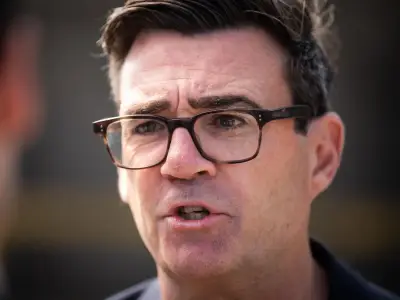
Prime Minister Andy Burnham urged everyone to take it seriously, as ban on disposable BBQs also came in. Writing on X, the Prime Minister said: "Our priority now is to keep everyone safe and prevent more fires from starting. During this period of extreme heat, I’m asking everyone to take extra care." He had previously described Britain as a 'tinderbox'. The UK Health Security Agency (UKHSA) said severe wildfires are becoming more frequent because of climate change making our summers hotter and drier - the ideal conditions for a fire. Most wildfires start 'due to human activities', the UKSHA said, with everyone urged to 'play a part in reducing wildfires' by acting responsibly. Bev Craig, the new Greater Manchester Mayor, said previously that there has to be consequences for those that start the blazes.
In response to the Dovestone fire, she said: "I do think there have to be consequences for that because you have seen the impact. You have seen the impact on our fire service, on the environment, and you can smell smoke across Greater Manchester. I think on this particular case I want to see how the investigation unfolds but antisocial behaviour has over the years caused a lot of preventable fires, have caused a lot of damage in Greater Manchester." Fire chiefs have also called for tougher consequences and more education. Andy Steele, a GMFRS crew manager at Stalybridge, said: "I think unless there's a large amount of education around moorland fires it won't stop. Hopefully there's a bit of consequence to the person that did the Dovestone fire, that might stop it a little bit. But unless there's a large amount of education around moorland fires, I can't see it stopping. I just don't think that we should be selling disposable BBQs at all. There's plenty of dead animals out there because of people starting a BBQ or dropping litter."
Zoe Politis, a firefighter from Altrincham fire station, also thinks that without a proper deterrent the fires will continue. She said: "I just think at the end of the day it's taken a lot of resources from the brigade... It affects the wildlife massively as well and the money that goes into it and the graft.. With the weather being so dry at the moment we're not use to it being so dry and I just think people need to be a lot more conscious of these decisions." Mr Burnham previously said he accepted wildfires were a growing problem and after issuing a package of immediate support, pledged to look into the resources available to fire and rescue services in autumn, which he believes are currently insufficient. Later this year, ministers will convene a national wildfire summit bringing together fire chiefs, the National Fire Chiefs Council, the Fire Brigades Union and other partners.
The summit will build on the Government’s existing investment in wildfire resilience, including £97 million for fire service training and specialist equipment. Communities Secretary and Ashton-under-Lyne MP Angela Rayner has also written to local authorities across England reminding them of the powers available to restrict activities that could increase fire risk, including the use of Public Spaces Protection Orders to limit barbecues, campfires and other forms of open fire in vulnerable areas. In a previous statement amid the wildfires, Ms Rayner said: "We will do everything to make sure our fire services have the resources they need from us and our support to deal with the unprecedented risks being driven by this heatwave. As well as supporting firefighters on the ground now, my department will hold a summit bringing together fire chiefs, the National Fire Chiefs’ Council, the Fire Brigades Union and other key organisations to look at our future response."