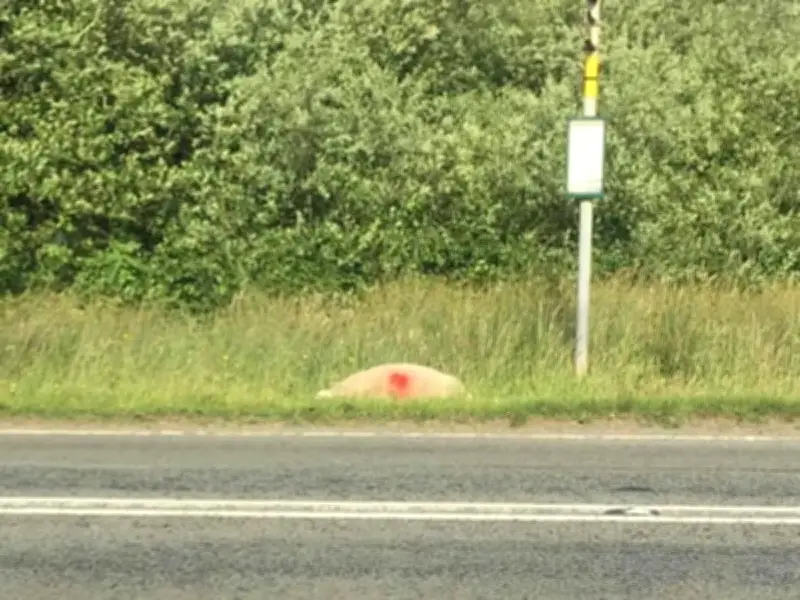
GPS-enabled cattle collars placed on grazing animals in Gower have dramatically reduced the number of livestock being hit by cars. The new technology, referred to as 'virtual fencing', was introduced after incidents, which have been a long-running problem in the area, rose to 140 in 2023-24.
That number of livestock casualties reduced dramatically to 33 in 2024-25 with only two being cattle. Ten out of 11 graziers on Fairwood Common now use the collars on their animals.
How the virtual fencing works
The devices use satellite positioning to provide real-time tracking, health monitoring, and virtual fencing.
Councillor Andrew Stevens, writing to Swansea council's climate change and nature scrutiny panel, wrote: "The council’s countryside team, which includes the Gower National Landscape Team, has worked closely with Gower commoners and Natural Resources Wales for many years to support the sustainable management of the commons."
Grazing's role in biodiversity
He added: "The only way that the iconic commons can be maintained is through traditional grazing by commoners, to maintain the mosaic of habitats which underpin the biodiversity of Gowers commons, and their environmental importance."
"There is strong ecological evidence that appropriate grazing is essential to maintain species rich habitats. Grazing helps control dominant vegetation and prevents scrub encroachment, maintaining the diversity of plant and animal communities that depend on open habitats."
"Conversely, reduced grazing can lead to rapid scrub encroachment and a decline in biodiversity value on commons Best Practice Commons Management — Foundation for Common Land."
Decline in grazing levels
"Locally, grazing levels have declined significantly over the past decade, with livestock casualties on roads being a key factor."
"In 2023, this reached a critical point, and several graziers were considering removing their livestock from the commons."
"In response Welsh Government funding has enabled the introduction of 80 GPS-enabled cattle collars on Fairwood Common which keep the cattle away from the roads."
"Livestock casualties reduced from approximately 140 incidents in 2023-24 to 33 in 2024-25 (only two of which were cattle), supporting continued grazing."
"Of the 11 active graziers on Fairwood Common 10 use the collars and are very enthusiastic about their use."
"This form of 'virtual fencing' is increasingly recognised as a useful tool for managing grazing, allowing livestock to be safely contained or guided without fixed fencing while supporting conservation grazing objectives."
"Maintaining grazing is important to prevent scrub encroachment and maintain open habitats, support biodiversity across mosaics of grassland, heath and wetland, reduce wildfire risk associated with unmanaged vegetation."
The council also provides support for cutting of firebreaks where resources allow but is dependent on partners to undertake the work, subject to a number of issues around timing and the availability of suitable machinery and drivers.