
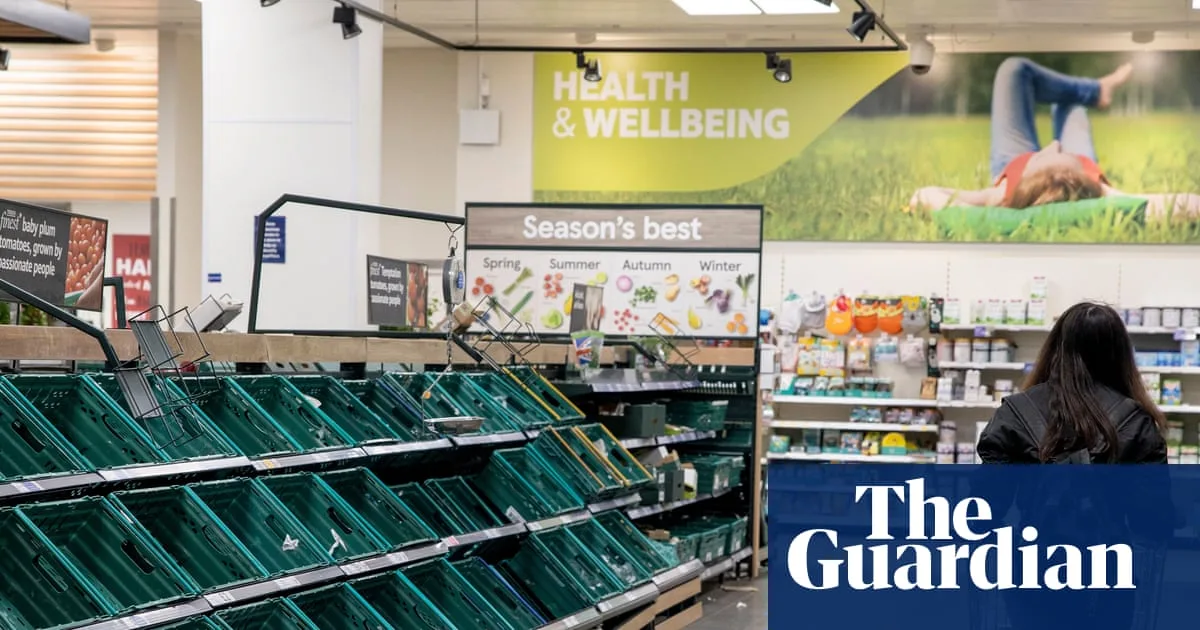
The UK’s food system is a “tinderbox” that could tip into social unrest or even food riots after a single shock, according to an analysis by more than 30 food experts. Chronic issues such as the climate crisis, low incomes, poor farming policy and fragile just-in-time supply chains have left the nation dangerously exposed, the researchers said.
The experts identified the three most dangerous shocks as extreme weather, cyber-attacks and international conflicts. These could hit supply chains and push up food prices, leading to increased social tension, hidden sales of unsafe food and, in the worst case, civil unrest. A large majority (80%) said large-scale violence from a food crisis was possible in the next 50 years, with 40% saying it could occur within a decade.
Many of the shocks considered have already happened, including cyber-attacks on Co-operative and Marks & Spencer supermarkets in 2025, and recent overseas droughts and Russia’s invasion of Ukraine that increased food costs. The UK currently imports about 35% of its food, and one in seven families experienced food insecurity in 2025, according to the Food Foundation.
“The stability of the UK’s food system is a critical aspect of national security,” said Prof Sarah Bridle of the University of York, who led the analysis. “Understanding how the system might react to extreme pressure is the first step to preventing worst-case scenarios.” The experts urged more coordinated government and business action and a wider, more resilient range of food produced and eaten in the UK.
A UK government spokesperson said: “Food security is national security… This government is investing billions in the development of new technology to increase yields or create climate-resilient crops.” The analysis, published in the journal Sustainability, concluded that “any combination of these shocks could lead to a UK food availability and/or price shock that could result in widespread fear of unsafe or inadequate food, leading to violence.”




