Half of World's Largest Cities Grapple with Severe Water Stress as Climate Crisis Intensifies
An alarming new global analysis has revealed that half of the world's 100 largest cities are now experiencing high levels of water stress, with 39 of these urban centres sitting in regions classified as having "extremely high water stress." The comprehensive mapping and research demonstrates how climate breakdown is significantly worsening water scarcity challenges across major metropolitan areas worldwide.
Global Cities on the Brink of Water Bankruptcy
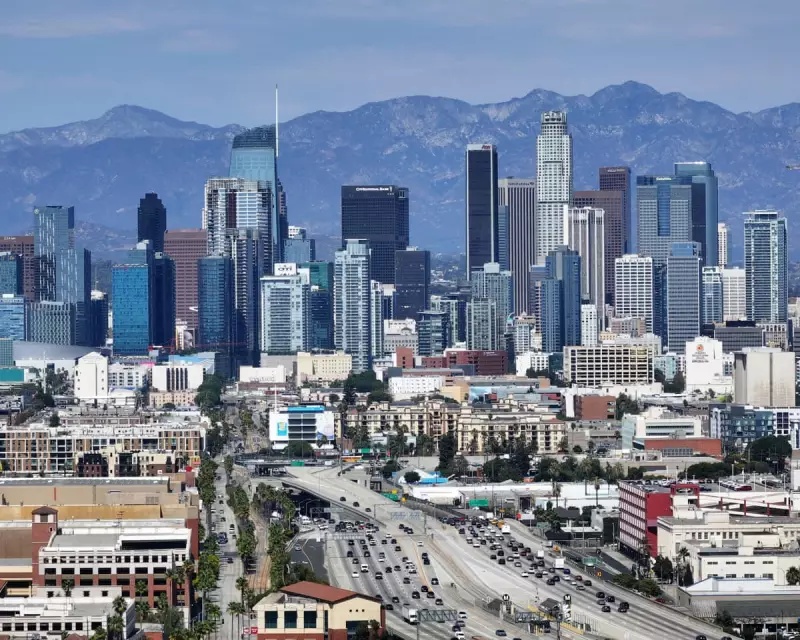
Water stress occurs when water withdrawals for public supply and industrial use approach dangerously close to exceeding available resources. This critical situation is frequently driven by poor water management practices that are being dramatically exacerbated by the accelerating impacts of climate change. The analysis reveals that Beijing, New Delhi, Los Angeles, Rio de Janeiro, and New York are among the cities facing the most extreme water stress conditions.
London, Bangkok, and Jakarta have been classified as experiencing high water stress, highlighting that this is not merely a problem confined to developing nations but a truly global crisis affecting cities across economic spectrums. The research combines watershed investigations with sophisticated mapping techniques to identify stressed catchments and vulnerable urban areas.

Satellite Data Reveals Dramatic Drying and Wetting Trends
Separate analysis of NASA satellite data compiled by University College London scientists shows which of the largest 100 cities have been experiencing significant drying or wetting trends over the past two decades. The research reveals strong drying patterns in cities including Chennai, Tehran, and Zhengzhou, while Tokyo, Lagos, and Kampala show pronounced wetting trends.
Approximately 1.1 billion people now reside in major metropolitan areas located in regions experiencing strong long-term drying, compared to about 96 million people living in and around cities in regions showing strong wetting trends. Most urban centres experiencing the strongest drying signals are concentrated across Asia, particularly in northern India and Pakistan, while most city regions in notably wetting zones are located in sub-Saharan Africa, with Tokyo and Santo Domingo in the Dominican Republic being notable exceptions.
Tehran's Perilous "Day Zero" Scenario
Tehran, now in its sixth consecutive year of drought, is perilously close to reaching "day zero" when no water will be available for its citizens. Last year, Iranian President Masoud Pezeshkian warned that the city might need to be evacuated if the drought continues unabated. This scenario echoes similar crises faced by Cape Town and Chennai, both of which have narrowly avoided their own "day zero" moments in recent years.
Professor Mohammad Shamsudduha, an expert in water crisis and risk reduction at UCL, emphasised the importance of satellite monitoring: "By tracking changes in total water storage from space, the NASA GRACE project shows which cities are drying and which are getting wetter, offering an early warning system for emerging water insecurity."
UN Declares State of Global Water Bankruptcy
On Tuesday, the United Nations announced that the world has entered a state of water bankruptcy where deterioration of some water resources has become permanent and irreversible. Professor Kaveh Madani, Director of the United Nations University Institute for Water Environment and Health, explained that poor water management is frequently the primary cause of this bankruptcy, with climate breakdown acting as an exacerbating factor rather than the sole reason: "Climate change is like a recession on top of bad management of business."
The World Bank Group has been sounding similar alarms, reporting that global freshwater reserves have plunged dramatically over the past two decades. According to their data, the planet is losing approximately 324 billion cubic metres of freshwater annually—enough to meet the yearly needs of 280 million people, roughly equivalent to Indonesia's entire population. These losses are affecting major river basins across every continent.

England's Looming Water Crisis
By 2055, England could need to find an additional 5 billion litres of water daily to meet public water supply demands—more than a third of the 14 billion litres currently supplied. Other water sectors, including agriculture and energy, may require an extra 1 billion litres per day according to Environment Agency projections.
Professor Shamsudduha noted that "the hidden resource of groundwater offers the UK a more climate-resilient water supply," but cautioned that "without sustained monitoring and better management we risk managing it blindly amid intensifying development and climate pressures."
Parts of southern England have recently suffered water outages, which South East Water attributed to winter storms. However, regulators had already expressed "serious concerns" about the company's security of supply prior to these incidents.
Government Response and Regulatory Reform
On Tuesday, the UK government published a water white paper aimed at overhauling the national water system. The proposed reforms include establishing a new chief engineer role, implementing "MOT checks" on water infrastructure, and granting new powers to a strengthened water regulator. These measures represent a significant step toward addressing the systemic challenges facing water management in an era of climate uncertainty.
The interactive water security atlas developed as part of this research allows users to explore all 100 cities and their specific water trends, providing unprecedented transparency about global water security challenges. As climate breakdown continues to intensify, the need for improved water management, conservation, and infrastructure investment has never been more urgent for cities worldwide.