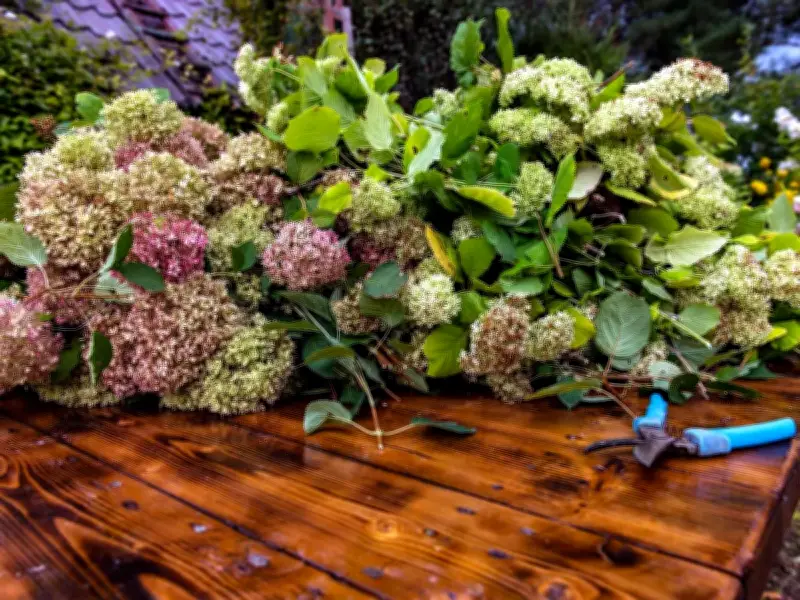
Gardeners eager to prepare their hydrangeas for winter have been told to hold off, as an expert warns that pruning certain varieties in September could affect next year's blooms. Michael Griffiths, known as @michaelgriffiths on social media, has shared advice on what to do with hydrangea plants in autumn to help them thrive next year.
Which hydrangeas can be pruned now
While his advice varies depending on the type of hydrangea, Griffiths usually recommends leaving plants alone in September, as the flower heads can remain beautiful throughout autumn in a different way. But for those who don't want to see plants once they're past their best, he says some varieties can be pruned.
He said: "The ones you can prune are your smooth or panicle hydrangeas - like Annabelles." As these varieties flower on new wood, he explained that they can be cut back to just above a pair of buds.
Which hydrangeas to leave alone
However, he warned gardeners not to reach for their secateurs when it comes to other varieties. "For your bigleaf and oakleaf varieties that flower on old wood, put the secateurs away. It's not time to prune them yet," he added.
His advice sparked discussion among fellow gardeners, with some sharing their own experiences. One user said: "I'm shook my big leaf just produced 4 new flowers on new wood. So confusing!" Another added: "Mine haven't bloomed in 2 years after 5 years of blooms! What have I done wrong! Help."
A third asked: "I have Annabelles and want really big heads next year, how far down is best to prune them? This year I got lots of small heads so think I didn't do a hard enough prune of them maybe?"
One gardener shared their long-term experience, writing: "My Annabelles are 22 years old. I cut them down to about 8 inches every fall and they always come back beautifully. Some of the blooms have been over 12” wide." Another added: "Mine didn't like this heat wave. Not looking good but will survive."
Autumn gardening jobs
Other autumn gardening tasks include planting spring bulbs such as daffodils, tulips, and crocuses in September and October so roots establish before winter. Gardeners should also care for their lawn by scarifying to remove thatch, aerating compacted soil, applying an autumn-specific fertiliser high in potassium, and raising mower blades for the final mow.
Fallen leaves should be raked regularly to maintain airflow and prevent disease, leaving small piles for overwintering wildlife. Dead foliage on herbaceous perennials can be cut back and congested clumps divided, while deciduous hedges should get a final trim and rambling roses pruned after flowering. Tender plants and dahlias should be moved into a greenhouse or sheltered area, with mulch added around plant bases to insulate the soil.