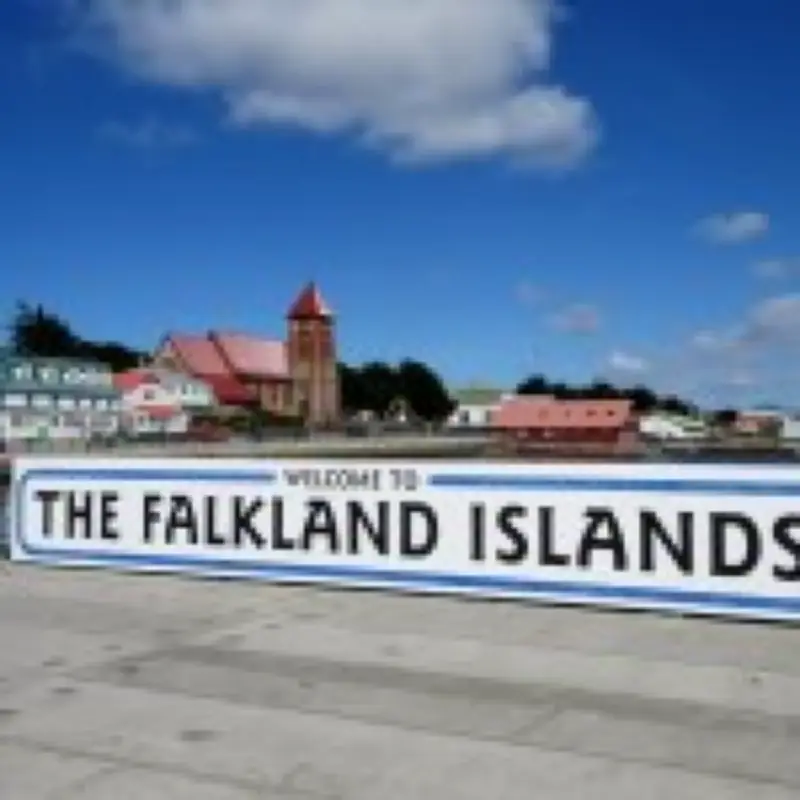
Michael Poole, a lifelong resident of the Falkland Islands, describes life on the archipelago as peaceful and community-oriented, in stark contrast to the political turmoil often depicted in headlines. The 3,500 residents are used to occasional international attention, but day-to-day existence revolves around work, family, and a close-knit society.
Political Rhetoric vs. Daily Reality
Recent controversy erupted after an Argentinian World Cup banner declared 'The Falklands belong to Argentina,' prompting FIFA to investigate. Argentine President Javier Milei called the players' actions 'understandable' and reiterated plans to 'recover' the islands. But Poole, CEO of Sea Fish Falklands, dismisses such claims: 'It is incorrect to suggest they would be recovering anything. The islands had been populated by Britain before Argentina existed. This rhetoric doesn’t really cause us concern but is a frustration for sure.'
Born and raised in Stanley, Poole comes from a family with roots stretching back six or seven generations. After studying in Birmingham and working in the UK, he returned home in his twenties. His daily commute takes just five minutes, and he walks home for lunch with his wife Christine and stepson Benji, 14. 'That kind of lifestyle is completely normal,' he says.
Wildlife and Community
The Falklands cover a vast area despite a small population. 'You can drive for hours or fly between islands on our own little airline,' Poole notes. Wildlife is part of everyday life: 'Five minutes outside Stanley and you’re in open countryside. We have penguins, whales, incredible birdlife and beautiful beaches. It’s one of the biggest privileges of living here.'
Community bonds are strong. 'Everyone knows everyone. You drive down the road waving at people and they wave back. If you go into a pub there’s always someone to chat to.' Safety is a hallmark: 'Our son has just turned 14 and we’ve never worried about him walking around by himself, day or night. Honestly, that’s been true since he was nine or 10.'
However, small communities have downsides. 'There’s not much privacy,' Poole laughs. 'We joke that it’s like living in a goldfish bowl because everyone knows who you are.' Many young people leave at 16 to study in Britain, drawn by bigger cities and nightlife. 'There isn’t really that stepping stone for teenagers,' he admits. Travel is expensive and time-consuming: twice-weekly 18-hour military flights or commercial routes via South America taking up to 48 hours. Yet around three-quarters eventually return. 'There are plenty of jobs here and lots of opportunities.'
Cost of Living and Culture
Imported goods can cost more than double UK prices, but local produce like beef, lamb, and fish is fresher and cheaper. Football is a major passion. Poole has spent 15 years running grassroots football, coaching children as young as four. He watched England's semi-final against Argentina in a pub: 'When England took the lead, the place erupted. Then came the collapse. When Argentina equalised, and then scored again, the whole pub just went quiet. Everyone simply slumped in their seats.'
The banner display was frustrating but unsurprising. 'I don’t think anyone here was particularly surprised because we’ve seen similar things before,' he says. Both the Falkland Islands Government and the UK Government have called for FIFA to investigate. 'Football should be about football, not political point-scoring,' Poole adds.
Diversity and Identity
The Falklands are home to more than 70 nationalities, including a small Argentinian community. 'Everyone just gets on. I’ve never witnessed any problems. People are here to work, raise families and be part of the community,' Poole says. He identifies as 'a Falkland Islander first and British second,' valuing self-determination: 'Ultimately, it should always be the people who live here who decide our future.'
The 1982 Falklands War ended before Poole was born, but its legacy remains. His parents were detained or lived through the conflict, and anniversaries still bring memories. 'For years they hardly spoke about it,' he says. Today, he hopes people see the Falklands as a community, not just a headline. 'We appreciate that people take an interest in the Falklands. We just hope they understand we’re a community, not just a headline.'