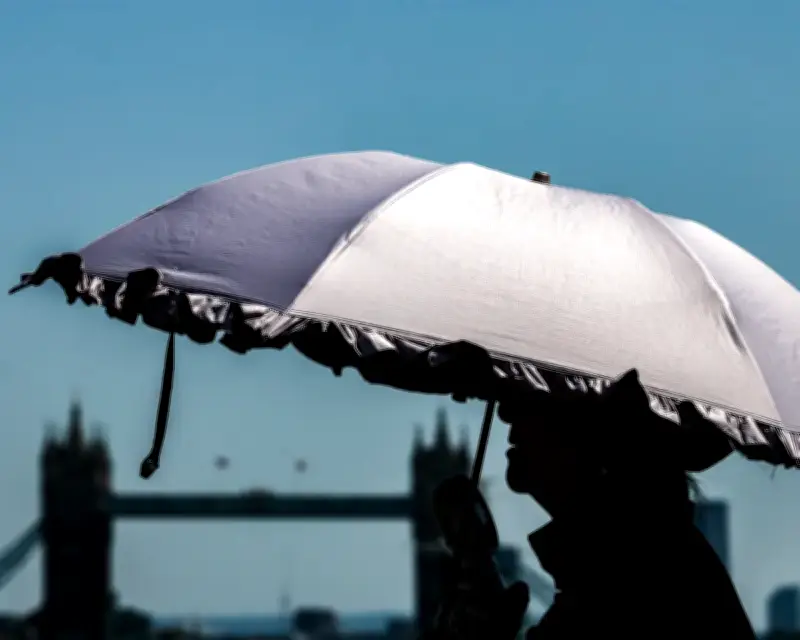
More than 40,000 extra people died on the hottest days in England between 1988 and 2025 than would be expected in normal temperatures, according to data published by the Office for National Statistics on Wednesday.
The figures do not include this summer, when England has sweltered under a succession of heatwaves and is on track to record its highest ever number of heat-related deaths. The UK Health Security Agency announced on 30 July that an estimated 2,877 people had died in the May and June heatwaves alone. The total is almost double the figure for the whole summer in 2025.
Rising toll as climate crisis worsens
The number of people dying prematurely due to high temperatures is expected to rise further as the climate crisis caused by the burning of fossil fuels continues to push up temperatures and the population ages. Elderly people, as well as children and the unwell, are particularly vulnerable to heat.

Emergency departments in England’s hospitals have experienced their busiest period ever this summer, with almost 2.5 million patients attending A&E each month in May, June and July and the heat cited as a main reason. Nurses were collapsing during shifts amid “inhumane and impossible” conditions caused by extreme heat, their union warned earlier in August.
Regional impact and hospital strain
London had the highest number of deaths attributable to the hottest temperatures, the ONS said. The London ambulance service has dealt with 25,000 more calls this summer than last, surpassing the record number seen during the peak of the Covid-19 pandemic.
Nearly all English regions, and Wales, experienced a 50% increase in the risk of a person dying when temperatures passed 24C. More than 2,000 deaths in Wales were associated with the hottest days from 1988 to 2025 and 10,000 deaths with the coldest.
Heat deaths narrowing gap with cold
Historically, more excess deaths happened on the coldest days than the hottest. There were 139,000 deaths associated with the coldest days in England between 1988 and 2025, according to the ONS data. However, James Tucker at the ONS said: “Our results show that the gap between heat- and cold-related deaths has narrowed in recent years as the proportion of heat-related deaths has increased.”
Dr Clair Barnes, a statistician at Imperial College London investigating the impacts of climate change on extreme weather, said: “We now face the very real prospect of heat deaths overtaking those that occur on the coldest days. As this summer has made abundantly clear, the risk from extreme heat is a fast growing problem that will only worsen without further action to reduce emissions and provide cooling.”
“Many climate change deniers and net zero opponents callously claim that heat-related deaths do not matter because of higher winter deaths, but all these lives matter,” said Bob Ward, of the Grantham Research Institute on Climate Change at the London School of Economics.
“Most of these cold- and heat-related deaths are preventable,” Ward said. “This is a shocking national scandal.”
In the most recent year in the ONS data, the 2,805 heat-related deaths in England and Wales were more than the 2,244 cold-related deaths.
Calls for action and preparation
Emma Howard Boyd, the chair of the National Heat Risk Commission, said: “Behind these numbers are people, families and communities. The challenge now is to ensure that our homes, neighbourhoods, infrastructure and public services are better prepared to protect those most vulnerable.”
The UK prime minister, Andy Burnham, has been criticised for a low-key response to the summer heatwaves and the climate crisis, and for moving to cut electric vehicle sales targets and accept new North Sea oil and gas drilling.
Government advisers at the Committee on Climate Change have long warned the country is not prepared for the impact of the climate crisis. The CCC said in May that air conditioning should be installed in all hospitals and care homes within the next 10 years and in all schools within 25 years, and that the government should set a maximum temperature for indoor and outdoor working.
In continental Europe, at least 35,000 more people died during the baking hot summer than would normally be expected, according to figures available so far from barely half the continent.

The heatwave that scorched western Europe in late June was the most severe and widespread ever recorded and was only possible due to the climate crisis driven by fossil fuel burning, scientists found. The World Health Organization said in May that heat-related mortality in its European region had increased by more than 30% over the past 20 years.
Gareth Redmond-King, of the Energy and Climate Intelligence Unit, said: “If we don’t speed our way to net zero emissions – the only solution to bringing our climate back into balance – then this hot and dangerous summer will be one of the coolest of the rest of our lives.”
The heat in 2027 will be further exacerbated by the super El Niño weather system now building in the Pacific Ocean.
Millie Brown, of the Centre for Ageing Better, said the ONS statistics were “extremely worrying”. She said: “The threat of heatwaves is exacerbated by our ageing and poor-quality housing stock that heat up quicker and more intensely than homes in Europe. Often these homes are designed for a temperate climate that no longer exists.”
The ONS data focused on the hottest 2.5% of hottest and coldest days, representing a range of about 0C to 20C. The researchers used a statistical model to estimate the relationship between temperature and mortality. This accounted for some factors that influence the risk of dying, such as air pollution, but not other including deprivation and household overcrowding.
The minister for climate transition, Katie White, said: “These shocking figures represent thousands of families who have lost someone they love. We’re not waiting for climate change to arrive, we’re living in the middle of it, and this summer’s record-breaking heat has brought that home.
“That’s why we’re taking some of the biggest action in a generation, preparing hospitals for extreme heat, rolling out air-to-air heat pumps to cool as well as heat homes, and accelerating clean homegrown power to tackle the root causes of climate change.”