Everglades Faces Quarter-Century Drought Threatening Ecosystem and Aggressive Alligators
South Florida's iconic Everglades is confronting a once-in-a-quarter-century drought that poses severe threats to its delicate ecosystem and could trigger increased aggression among its most famous inhabitants: alligators. This year's water shortage has dramatically reduced water levels across the wetlands, creating conditions not seen since 2001.
Early Season Severity Raises Alarm
Dr Stephen Davis, chief science officer at the Everglades Foundation, revealed to the Daily Mail that the region was already experiencing "a severe to extreme drought" at this time last year. "The issues are starting to express themselves more clearly and severely now," he stated.
South Florida's dry season typically extends from October to May, making the current severity particularly concerning this early in the season. "We've had droughts of greater magnitude or equivalent magnitude occur later in the dry season, but that we're seeing it this early in the year is concerning," Davis explained.

The drought's impact is expected to worsen until the wet season returns in spring, when South Florida typically receives 75 percent of its average five feet of annual rainfall.
Alligator Aggression and Wildlife Impacts
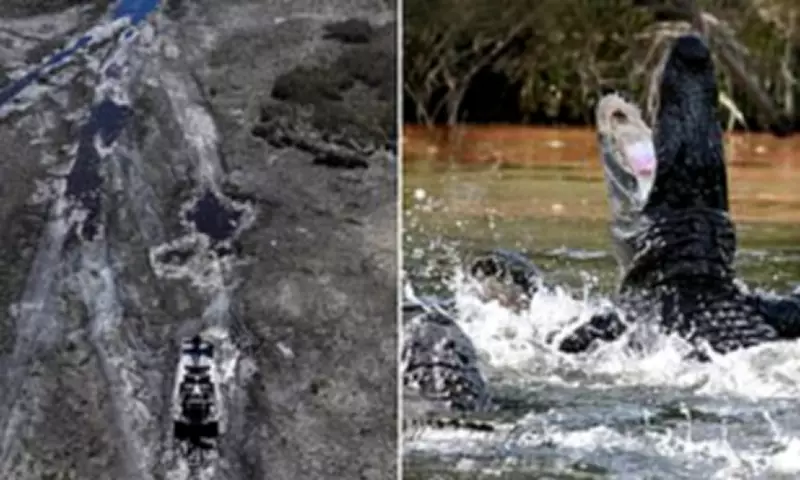
Davis detailed how the drought could force alligators into greater competition and increased aggression. "As the marsh dries down, they can't depend on that marsh for a natural seasonal concentration of food that they depend upon, which means they're going to be forced into deeper waters, likely where other alligators are," he said.
"So the competition will increase the aggression among, say, two male adults or other alligators coming together where they may be more dispersed in a natural state and are now forced to coexist."
Other species face dire consequences too. Wading birds such as herons and egrets are in their nesting season and rely on small fish that disappear as water levels decrease. These birds will be forced to abandon their nestlings as diminished food supplies make foraging impossible for both adults and their young.
Human and Economic Consequences
The South Florida Water Management District issued a water shortage warning for Miami-Dade and Monroe counties on February 6, recommending residents limit water usage through measures like reduced lawn sprinkling and shorter showers. While currently voluntary, these recommendations could become mandatory if conditions deteriorate further.
South Florida's vital tourism industry faces significant risks. Airboat tour companies have reported scaling back tours as some routes have completely dried up. Golf courses, which consume substantial water, could experience damage to their greens, while hotels face challenges with water conservation expectations conflicting with guest experiences.
Wildfire Risks and Environmental Damage
The drought presents heightened wildfire dangers, with dry soil and vegetation creating tinderbox conditions that could spread toxic particulates over South Florida communities. Davis warned that under such dry conditions, "the soils themselves are vulnerable to combustion, so you could literally lose a century of accreted peat overnight in a fire."
Accreted peat represents a buildup of organic matter that stores carbon, nitrogen, and other chemicals essential for plant growth, playing a vital role in ecological restoration.
Historical Context and Future Preparations
Although concerning, the current drought is not unprecedented. The Everglades remains "a pretty resilient system," according to Davis, who noted that "when we get back into the wet season, the plants will recover very quickly." Fish populations will gradually reestablish in currently dry areas, though rebuilding the food base may take one to two years.
Florida, in partnership with the federal government, has been constructing water capture systems like the Everglades Agricultural Area Reservoir south of Lake Okeechobee, expected for completion by 2030. These systems aim to store water for release during droughts, replenishing the Everglades water supply.

Historically, water flowed naturally from Lake Okeechobee to South Florida's wetlands, but early 20th-century replumbing for agriculture redirected this flow east and west. A dike built around the lake to prevent flooding necessitated artificial systems to mimic natural water flows.
"We're to the point now where we can say definitively that the projects that have been built or are under construction, or some degree of operation - they're delivering benefits right now," Davis said.
Climate Change Implications
Davis emphasized that while restoration efforts help, "restoration does not fix our drought issue today." He warned that climate change is expected to cause "an increased severity and potentially frequency of these types of events."
Fortunately, this doesn't require changing or adjusting water capture systems under construction, but rather "it only means that we should move forward faster" with implementation.