If you have been feeling unusually cold over recent weeks, you are certainly not alone. The Copernicus Climate Change Service (C3S) has officially confirmed that last month marked the coldest January in Europe for 16 years, delivering a stark reminder of the planet's climatic volatility.
Severe Cold Waves Sweep the Northern Hemisphere
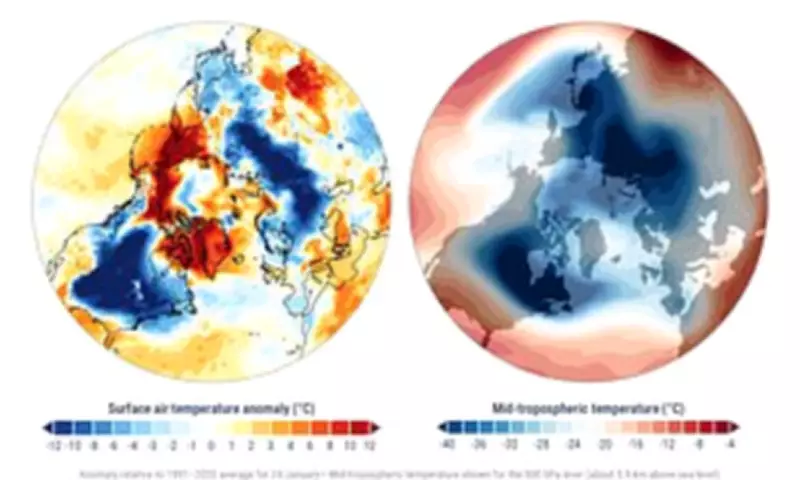
In the final weeks of January, the Northern Hemisphere was gripped by severe cold waves, driven by a meandering polar jet stream that funneled icy air masses into Europe and North America. This meteorological phenomenon resulted in Europe enduring its coldest January since 2010, with average temperatures plummeting to a frigid -2.34°C. The chill was widespread, affecting regions such as Fennoscandia, the Baltic States, eastern Europe, Siberia, and parts of the central and eastern United States.
Contrasting Extremes in the Southern Hemisphere
While Europe shivered, the Southern Hemisphere faced a dramatically different scenario. Record-breaking heatwaves triggered devastating wildfires in Australia, Chile, and Patagonia, alongside severe flooding in South Africa and Mozambique. Samantha Burgess, Strategic Lead for Climate at the European Centre for Medium-Range Weather Forecasts (ECMWF), commented, January 2026 delivered a stark reminder that the climate system can sometimes simultaneously deliver very cold weather in one region, and extreme heat in another. She emphasized that while human activities continue to drive long-term warming, resilience and adaptation to increasing extremes are crucial for preparing society for future climate risks.

Global Temperature Trends and Precipitation Patterns
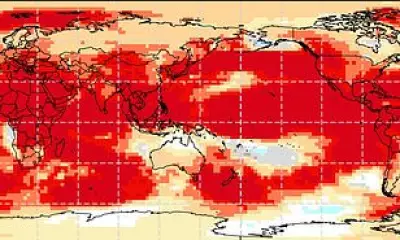
Globally, January was the fifth-warmest on record, with an average surface air temperature of 12.95°C. This figure is 0.51°C above the 1991-2020 average and 1.47°C above pre-industrial levels, underscoring the ongoing trend of global warming. In Europe, the average temperature of -2.34°C was 1.63°C below the 1991-2020 baseline, highlighting the regional cold anomaly.
Precipitation patterns also varied significantly. Much of western, southern, and eastern Europe experienced wetter-than-average conditions, leading to flooding and disruption in areas like the Iberian Peninsula, Italy, the western Balkans, Ireland, and the UK. Conversely, drier-than-average conditions prevailed in large parts of central Europe, northwestern coastal and southern USA, southern China, extratropical South America, and parts of Australia.
Sea Ice Extent and Regional Impacts
The analysis extended to sea ice at the poles, revealing concerning trends. In the Arctic, the average sea ice extent in January was six per cent below average, with notably low concentrations in the northern Barents Sea, Baffin Bay, and the Labrador Sea, coinciding with above-average surface air temperatures in those regions. In the Antarctic, sea ice extent was eight per cent below average, with below-average concentrations in most ocean sectors, particularly the Bellingshausen Sea, though above-average in the Weddell Sea.
The Urgency of Climate Action and the Paris Agreement
These extremes reinforce the critical importance of global climate initiatives like the Paris Agreement. Signed in 2015, this international accord aims to limit global temperature increases to well below 2°C above pre-industrial levels, with efforts to cap it at 1.5°C. The agreement outlines key goals:
- Maintaining long-term temperature stability below 2°C.
- Aspiring to limit warming to 1.5°C to reduce climate risks.
- Encouraging global emissions to peak as soon as possible.
- Implementing rapid reductions based on scientific evidence.
As climate extremes become more frequent and severe, the need for robust adaptation strategies and sustained emission reductions has never been more pressing. The events of January 2026 serve as a powerful call to action for governments and communities worldwide to enhance resilience and combat climate change proactively.