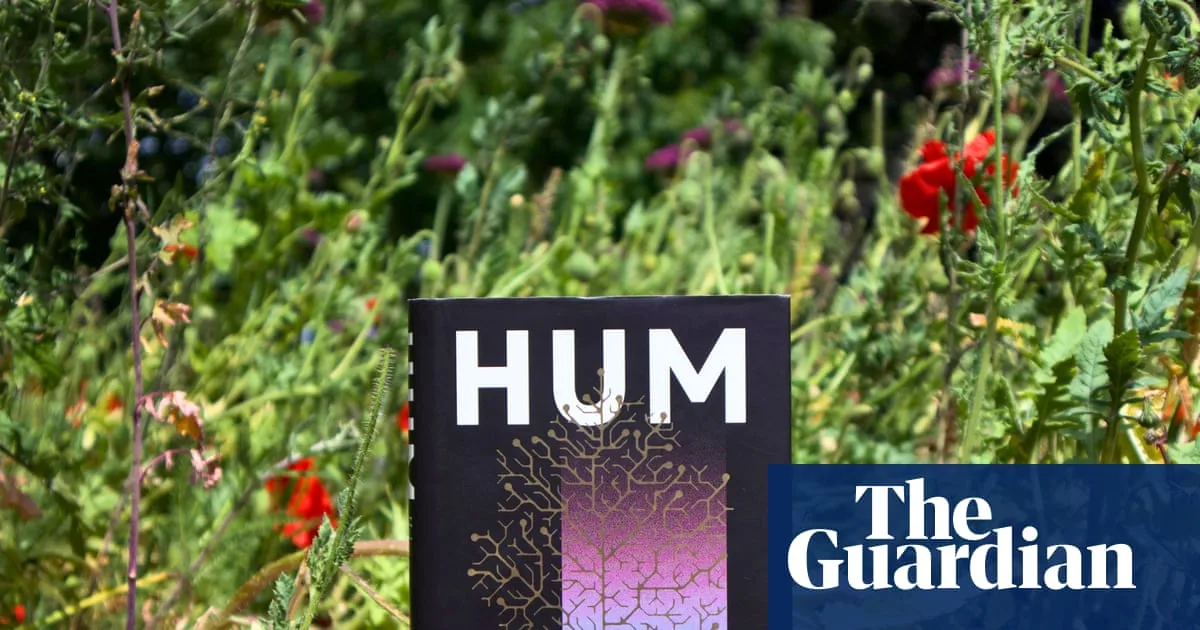
AI-Era Thriller About Paying for Fresh Air Wins 2026 Climate Fiction Prize
AI Thriller About Paying for Fresh Air Wins Climate Prize

Author Helen Phillips has been awarded the 2026 Climate Fiction Prize for her novel Hum, a powerful and darkly humorous thriller set in a near future shaped by artificial intelligence and climate change. Phillips received the £10,000 prize at a ceremony in London on May 27.

The Climate Fiction Prize rewards the best novel-length work of fiction published in the UK that engages with the climate crisis. It is founded and supported by Climate Spring, a global organization dedicated to shifting cultural responses to climate change by transforming its representation in popular culture.

Helen Phillips is the author of six books, including The Need, a National Book Award nominee and a New York Times Notable Book. She is the recipient of a Guggenheim Foundation Fellowship, a Rona Jaffe Foundation Writers’ Award, and the Calvino Prize in Fabulist Fiction. She is an associate professor at Brooklyn College.

Wide Pickt banner — collaborative shopping lists app for Telegram, phone mockup with grocery list

Hum is set in an all too plausible near future impacted by climate change and dizzying technological advancement. The plot follows May, a protagonist who loses her job to AI. Desperate to resolve her family's debt, she undergoes an experimental procedure to alter her face so it cannot be recognized by surveillance. May splurges a significant portion of these hard-won funds to gain access to one of the last remaining green spaces, powerfully depicting humans’ intrinsic yearning for nature and clean air amidst its commodification and pollution.

Phillips avoids sanctimony and presents potential outcomes, both utopian and dystopian, with warmth, humanity, and Black Mirror-style dark humour. The judging panel praised the novel's intimate look at the anxieties of a fast-changing world. Arifa Akbar, Climate Fiction Prize Chair, described it as “a book that deals with love, community and family in the face of climate crisis, privilege and the age of AI.”

Other judges highlighted the book's timely themes. Simon Savidge called it “a domestic yet urgent novel. Something that isn't far in the future, but shows we have time to change direction.” Judge Kit de Waal noted it is “a book about the Disneyfication of nature—turning nature into a rare place that we have to pay to see.”

The novel also tackles broader systemic issues. Judge Friederike Otto commented that Hum “tackles the central reason that nothing is done about the climate crisis—privilege. It destroys your opportunities and human rights.” Judge Jessie Greengrass added: “Beautiful and intimate, this novel about the difficulties of love and care in a world which is increasingly mediated by technology is one I’ve found myself thinking about long after finishing the last page.”

Lucy Stone, Founder and Executive Director of Climate Spring, emphasized the critical role of storytelling in the modern age. She said: “As rapid tech and AI advancements coincide with accelerating climate impacts, it is easy to feel like Big Tech’s vision of the future is inevitable. But the future is not written. Storytelling has the power to challenge and change these narratives, by connecting big ideas of AI and climate to relatable human experiences, and illuminating futures where tech is in service of the biosphere and humanity. Hum is a powerful story that explores alternative visions and helps us connect with what really matters.”

Following her win, Phillips will be interviewed by broadcaster Simon Savidge at the Hay Festival on Friday 30 May 2026 at 4.30pm.

Pickt after-article banner — collaborative shopping lists app with family illustration




