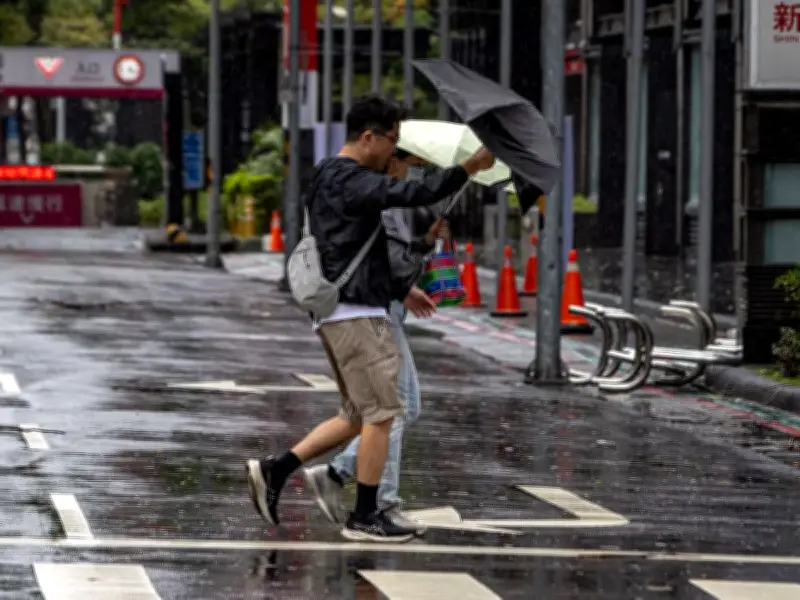
El Niño is driving extreme weather across East Asia, with experts comparing the Pacific Ocean to someone "burning with fever" as typhoons batter the region. The phenomenon has turbocharged storms that have hit Taiwan, China, Japan and the Philippines, killing dozens and causing widespread disruption.
Typhoon Champi brings devastation
Typhoon Champi struck Taiwan last month, effectively shutting the island down. The storm was as powerful as a category five hurricane, with winds reaching 193mph. It sparked hundreds of flight cancellations across East Asia and cut power to tens of thousands of homes, though it did not make landfall in Taiwan.
Experts attribute the storm's strength to El Niño, a climate phenomenon that warms sea water in the Pacific and can trigger major weather events globally. While El Niño events occur every few years, the UK Met Office has warned this year's is the "strongest in living memory" and could last until February or March next year.
Record sea surface temperatures
Ana Liza Solis, head of climatology at the Philippines' national weather bureau, compared the Pacific Ocean to someone "burning with fever". "It can go into convulsions soon," she said during a press briefing in Manila in September.
Sea surface temperatures in parts of the Pacific have risen 4C above normal conditions, the highest since records began in 1949. The previous record of 3.6C was observed in December 1997. China's climate agency has said temperatures could continue to rise over the winter months due to El Niño, raising concern as typhoon season typically peaks in September and October.
Preparation and warnings
Countries are bracing for further impact. Japanese officials have urged citizens to stockpile food, water and other essentials ahead of typhoon season. Beijing has asked citizens to identify vulnerable areas and has upgraded its monitoring and alarm systems.
The United Nations Development Programme in Asia and the Pacific noted that "how severely a community experiences an El Niño is decided years in advance, by where roads and settlements are built, how water is managed, who is covered by social protection and whether public budgets have room to absorb a shock". It added: "Every El Niño tests the resilience we have built; this one should also drive us to build more."