
The Environment Agency (EA) has published a stark report revealing that 41% of England's native species have declined since 1970, with 15% now facing extinction – warning the biodiversity crisis poses a serious threat to human survival.
Report details and warnings
The study, released by the EA – a body under the Government's Department of Environment, Food and Rural Affairs (DEFRA) – found that 41 percent of England's native flora and fauna species have significantly declined since 1970, with 15 percent at serious risk of extinction.
The report cautioned that this could not only severely impact global biodiversity, affecting other species in the food chain, but it could also threaten human survival.
EA chief executive's speech
In a speech unveiling the report, EA chief executive Sir James Bevan emphasised the connection between a flourishing natural environment and the provision of clean water, high-quality soil and essential carbon storage for human survival.
Addressing the Green Alliance think tank in London, he said: "The biodiversity crisis is a crisis because it won't just kill the plants and animals, it will kill us too. That's because nature is indivisible and interdependent - nature provides us with a host of things we depend upon, such as clean water, clean air and food."
Key findings of the study
According to the EA's study, titled Working with Nature - Chief Scientists Group Report, a quarter of mammals in England are at risk of extinction. Meanwhile, populations of priority mammal, bird, butterfly and moth species, previously identified as the most endangered and in need of conservation action, have decreased by 61 percent.
In his address, Sir Bevan referenced the 1962 publication Silent Spring by American author Rachel Carson, which has been hailed as sparking the contemporary environmental movement, ultimately resulting in a nationwide US prohibition of the pesticide DDT.
The publication, which exposes the devastation of complete ecosystems due to irresponsible pesticide usage, was employed by the EA leader to contemplate humanity's position six decades on.
Hope for restoration
His address said: "On the mornings that had once throbbed with the dawn chorus of robins, doves, jays, wrens, and scores of other bird voices there was now no sound; only silence lay over the fields and woods and marsh. Sixty years on we are closer than ever to that silent spring happening. Since we humans and everything we cherish depends on nature, we have the strongest possible interest in avoiding that outcome."
Sir Bevan emphasised that hope remained regarding the restoration of natural environments, as he spotlighted the Government's schemes to rewild enormous stretches of countryside throughout the UK.
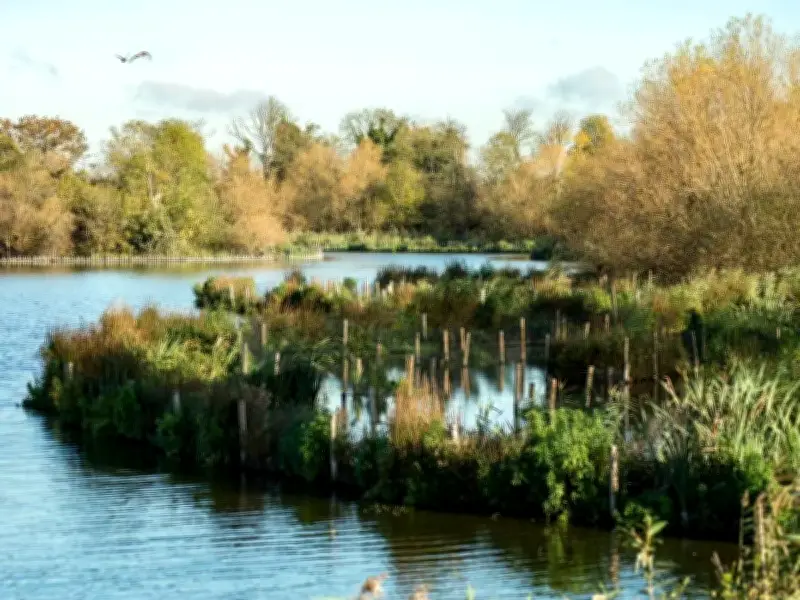
The EA leader highlighted Steart Marshes on the Severn Estuary, which represents a significant functioning wetland that safeguards 100,000 properties from flooding while serving as habitat for hundreds of thousands of plant and animal species. In total, the EA rejuvenated 1,100 hectares of natural habitat throughout the year 2021-22.




