Australia's Datacentre Expansion: A Growing Challenge for Resources
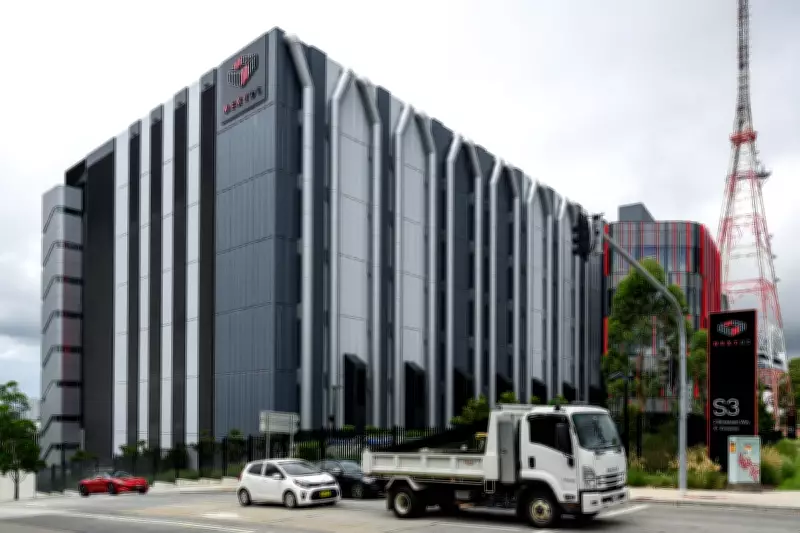
Australia is currently home to 260 operational datacentres, with the majority concentrated in Sydney and Melbourne, and dozens more facilities in the pipeline. This surge in digital infrastructure is largely fuelled by the rapid adoption of artificial intelligence, transforming how data is processed and stored. As technology companies advocate for Australia to become a global hub for data processing, the environmental and economic impacts are coming under intense scrutiny.
Energy Demands and Policy Responses
Datacentres are significant energy consumers, currently drawing approximately 2% of electricity from the national grid. According to the Australian Energy Market Operator (AEMO), this share could triple within five years. By 2030, datacentre energy demands are forecast to exceed the power used by the nation's entire fleet of electric vehicles, and by 2035, consumption could reach 21.4 terawatt hours, nearly matching the annual usage of Australia's four aluminium smelters.
Energy Minister Chris Bowen has acknowledged that datacentres are big energy users, with plans to address this in a forthcoming AI and datacentre strategy. He emphasised that new datacentres should build renewable energy capacity to accompany their operations. In the United States, former President Donald Trump proposed ratepayer protection pledges, requiring tech companies to meet their own power needs to prevent utility bill increases for households.

A coalition of energy and environment groups, including the Clean Energy Council and Australian Conservation Foundation, has proposed public interest principles for datacentres. These principles advocate for investments in new renewable energy and responsible water use. Adam Bandt, chief executive of the Australian Conservation Foundation, stated that big tech corporations should be compelled to build renewables and water recycling facilities to power their datacentres, ensuring they do not drain national resources.
Impact on Electricity Prices and Emissions
Dr Dylan McConnell, an energy systems researcher at the University of New South Wales, warns that datacentre growth will inevitably impact electricity costs. Building a larger energy system to serve this increased load will utilise more expensive resources, driving up wholesale prices. A report by Baringa consultants for the Clean Energy Finance Corporation projects that by 2035, datacentre expansion could increase wholesale electricity prices by 26% in New South Wales and 23% in Victoria, primarily due to reliance on costly gas peaking generation.
This reliance not only escalates prices but could also lead to a 14% increase in grid emissions across the national electricity market. While renewable energy is growing in Australia, McConnell cautions that the pace may not be sufficient to meet emissions targets. If demand outpaces renewable energy development, new datacentre load could be powered by coal rather than displacing it, slowing emissions reductions post-2035.
Julia Hinwood, head of infrastructure at the Clean Energy Finance Corporation, suggests that early investment in renewable energy and storage capacity can mitigate these risks. Industry group Data Centres Australia reports that power purchase agreements and onsite solar account for about 70% of the sector's energy consumption, with CEO Belinda Dennett highlighting the industry as one of the largest investors in renewable energy.
Water Supply Concerns and Solutions
Water consumption is another critical issue, largely related to cooling systems for servers. Data Centres Australia describes the industry as modest water users, pointing to opportunities for reducing reliance on drinking water through closed-loop cooling systems and recycled water. However, water authorities anticipate significant demand on drinking water supplies.
In Sydney alone, datacentre water demand is forecast to reach 250 megalitres per day by 2035, roughly equivalent to Canberra's total drinking water consumption. Melbourne Water notes that development applications for new hyperscale datacentres already exceed the water demand for nearly all of the state's top 30 business customers combined. These projections underscore the need for sustainable water management practices in the datacentre sector.

Global Context and Future Outlook
The challenges posed by datacentre growth are not unique to Australia. Globally, datacentre power demand is increasing four times faster than all other sectors, according to the International Energy Agency. Hyperscale facilities, which can consume as much electricity annually as 100,000 households, are becoming more prevalent. An inquiry in New South Wales will examine the social, environmental, and economic effects of this datacentre boom, addressing key policy questions such as whether datacentres should be 100% renewable and how to account for timing of electricity use.
As Australia navigates this expansion, balancing technological advancement with resource sustainability remains paramount. The datacentre industry's growth presents both opportunities for economic development and significant challenges for energy, water, and emissions management, requiring coordinated policy and investment strategies to ensure a sustainable future.