Residents of Gospić, a town in the mountainous Lika region of central Croatia, have formed a movement called “Gospić is our home” to protest against illegal waste dumping that has blighted their community for years.
Between 2022 and 2024, waste was illegally abandoned at several sites in the town. At one of the biggest, just 50 metres from campaigner Željka Šikić’s home, an estimated 35,000 tonnes of waste, some of it hazardous, was dumped and buried.
Lorries carrying waste would pass her front door at night and enter a nearby industrial site. The activity went largely unnoticed by local authorities and police, but residents started taking turns to stay up and photograph the vehicles coming and going.
Health fears and contamination
“I don’t think it should be our job to stay awake all night to see what’s going on,” Šikić says.
A recent report from the Croatian Institute of Public Health revealed Pfas “forever chemicals” had been detected in groundwater samples nearby. Elevated concentrations of copper and lead were also detected in the soil. Pfas are a group of thousands of synthetic chemicals linked to serious health conditions, including several types of cancer, and are known as “forever chemicals” because of how long they persist in the environment.
Despite assurances that their drinking water is safe, a lack of trust means many residents have resorted to buying bottled water. “I’m really scared,” Šikić says. “I would like to move house but I don’t know who would pay for the house on the first road next to the waste. I feel betrayed.”
Arrests and national movement
In February 2025, police arrested 13 people on suspicion of being part of an environmental criminal network involved in dumping the waste. The main suspects, two Croatian nationals, were considered high-value targets by Europol and were believed to have orchestrated the illegal import of hazardous waste from Italy, Slovenia and Germany. It is thought the criminals generated upwards of €4m (£3.4m) in profit.
Residents had hoped the arrests would mean the site was shut down and cleaned up, but 18 months later it is still there. Frustrated, Šikić and 16 other residents formed the “Gospić is our home” movement.
Ivana Rukavina Sarić, another member of the campaign group, says: “We called people from different professional backgrounds because we knew from the beginning that this would be highly complicated and would need a multi-disciplinary approach.”
National and global problem
After sharing information online and with Croatian media, the campaign turned national, with the group now getting calls daily from other affected communities. “There are so many waste hotspots in the whole of Croatia and so many people facing similar problems. The problem we have in Gospić is the drop of liquid that overflows the glass,” Sarić says. “It’s become a national, even global problem.”
Similar dumping has been reported in several other Croatian towns, but the issue extends beyond national borders. The United Nations estimates that 15% to 30% of EU waste shipments are illegal, and a recent investigation by the Guardian uncovered irrigation canals contaminated with microplastics in Turkey, a major destination for UK waste exports.
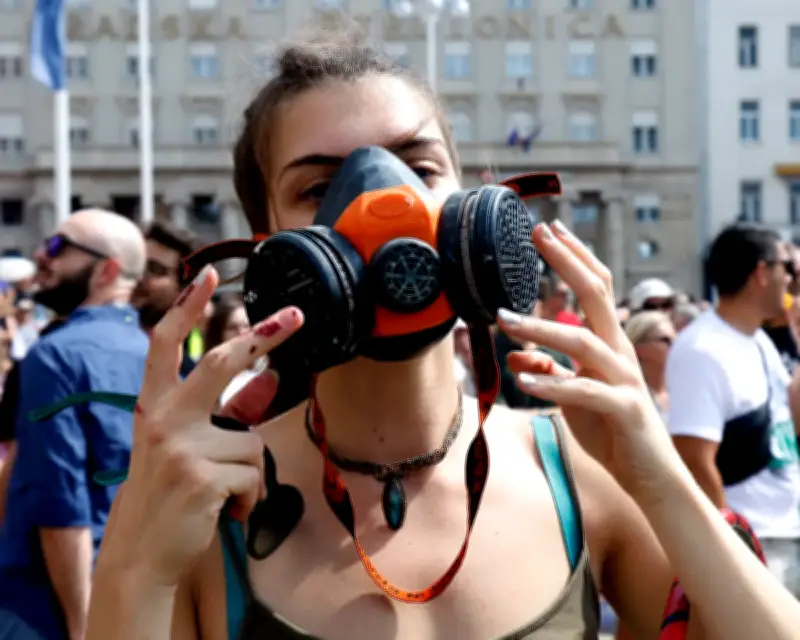
Anger at the scale of the problem prompted tens of thousands of people from across Croatia to descend on the capital on 5 September. It is thought there were upwards of 40,000 people marching through Zagreb. “The capital was full,” Sarić says.
The group is demanding a comprehensive remediation of the site and the urgent removal of the buried waste. It also wants all known waste hotspots in Croatia to be included in a national waste strategy. The government has opened two public procurement procedures for the removal, disposal or recovery of the waste.
With the waste still there four years since the illegal activity began, and concerns mounting over potential health and environmental impacts, the group plans to head to Brussels to protest at the European parliament. “We’ve lost so much time, we don’t have time for more promises,” Sarić says. “We want clear information, clear deadlines and clear action.”