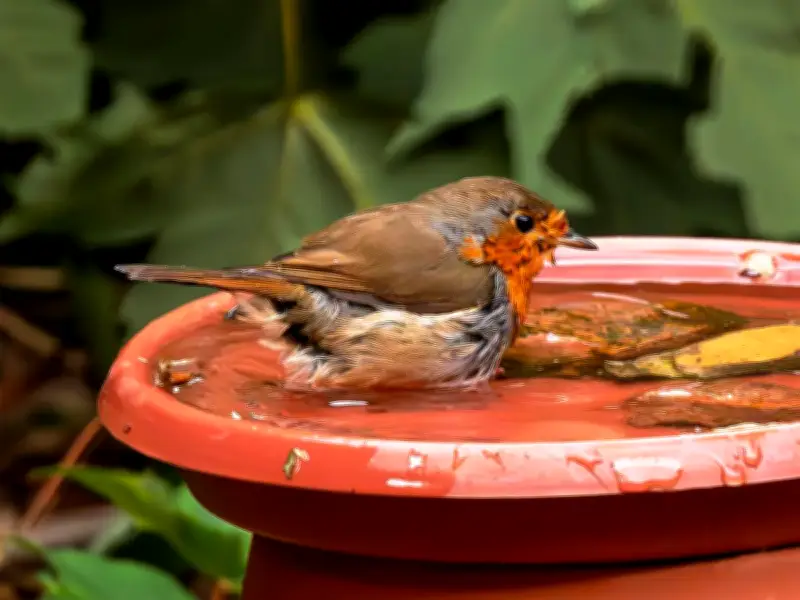
Gardeners can attract robins more effectively by placing a simple household item—copper pennies—into bird baths, as copper naturally discourages algae growth and keeps water fresher for longer.
Robins are among the few garden birds that keep singing through the colder months, adding colour to autumn gardens. Fresh water in bird baths is one of the simplest ways to entice them, as they rely on it for drinking and bathing. Even a garden abundant with food may struggle to retain robins for extended periods without a dependable water source.
Why bird baths get dirty
Bird baths do not stay clean for long, especially during the transition from summer to autumn. Algae, fallen leaves and bird droppings quickly contaminate the water. A grimy bird bath can become off-putting to both gardeners and wildlife, often turning murky, foul-smelling or slimy.
Professional cleaner Claire, who goes by @sisterpledgecleans on Instagram and TikTok, shared a "secret garden hack" that keeps bird bath water "fresher for longer". She instructed: "Drop a couple of copper coins into your bird bath to help keep algae from taking over. Copper naturally discourages algae growth, so it helps keep the water fresher for longer and clearer between cleans."
Which coins work best
Claire highlighted an "important" point: use UK 1p or 2p coins dated 1992 or earlier, as those are bronze and about 97% copper, which is why "they work best". She cautioned: "Newer coins are mostly steel with a copper coating." For those without copper coins, a small piece of copper wire "works exactly the same", she stated.
The copper in pennies is thought to have mild antimicrobial properties that help minimise algae and bacterial growth in standing water. Copper in pre-1992 pennies triggers a natural chemical reaction that prevents algae formation—the slimy layer responsible for the sticky buildup commonly seen on bird baths.
Expert explanation and cleaning tips
Bird lover and owner of The Rocky Safari, Rocky Trifari, told Home and Gardens: "Copper is a natural biocide with properties that interfere with the biological processes algae and other microorganisms rely on. When copper ions leach into the water, they promote an environment that discourages the growth of green algae, one of the main causes of that slimy, dirty water found in bird baths." While copper coins will not entirely prevent algae, they can help keep it in check when the correct coins are used and positioned appropriately.
It is advisable to clean copper pennies thoroughly before placing them in a bird bath, and the same applies to the bird bath itself. To clean pennies, combine a small amount of white vinegar, salt and lemon juice, then scrub with an old toothbrush. Alternatively, lemon juice mixed with a little bicarbonate of soda works equally well. After scrubbing away visible grime and the penny looks reasonably shiny, rinse thoroughly and leave to dry. Only place the penny in the bird bath once a decent shine is visible on its surface.