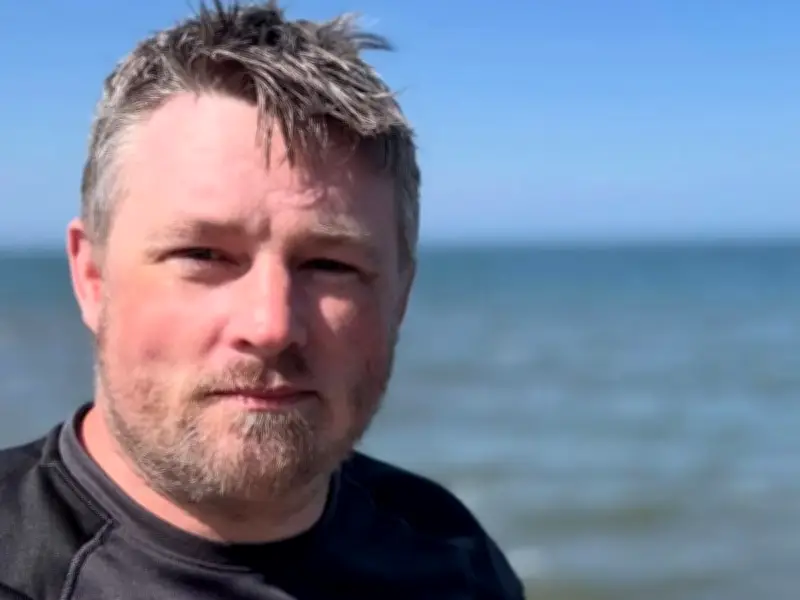
Mike Chappell, a father-of-six from Manchester, keeps 120 days' worth of food and water in his home. Known online as the UK Urban Prepper, he believes everyone should prepare for realistic threats, not just doomsday scenarios.
Chappell works as a web developer and runs a YouTube channel about Sunderland AFC. He says he is "a regular working man with a family just trying to get by" who decided to "take my safety into my own hands rather than relying on somebody else."
Prepping for real-world threats
Prepping, or survivalism, is a global movement of people preparing for societal collapse. Chappell says the reality is more down-to-earth than images of armed loners in bunkers. His concerns include power outages, cyber attacks, floods, crop failures and fuel shortages.
Recent events have highlighted vulnerabilities. This summer's heatwave and wildfires scorched hundreds of acres of moorland at Dovestones. In August, the threat of wildfires led the government to send emergency text alarms to millions of phones. Flooding has also hit communities, and the closure of the Straits of Hormuz amid the US attack on Iran showed how exposed the UK's supply chain is.
Government advice and Chappell's stores
At last month's Labour Party conference, Home Secretary Wes Streeting called for a "whole society approach" to strengthen national resilience, urging people to remain "alert not alarmed." The Government also released a list of supplies for an emergency kit.
Chappell's understairs pantry holds hundreds of tins and packets of food, including Fray Bentos pies, sausages, beans and his favourite canned haggis. He also stores hundreds of litres of bottled water, batteries, torches, radios, medical supplies, tools and camping stoves.
He welcomes the Government's push but says it doesn't go far enough: "They're not giving enough advice. Even if they tell you you must have three days worth of food, the wildfires lasted longer than three days. Floods last longer than three days. If, touchwood hopefully never, if the power went out on a massive scale, if you live somewhere rural, it's going to take them 10 days to get power back on."
He adds: "In my opinion, two weeks should be the minimum target for anyone because everything we've seen in our lifetimes, two weeks would have got of us over it."
Return to past norms
Chappell says having 30 days of food was "the norm not very long ago." He grew up in rural Wales, where the nearest supermarket was a 60-mile drive. He also has pre-packed evacuation bags with three days of supplies and camping kit, a precaution he says "everyone should have."
If he had to leave home in a rush, he says: "I'm not standing here protecting my beans with my life. You can have my beans. I'm getting my kids and my family out of dodge." He stresses this isn't about living in the forest: "We're not Rambo. This is to get me to a friend's house in a better place or to get me to potentially a government evacuation centre in a sports hall."
His main concern now is an extreme weather event or food supply disruption caused by Super El Nino. He notes that 50% of food on UK plates is imported. "I see food shortages and extreme weather events as the main focus for me over the next 18 months at least," he says.
Ten years ago, friends and family thought he was "crazy," but after Covid they "started to get it." Now they ask him what they should keep. Chappell attends meet-ups with other preppers and keeps his skills sharp on wild camping trips.
Asked if he secretly hopes for disaster to test his preps, he says: "I want peace. I want to go on holiday with my family. I want to do all those wonderful things. I want my preps to gather dust and never need to be used, but they're there just in case, because I never want my kids to turn around, look me in the eyes, wondering where the next meal's coming from."