Scientists are warning that climate change poses a severe threat to tens of thousands of plant species worldwide, a crisis often overshadowed by the plight of more charismatic animals like polar bears. According to a new study published in the journal Science, between 7% and 16% of the world's plant species could lose at least 90% of their habitat and face extinction within 55 to 75 years. This translates to roughly 35,000 to 50,000 plant species under moderate carbon pollution scenarios, with even greater losses if emissions continue to rise unchecked.
Rapid Warming Drives Extinction Risk
“The warming rate drives the extinction,” said study co-author Xiaoli Dong, an ecologist at the University of California, Davis. Dong and her team used a combination of biological and climate computer models to simulate the future of 18% of the world's plant species in detail, aiming to understand the broader implications for all plants. While plants can shift to cooler climates through wind, water, or animal dispersal, the simulations revealed that even rapid movement cannot significantly reduce extinction rates. “It is not because they are not moving fast enough,” Dong explained. “What we found is that it has to do with the loss of habitat.” Climate change alters temperature and rainfall patterns, making once-suitable areas uninhabitable for many species.
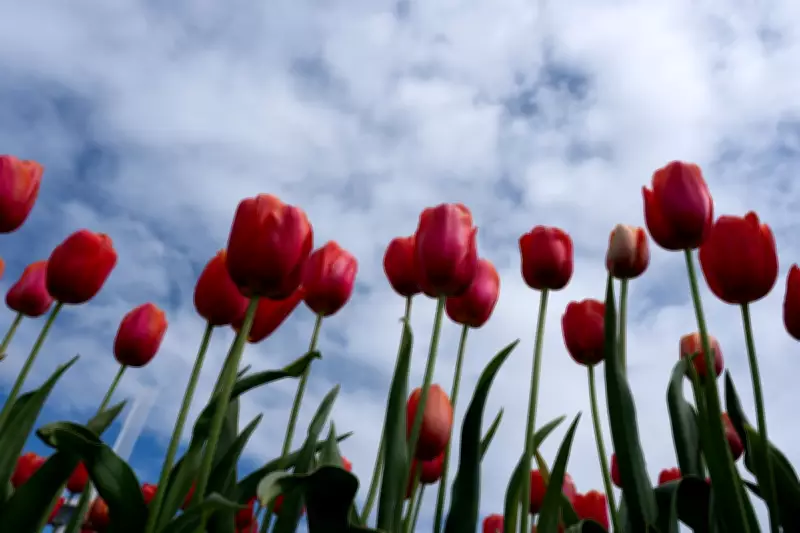
Habitat Disruption: The Case of the Tulip
Dong illustrated the problem using the tulip as an example: a plant that requires specific soil, temperature, and rainfall conditions. Climate change has fragmented these conditions—temperature shifts northward, rainfall patterns move eastward, while the soil remains in place. “The perfect condition required by this tulip has become really small,” she said. This scenario is particularly acute in the Arctic, where temperatures are warming four times faster than the global average, and in Australia, where rainfall changes are more pronounced. The Mediterranean region is also identified as a hotspot for plant extinction risk.

Unique Flowering Plants at Imminent Risk
A second study in the same journal examined the current extinction risk of flowering plants, which include over 335,000 species. Researchers at Kew Gardens in the United Kingdom found that nearly 10,000 flowering plant species are currently in danger of disappearing. These species are evolutionarily ancient and unique, and their loss would eliminate 21% of Earth’s “tree of life.” Among them are peculiar plants like the titan arum, known for its foul smell, and economically valuable species such as the vanilla orchid. Lead author Felix Forest, an evolutionary plant biologist, applied a 20-year-old prioritization system that focuses on saving the most distinctive species. The study did not investigate the causes of extinction risk but highlighted the immense evolutionary history that would be lost.
Evolutionary History at Stake
Forest noted that flowering plants harbour more evolutionary history at risk than almost any other group of organisms, except turtles and tortoises. Unlike species with many close relatives, such as rats, which have a “bushy” evolutionary branch, many flowering plants—like the Ginkgo biloba—have no close relatives and represent hundreds of millions of years of evolution. If they disappear, that unique lineage is gone forever.
Plants Overlooked in Conservation Efforts
Both Dong and Forest emphasised that plant extinctions are often neglected compared to animals. “Humans are generally more interested in fluffy furry things and things with two wings than plants,” Forest said. This imbalance is reflected in conservation funding and public attention. However, the consequences of plant extinction extend beyond biodiversity loss. Chilean biologists Rosa Scherson and Federico Luebert, who reviewed the studies, warned that unstable plant populations can threaten human food security and access to basic materials. “Maintaining the current conditions that support human life requires urgent action,” they wrote.
The two studies together underscore the need for immediate conservation efforts to protect endangered plant species. As climate change accelerates, the window for action is narrowing.