
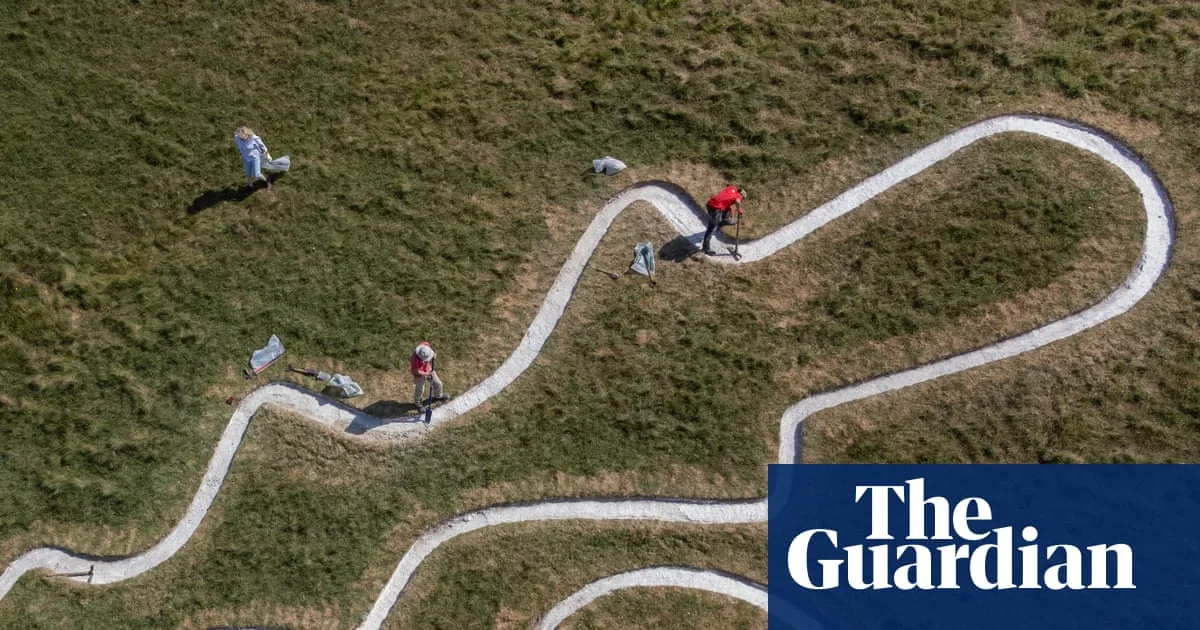
Volunteers have gathered in Dorset to rechalk the ancient Cerne Giant, but the painstaking process is being adapted as warmer, wetter conditions linked to climate change take their toll on the chalk figure. The National Trust, which cares for the site, says algae growth and more intense rainfall are dulling the giant's bright outline and gradually wearing away the chalk.
"We've noticed algae growth starting to dull the giant's bright white outline," said Luke Dawson, a National Trust lead ranger. "Milder winters and wetter summers make perfect growing conditions. We're also seeing more intense rainfall, which can increase water runoff and gradually wear away the chalk." The figure, which stands 55 metres tall, is normally rechalked every seven to ten years, with the last restoration in 2019 prior to the current work.
This year's technique has been altered. Instead of packing in dry chalk, 17 tonnes of chalk are being mixed with water to create a paste. "It's like a putty, which makes it easier to make it stick," Mr Dawson explained. The hot weather has also forced changes, with afternoon shifts cancelled and workers rechalking for only 20 minutes each hour. Gazebos provide shade, and walnut and lemon cake are offered—though chocolate is avoided due to the risk of melting.
The National Trust led the work with help from local volunteers, including a vicar, brewery staff, and schoolchildren. A nationwide fundraising appeal, backed by Stephen Fry, raised £330,000 in 60 days to buy land around the giant, attracting donations from as far afield as Australia, Japan, and Iceland. Some donors joined the rechalking, including Debby van den Berg from the Netherlands and Jane Hanney-Martin from the West Midlands.
The giant's origins remain a mystery, but scientific analysis commissioned in 2021 suggested it was likely created in the late Saxon period, between AD700 and AD1100. Despite the challenges, Mr Dawson said the sight of workers on the hill on a bright spring day was joyful. "It's a beloved figure," he said. "Everyone in the village has a connection with the giant."




