
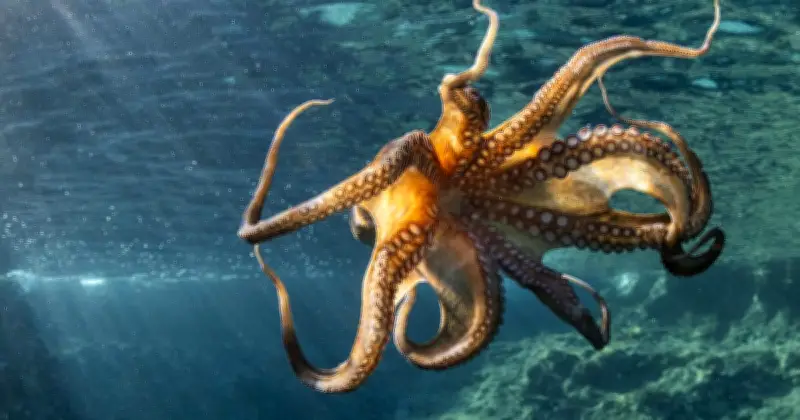
Plans for the first commercial octopus farm have been abandoned after a prolonged campaign against the project. The proposed facility, which would have been the world's first, was to be built by Spanish seafood company Nueva Pescanova at the port of Las Palmas in Gran Canaria.
The farm would have used a slaughter method in which octopuses were submerged alive in an ice slurry kept at -3°C, freezing them to death. This method drew widespread condemnation from scientists, NGOs, and members of the public.
Plans Officially Scrapped
Despite raising over £40 million for the development, the plans were officially scrapped on July 23 following external pressure. The farm would have produced thousands of tonnes of octopus meat annually.
The project was first proposed in 2019 and has faced intense scrutiny since then. Campaigners warned that industrial-scale farming of octopuses would cause severe suffering for the intelligent and sentient creatures.
Reaction from Animal Welfare Groups
World Animal Protection celebrated the news, calling it a "big win for octopuses". David Garrahy, External Affairs Manager for the organisation, said: “Commercial farming of octopus would have been cruel and unsustainable.”
Garrahy added: “We know that octopuses are highly intelligent animals that are capable of problem solving, learning and experiencing pain. They are solitary animals and become aggressive when surrounded by others, so they would especially suffer in farming conditions.”
He also noted that octopuses need to be fed other marine creatures, creating a loop of potential animal suffering and loss of ocean biodiversity, similar to factory farming of pigs and chickens.
Broader Campaign Against Factory Farming
World Animal Protection is continuing to push for the elimination of factory animal farming for all species. The organisation stated that millions of animals still suffer in both land and sea factory farming models, and reported that salmon fish farms are also increasing in production.
A spokesperson for World Animal Protection said: “Our food systems need a transformation to be more humane, ethical and sustainable, to protect animals, people, and the planet.”




