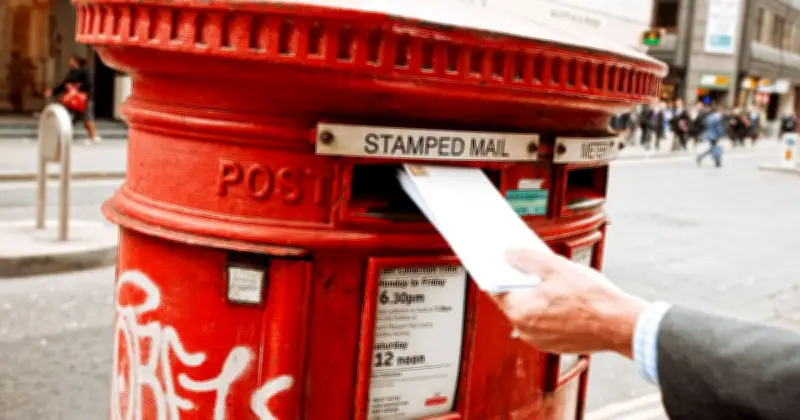
Royal Mail has issued official guidance on how to address envelopes and parcels, advising customers to place the recipient's name and address in the bottom-left corner rather than the centre to minimise potential delivery delays.
The instructions, published on the Royal Mail website ahead of Christmas 2026, come as the service's last recommended posting dates for UK inland services range from Friday, December 18 for 2nd Class to Wednesday, December 23 for Special Delivery Guaranteed.
Official Addressing Tips
On a page titled "How to address your mail – clear addressing tips," Royal Mail states: "The name and address go on the bottom left corner of the front of the envelope or parcel. Use clear and easy to read handwriting (or font if you are printing the address). Use a pen or ink that is clear against the colour of the envelope or parcel."
The guidance continues: "Left align the text (no centred or 'stepped' lines). No commas or full stops. Leave a generous margin around the address. Place the correct postage on the top right."
Royal Mail also advises against including telephone numbers or email addresses to protect people's privacy.
Why Placement Matters
Placing the address in the bottom-left corner significantly reduces delivery delays because modern postal sorting machinery is configured to scan that specific area. When text is left-aligned within this zone, high-speed optical character recognition (OCR) scanners can instantly identify and process the mail.
Positioning the address centrally or on the right may cause automated systems to overlook it, diverting the letter from the rapid automated process into slower manual handling. Keeping the top-right corner free for stamps and postmarks ensures postage cancellation marks do not blur or cover the delivery address.
Key Rules for Swift Delivery
- Position the recipient's name and address in the bottom-left corner.
- Left-align all lines; avoid centring or "stepped" formats.
- Avoid using commas or full stops.
- Place the stamp or postage mark in the top-right corner.
- Provide a return address to guarantee the item can be returned if delivery is impossible.
Senders are advised to supply a return address alongside the recipient's information. The guidance states: "If for any reason your item can't be delivered, we can send it back to you. Write the words 'return address' on the back of the envelope and underneath that, the actual return address."
Regarding insufficient postage, Royal Mail clarifies: "If you send a letter without the correct postage we may still attempt to deliver it, but the recipient may be asked to pay the missing amount - along with a surcharge. If the recipient doesn't pay, the item is returned to sender (if a return address is included) or held for a limited time."