
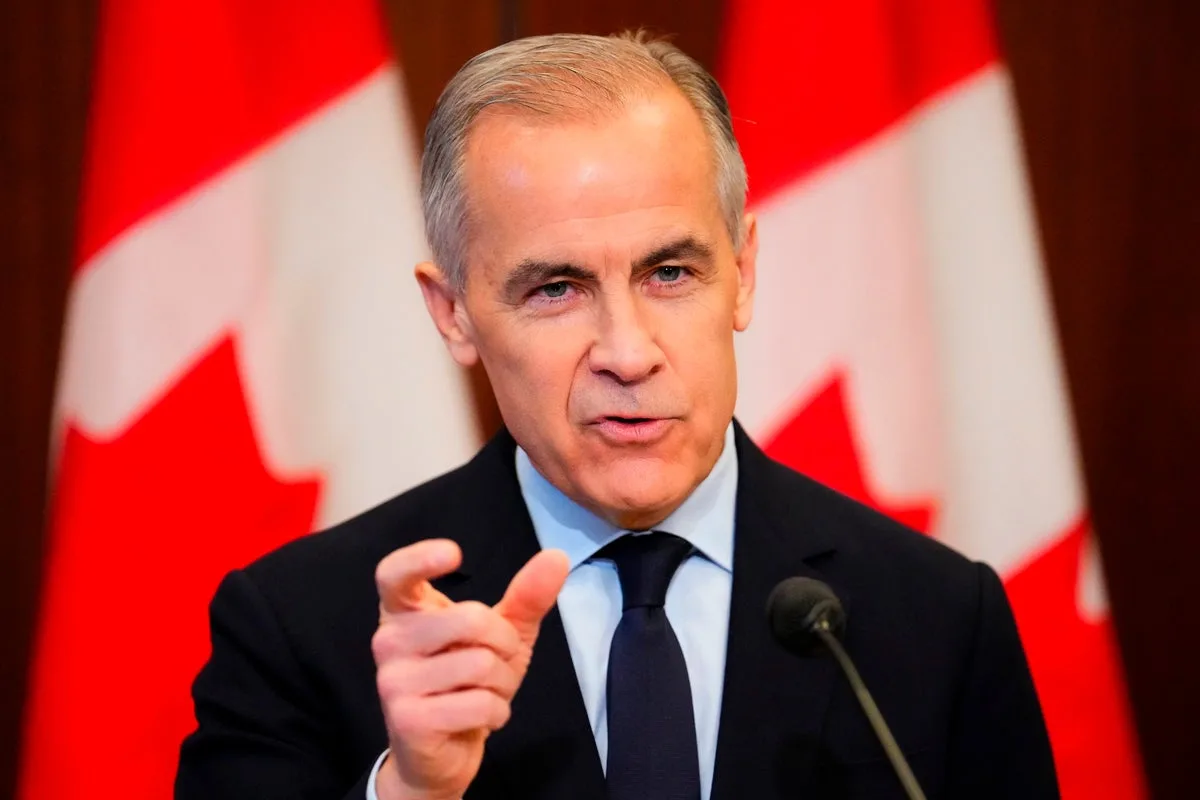
Canadian Prime Minister Mark Carney on Thursday unveiled a clean electricity strategy aimed at doubling the country's electricity grid by 2050 while reducing energy costs for most households. The plan comes amid challenges including US tariffs, higher energy costs linked to the war with Iran, and climate change impacts.
“When the world fundamentally changes, we must respond with new approaches,” Carney said at a news conference in Ottawa. The strategy allows natural gas a larger role in grid expansion and is expected to cost over $1 trillion Canadian ($730 billion). It includes partnerships with Indigenous communities and a mix of hydro, nuclear, wind, solar, gas, carbon capture, and geothermal energy.
“The path to affordability is electrification. The path to competitiveness is electrification. The path to net zero is electricity,” Carney stated. The government forecasts 130,000 new workers will be needed to double the grid's capacity.
The strategy marks a shift from previous clean electricity regulations under former Prime Minister Justin Trudeau, which set limits on fossil fuel emissions from electricity generation. Electricity accounts for about 7% of Canada's total greenhouse emissions, a figure that has fallen significantly in the last 15 years as coal use was phased out.
The plan does not specify total government spending but mentions tax credits and energy-saving retrofits for up to one million households. The Canadian Climate Institute called the strategy “pointing in the right direction” but noted several ambiguous issues. Executive vice president Dale Beugin said success depends on how swiftly the government expands clean power generation, transmission, and electrification.




