
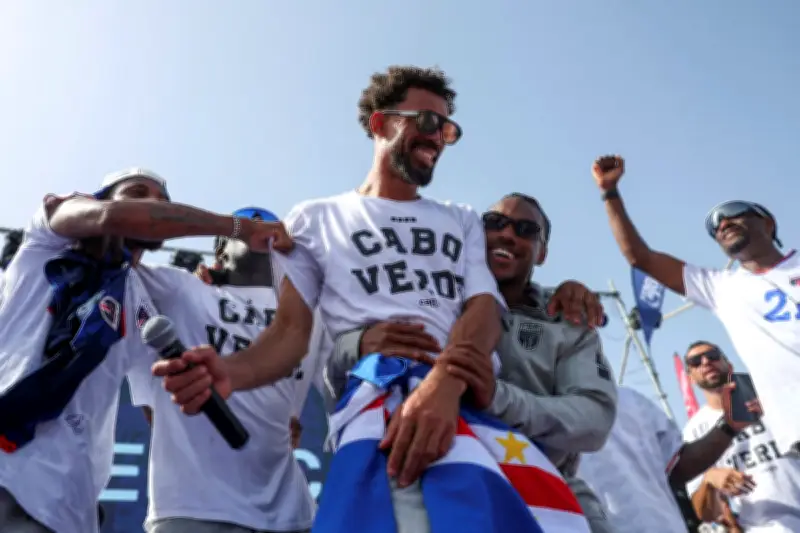
Cabo Verde became the smallest country to reach the World Cup knockout stages in 2024, but beneath the football triumph lies a complex struggle with African identity rooted in centuries of Portuguese colonialism and the transatlantic slave trade.
Historic World Cup Run and African Pride
Coach Bubista expressed pride in representing both the island and Africa before the round-of-32 match against defending champions Argentina, which Cabo Verde lost 1-0 after extra time. The team's performance inspired solidarity among Africans worldwide.
Colonial Legacy and Identity Crisis
Back home, many Cabo Verdeans identify as Portuguese rather than African, due to skin colour and the belief that the islands were uninhabited before Europeans arrived. António Tavares, a choreographer and cultural centre director in Mindelo, noted that deep-rooted colourism persists as a legacy of over 500 years of Portuguese rule, during which Cabo Verde was a major slave trading hub.
Nardi Sousa, a sociology professor at the University of Santiago, explained that the Portuguese instituted a hierarchy based on skin colour and labour roles, still visible today. He cited Luso-Tropicalism, a philosophy claiming Portuguese colonisers were more humane due to race-mixing, as shaping the national mentality.
Historical Sites and Memory Erasure
At Cidade Velha, a UNESCO World Heritage site on Santiago Island, thousands of enslaved Africans were baptised before being sold. Sousa stated, "Cidade Velha has a very bad memory because it’s here that the African starts to be dehumanised and to lose its identity." He added that Cabo Verde was "a laboratory for the Latinisation of Africans." Tavares questioned why he carries only a Portuguese name.
During the Salazar dictatorship, the Tarrafal concentration camp on Santiago held communist prisoners under inhumane conditions. The camp's doctor reportedly said, "I’m not here to cure, but to sign death certificates." The site now houses the Resistance Museum, seeking UNESCO recognition.
Reparations Debate and Decolonisation
Culture Minister Augusto Jorge de Albuquerque Veiga said Cabo Verde aligns with the African Union's push for reparations, possibly including diplomatic pressure or legal action. He stated, "The past of slavery is something that we’ve been dealing with for more than 500 years… I am in favour of reparations for what was taken and stolen from the African continent."
Critics argue Cabo Verdeans must first reconnect with their roots. Reports of Black Africans, especially Nigerians and Senegalese, being profiled at airports persist. Tavares called this a contradiction to the pan-Africanist ideals of independence leader Amílcar Cabral.
The education curriculum also faces criticism for teaching European history with little detail on colonial crimes. Tavares urged: "We need to decolonise our soul… The best way to decolonise is to start educating people on our history… there’s a need for us to recover forgotten memories, stolen memories."
President José Maria Neves noted in 2023 that the reparations debate is slowing due to the rise of the rightwing in Europe. That year, Portugal and Cabo Verde agreed a €12m debt-for-climate swap, which some see as a soft form of reparations.




