A government minister has warned Brits to "store of a bit of food" and prepare for possible national emergencies as the UN warns of an incoming "supersized" El Nino.
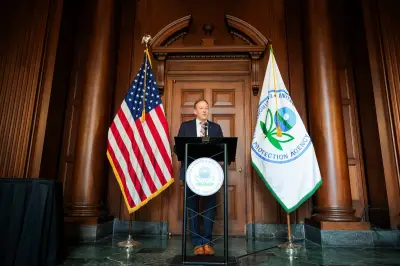
The public was urged to have a supply of water and food that would last a few days in the event of a climate disaster. Environment Secretary Dame Angela Eagle said the high chance the UK could experience a rough winter after battling five heatwaves this summer alone. The minister added that people are about to experience "probably the largest El Nino that has ever been seen" and warned "we need to take it seriously".
This comes after UN head António Guterres said the planet was in "uncharted waters" and warned: "El Nino is being supersized before our eyes."

Minister urges better preparation
The Environment Secretary's strong urged Brits to prepare for potential environmental emergencies that could hit the UK amid the brewing weather phenomena.
Dame Eagle, speaking to the Guardian, said: "We're about to experience probably the largest El Nino that has ever been seen, and that will lead to drier summers, wetter winters, with more extreme storms in this country. It will do a lot more damage in Asia with flooding, and therefore I think that we need to take it seriously.
"If you've got a store of a bit of food that can keep you going for a while before the emergency services can get to you, you're going to be a lot better off than if you haven't. So some of it is that kind of preparation for just being a bit more resilient."
UK must adapt to changing climate
Dame Eagle, speaking from Havant Thicket - set to be the UK's first new reservoir since 1992, added that the UK needed to do its "own adaptations" in the face of a changing climate.
El Nino is declared when sea temperatures in the tropical eastern Pacific rise are 0.5C or more above average. This weather pattern, which happens around every 2-7 years, impacts global rainfall patterns and average temperatures.
Wind that usually blows across the east to the west of the Pacific Ocean can weaken or stop, which allows warm water to move east. This heat can then be released from the ocean and into the atmosphere, leading a temperature rise of 0.5C or more.
Global impacts already visible
The heat from El Nino has already impacted regions with the monsoon in Indian seeing less rain than average this year and fires burning in parts of Indonesia since mid-July.
The brewing El Nino is expected to last into 2027 and with the impact of human-induced climate change next year could "very likely" be the hottest on record, the Met Office previously said.
UN Secretary General Guterres called for urgent action to be taken, saying: "El Nino is being supersized before our eyes. The science leaves no room for doubt: the planet is in uncharted waters, and those waters are heating up. The world is in the danger zone of extreme weather. The race now is between rising risks and our commitment to take climate action and protect people. We must win that race."
Professor Adam Scaife, head of long-range forecasting at the Met Office, described this year's El Nino as "an unprecedented event". He said: "I have never seen an El Nino signal this intense in our forecasts... if the forecast is accurate, and other forecast systems show similar extreme values, then 2026 will far exceed our recent experience of El Nino and its worldwide climate influences."