Britain's Rain Deluge Continues: 41 Days and Counting with More Wet Weather Ahead
The United Kingdom is enduring a record-breaking run of soggy weather that shows no immediate signs of abating, with forecasters warning that many areas face at least another ten days of persistent rainfall. This relentless meteorological pattern has created what the Met Office describes as "winter stuck on repeat," with every single day of 2026 so far registering as wet across substantial portions of the country.
No End in Sight for the Relentless Downpours
Met Office senior operational meteorologist Simon Partridge delivered the sobering forecast that "there is currently no sign of any prolonged dry weather for the next seven to ten days." He emphasized the heightened vulnerability across many regions, stating that "with so much rain having already fallen over parts of the UK this year, many areas are sensitive to further rainfall. Therefore, further rainfall warnings are likely as the week progresses."
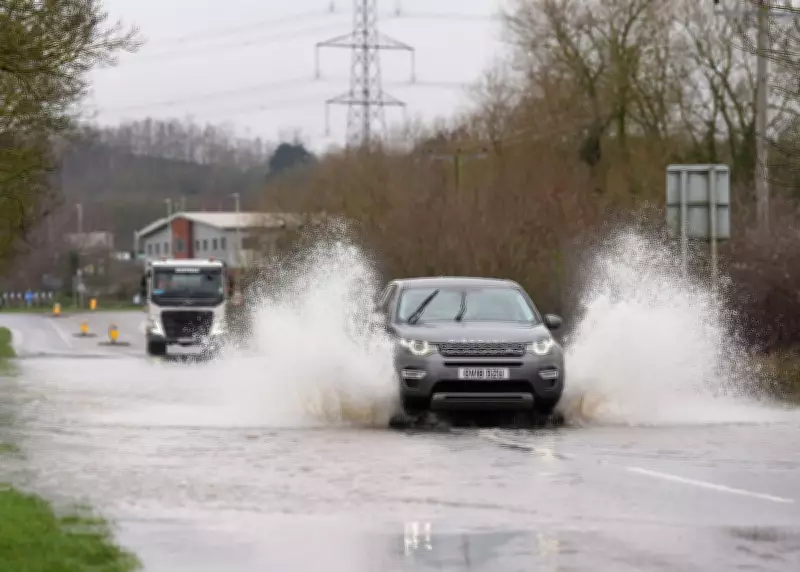
The Environment Agency has already issued more than one hundred flood warnings, while the Met Office maintains yellow rain alerts for multiple regions. The South West and Scotland have borne the brunt of the inclement conditions, though another substantial band of heavy precipitation is forecast to sweep across much of the remainder of the nation.

Record-Breaking Rainfall Statistics
The sheer scale of this year's precipitation has been extraordinary:
- Cornwall and County Down in Ireland both recorded their wettest January on record
- Northern Ireland endured its wettest January in 149 years
- Twenty-six weather stations across the UK established new monthly rainfall records
- Several daily records were shattered, including Plymouth's wettest January day in 104 years
- England has already surpassed 111% of its average winter rainfall
- Wales stands at 94% of its seasonal norm, with Northern Ireland at 101%
Particularly saturated locations include North Wyke in Devon, Cardinham in Cornwall, and Astwood Bank in Worcestershire, each of which has logged forty consecutive wet days stretching from December 31st through February 8th. Meanwhile, Aberdeen residents have endured the bleak distinction of not seeing a single minute of sunshine for two weeks and counting—the longest such period since records began in 1957.
Meteorological Drivers Behind the Deluge
According to Met Office chief forecaster Neil Armstrong, this relentless sequence of mizzle, drizzle, and downpours has been "driven by a strong, south-shifted jet stream steering low pressure systems directly towards the UK." He explained that "cold plunges of air across North America have strengthened the temperature gradient across the northwest Atlantic, energising the jet, while a blocking high over northern Europe has prevented weather fronts from clearing, causing them to stall over the UK."
The resulting atmospheric configuration has produced continuous waves of rain, accompanied by strong winds and hill snow in parts of Scotland. While meteorologist Aiden McGivern offered a glimmer of hope that "something a little less wet" might arrive later in the week, deputy chief forecaster Steven Keates cautioned that any reprieve would likely be short-lived, with Atlantic weather fronts poised to return from the west by the weekend's conclusion.
Environmental and Ecological Consequences
Beyond the obvious human inconveniences of flood risks, travel disruption, and agricultural challenges, the unusually wet weather presents significant threats to Britain's wildlife. Experts at the Wildlife Trusts warn that saturated farmland is leaching pollutants into already environmentally-compromised waterways, creating cascading ecological impacts.
Eleanor Johnston, climate change manager at The Wildlife Trusts, explained that "heavy rainfall can push more pollutants into our waterways and across fields, impacting delicate ecosystems, while water voles, kingfishers and other wildlife may find their riverbank homes flooded out or washed away." This habitat destruction can lead to the loss of eggs and young animals, creating ripple effects throughout the food chain that ultimately affect predators like owls and larger mammals.

Additionally, flooding exacerbates the spread of invasive non-native species such as Himalayan balsam and signal crayfish by dispersing seeds and organisms downstream. The organisation advocates for nature-based solutions including bog, wetland, and peatland restoration to enhance water retention in landscapes, thereby reducing flood impacts while providing crucial habitat for species like curlew, golden plover, and green hairstreak butterflies.
Climate Context and Future Implications
This exceptional weather pattern occurs against the backdrop of climate change, with forecasters noting that warmer atmospheric conditions can hold more moisture, increasing the likelihood of wetter weather extremes. The current deluge serves as a potent reminder of the UK's vulnerability to shifting weather patterns and the urgent need for both adaptation strategies and mitigation efforts to address underlying climate drivers.