
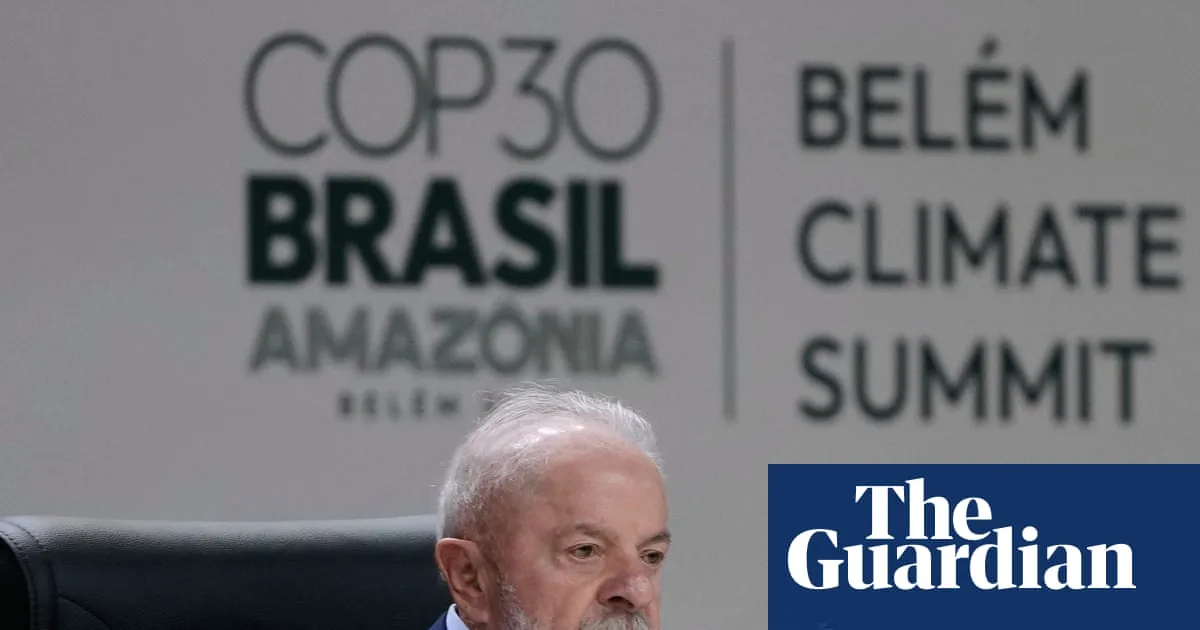
Brazil’s president, Luiz Inácio Lula da Silva, has welcomed world leaders to Belém for the first climate summit in the Amazon, where conservationists hope he can champion the rainforest and its people. However, with a divided administration, a hostile Congress, and 20th-century developmentalist instincts, Lula faces a balancing act in advocating for nature protection and emissions reduction.
At the summit’s opening, Lula stated that his priority is social development, but humanity must make an energy transition and halt forest loss. He acknowledged difficulties and contradictions, calling for roadmaps to reverse deforestation, overcome fossil fuel dependence, and mobilise necessary resources.
Recent months have shown stark contradictions: the government announced impressive progress in reducing deforestation while pushing projects that open the Amazon to extractivism. Forest clearance in the Brazilian Amazon fell by 50% over Lula’s third term, with the smallest area cleared in 11 years, thanks to environment minister Marina Silva’s robust measures against land invasions, illegal logging, and wildcat mining. Brazil’s emissions fell by 16.7%, likely the steepest fall among G20 economies.
Lula used these gains to pitch the Tropical Forest Forever Facility, aiming to raise $125bn for forest protection. So far, it has raised about $5.5bn, with investments from Norway, Brazil, Indonesia, Portugal, and the Netherlands. The money is urgently needed to prevent the Amazon from reaching a tipping point where it degrades into savannah, losing its climate stabilisation and water transport functions.
Senior scientists warn that degradation is accelerating in areas like Mato Grosso and Pará, driven by soy plantations, beef production, fires, and mercury contamination from gold mining. Earth system scientist Antonio Donato Nobre said the forest shows signs of breakdown, with severe droughts, temperature rises up to 7°C in cleared areas, and accelerating degradation. He called the summit an opportunity to put nature at the heart of climate solutions but warned of disaster if leaders pay only lip service.
Lula relies on support from agribusiness and mining sectors to maintain power. “Ruralista” politicians dominate Congress and several ministries, pushing an extractivist agenda that conflicts with forest conservation. This lobby is now the driving force in Brazilian politics, complicating Lula’s balancing act between social development and environmental protection.




