Australia recorded its second hottest September on record last month, as global heating and a strengthening El Niño combined to break a string of heat records around the country.
Bureau of Meteorology data showed the minimum night-time temperatures across the continent were also the hottest for any September, on a record that goes back to 1910. Averaged temperatures ranked in the top five warmest Septembers for every state, and the sixth hottest for the Northern Territory.
Alpine areas break records
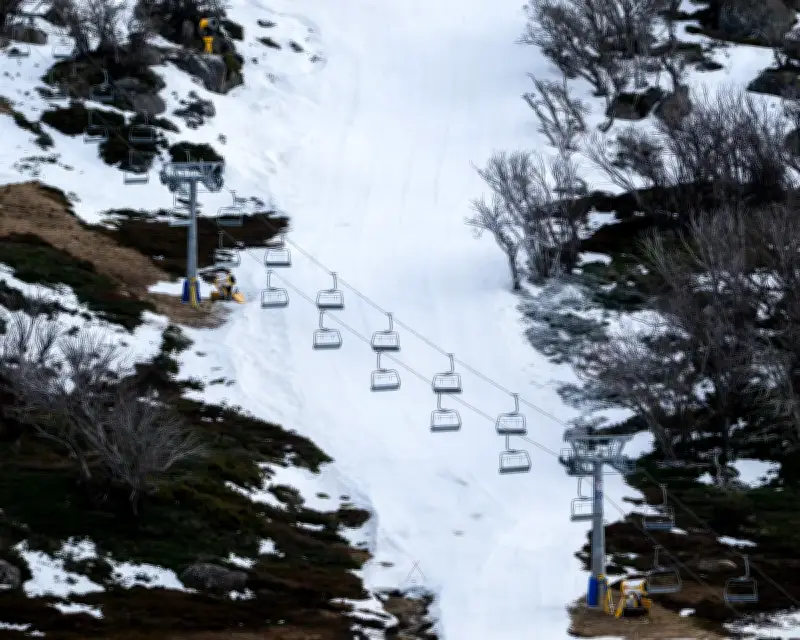
Alpine areas also broke temperature records, and in Kosciuszko national park snow depth fell to zero in September for the first time since monitoring started in 1954.
“There’s only one clear driver of this and that’s climate change,” said Dr Linden Ashcroft, a climate scientist at the University of Melbourne.
“This is also a clear example of seasonal creep where winter is ending earlier and spring is starting sooner.”
Temperature anomalies across the continent
Across the continent, average temperatures for September were 2.71C above the long-term 1961 to 1990 average. Minimum temperatures were 2.52C above average for the month, just beating the previous mark of 2.51C set in 2023.
The bureau’s data showed Australia has not experienced a September with below-average mean temperatures since 2004.
Global heating has warmed the continent by more than 1.5C since country-wide records began in 1910.
Rainfall and regional records
All states and territories had below average rainfall for September except for Western Australia, which had its second wettest September on record and the wettest September since 1904. In NSW, 45 locations recorded their warmest Septembers on record.
Dr Simon Grainger, a senior climatologist at the bureau, said: “It was pretty much just warm everywhere.
“There were persistent high-pressure systems over south-east Australia, and that kept the days quite warm and meant the days were quite dry. It was the fourth driest September on record for New South Wales and the sixth driest for Victoria.
“It’s unusual to see this persistent lack of cold days.”
Alongside global warming, Grainger said the El Niño climate system that is still intensifying in the tropical Pacific – forecast to be the strongest ever recorded – had likely contributed to the heat and rainfall patterns seen in September.
Ski resorts affected
Several alpine weather stations – where many ski resorts closed early after a warm and rainy winter – also set records in September.
The bureau said data from Snowy Hydro’s monitoring gauge at Spencers Creek in Kosciuszko national park showed snow depth had fallen to zero during September – the first time this had happened in any September since records started in 1954.
At Thredbo, where temperatures measurements go back 59 years, the average night-time temperature was 0.1C – the first time the daily minimum for September had averaged above freezing.
The town also saw its hottest September day on record at 16C, about 1C over the previous record set in 2001.
In Victoria’s alpine regions, maximum temperatures across the month in Mount Buller, Falls Creek and Mount Hotham were all the hottest on record.