
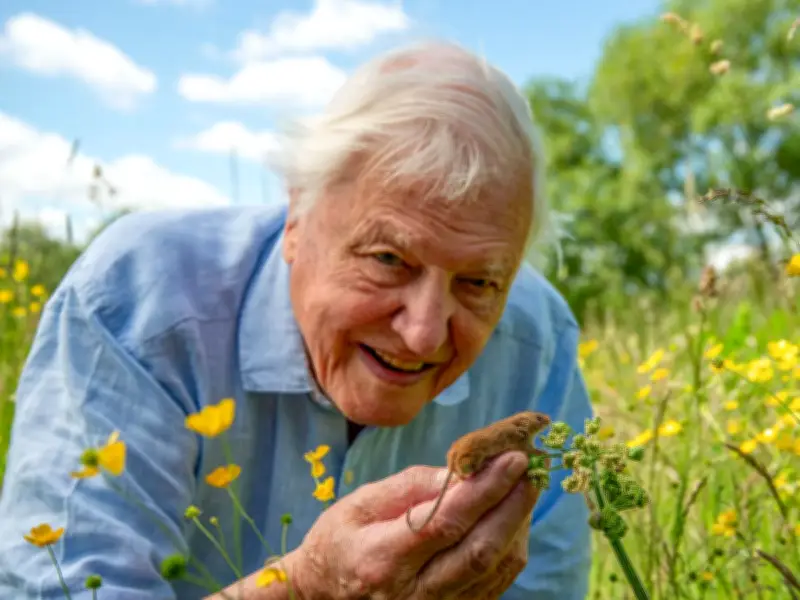
When the guidance comes from the legendary Sir David Attenborough, you can be certain it's advice of the highest calibre. As a trailblazing naturalist for more than 70 years, the BBC icon has been devoted to wildlife, and offering us methods to safeguard it, for generations.
Attenborough's Secret Gardens Series
In Sir David Attenborough's most recent BBC1 series, Secret Gardens, broadcast on April 5, 2026, as part of the naturalist's 100th birthday celebrations, he championed an essential gardening activity. This task allows keen gardeners to protect wildlife in their gardens, transforming them into sanctuaries for all creatures.
In the series, the iconic broadcaster said: "Across the British Isles, there are magical places, our gardens. Each is home to a cast of remarkable animals." Emphasising the importance of gardens, he added: "Some British gardens are almost as diverse as tropical rainforests. Our gardens cover a greater area than all of our national nature reserves combined."
Add a Mini Pond in Your Garden
Water is the lifeblood of everything, and its availability impacts all animals. While the Oxfordshire episode showcased a riverside garden teeming with wildlife—from otters and Daubenton's bats to kingfishers and bank voles—it was the Bristol episode that truly captured viewers' imaginations. Featuring artist Lou and her modest urban plot, the episode demonstrated that just one element was responsible for drawing in wildlife: water. Frogs, toads, dragonflies and more descended upon Lou's garden, all thanks to her compact mini pond.
Sadly, Britain has lost half of its rural ponds over the course of approximately 50 years, making garden ponds and water sources increasingly vital, particularly as they serve as an essential resource for amphibians that depend on water for breeding. The common toad alone is thought to have suffered a population decline of nearly 41% between 1985 and 2021.
For those with back gardens, installing a small pond can prove transformative. Its presence attracts amphibians and insects, which are crucial to maintaining the delicate balance of the ecosystem and keeping a garden healthy and flourishing. Even birds and hedgehogs will be drawn to your outdoor space if a water source is on offer.
Alternative Water Features
Should a mini pond be impractical, simply sinking a bowl into the ground with a handful of native plants, or placing a small bird bath, will prove enormously beneficial, particularly during the summer months when most creatures are at the peak of their breeding season. Just bear in mind to include a small stone or gradient so the creatures can exit the water safely, as without this crucial feature, you could prevent the creation of a suitable habitat.
According to garden specialists at the Royal Horticultural Society: "Ponds don't have to be large, even a mini pond in a pot will benefit wildlife."
Three Things to Keep in Mind When Adding a Pond
If you're taking the beneficial step of introducing a mini pond or water feature for wildlife, ensure you consider three key points:
- At least one edge of the pond should feature a gentle gradient, ramp, stone, or small step-access for wildlife to climb out.
- The water feature must be positioned in a spot where it receives both sunshine and shade.
- The RHS suggests helping "wildlife move between these areas by letting grass grow along one edge of the pond, and growing some denser plants nearby."




