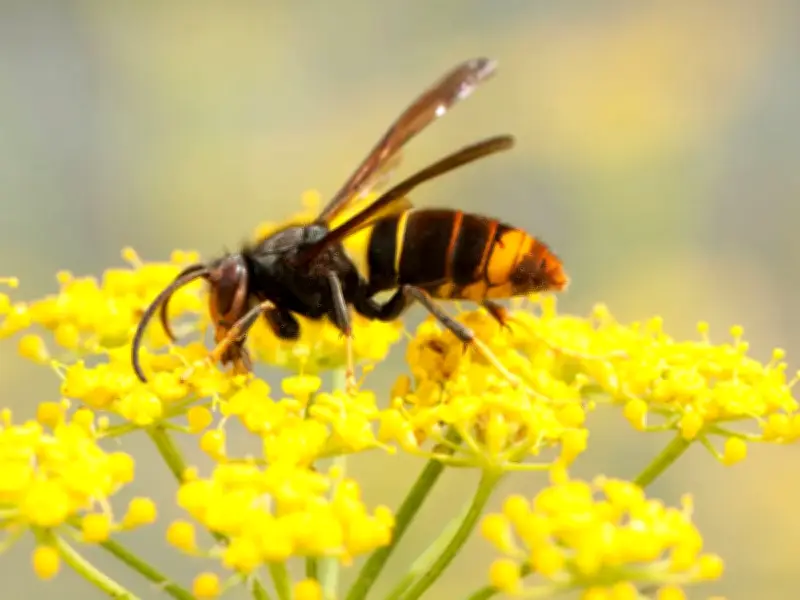
Homeowners across the UK are being urged to pick up fallen fruit from their gardens, as it can attract Asian hornets, an invasive species that poses a serious threat to honey bees and other pollinators.
The warning follows recent sightings of the yellow-legged hornet in south-west England and Wales, where a dead nest was found near Wrexham in January – the first confirmed sighting of the insect in Wales. The Welsh Government has asked for vigilance and for suspected sightings to be reported.
Rising numbers and risks
In 2025, the Channel Islands reported a record number of Asian hornet queens and nests, raising fears that the species could establish itself across the UK. Asian hornets have been responsible for wiping out honeybee populations across Europe and can kill as many as 50 bees a day. They can also deliver a nasty sting to humans, which can be serious for those who are allergic.
At this time of year, Asian hornets seek high-sugar, calorific food sources as the season changes, and many British gardens have an abundance of rotting fruit on the ground that is easy to neglect picking up.
Prevention tips from MyBuilder.com
Andy Simms, from MyBuilder.com, said prevention is essential when it comes to Asian hornets. He said: "While it’s currently unlikely that most of us in the UK will see any Asian hornets, like any pests, it’s harder to get rid of them once they’ve arrived than it is to prevent them in the first place. Any sightings should be reported via the Asian Hornets Watch app."
He added: "Removing food remnants and rubbish is a simple step to take, but fallen fruit is a massive attraction in particular. And it attracts more than hornets, rats love it too! And on top of that, leaving fallen fruit can cause damage to your lawn, unwanted seed spread, and diseases."
Simms advised: "All you need to do is to pick up any fruit that has fallen. Inspect your garden once a day, and if you don’t fancy keeping any fruit, make sure to dispose of it quickly. This is a simple, few-minutes job, but it may be enough to prevent long-term costly damage. Try not to neglect doing it."
How to protect your home and garden
The company, which helps homeowners find tradespeople, has put together a list of tips to help protect your home and garden from hornets.
Remove food sources: Hornets come to gardens looking for food, so remove anything that will attract them. Fruit attracts pests, so immediately remove any fallen fruit and don’t leave remains. Other food sources include uneaten pet food, scraps left for wildlife, and bird feeders.
Seal rubbish and move bins: Sealing rubbish bags and putting them in a bin prevents the smell of rotting food from attracting hornets. Compost bins also attract them, so keep them sealed. If possible, move bins away from the home and garden.
Plant off-putting plants: Certain plants, such as spearmint and lemongrass, have a scent that deters hornets while supporting pollinators like bees and butterflies. Position them around patios or seating areas.
Prevent nest establishment: Asian hornets can nest in trees and hedges. Trim back trees and hedges to reduce nest spots (check you are legally able to trim first), pick up dead plant debris, and fill in holes in the ground to stop underground nests.
Seal off entry points: Cracks in eaves and soffits can give hornets entry points into your home. Seal cracks with filler, then sand and paint once dry. If it’s a complicated job, call a local roofer.
Install hornet traps: Use traps especially made for Asian hornets, as other traps can catch bees and important insects. Hang the trap in a tree at head height, in a sunny area away from deep shade where hornets are unlikely to forage.