
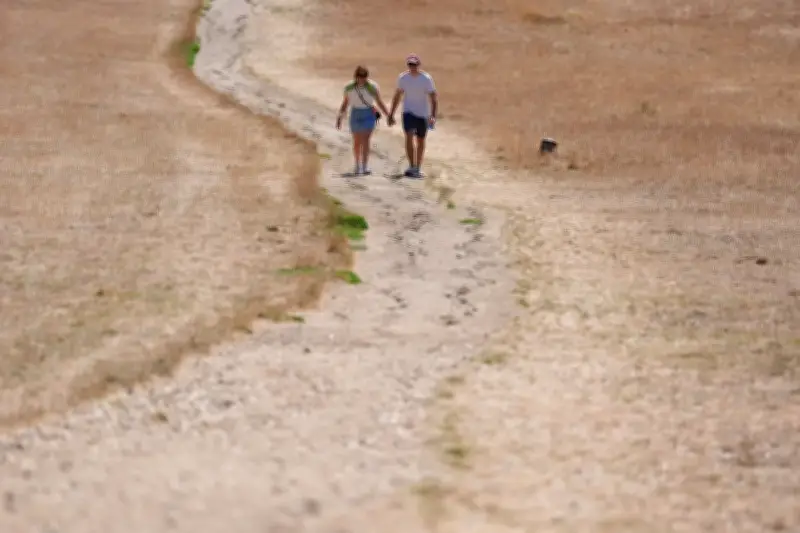
The Environment Agency (EA) has declared drought across almost three-quarters of England, following a dry start to August after the country's driest July on record. The East Midlands, Lincolnshire and Northamptonshire, Kent and East Sussex, and Solent and the South Downs are the latest areas to move into drought status.
Drought spreads across England
The announcement came after a meeting of officials, water companies and farming leaders under the National Drought Group, which warned that all regions of the country are experiencing pressure on water resources, affecting agriculture, public water supplies and the environment.
Last week, the EA said half of England had entered a "flash drought" – one that develops very quickly due to a combination of very low rainfall and high temperatures. The latest update means 71.3% of the country is now in drought. The North East and Yorkshire have moved to "prolonged dry weather" status, the stage before drought, and nowhere in England is in "normal" status.
Heatwave and health warnings
The drought warnings came as parts of the UK braced for the fifth heatwave of the summer, with temperatures expected to reach 36C on Thursday. This summer has seen extreme heat and dry conditions, with two record-breaking heatwaves in May and June that led to more than 2,800 deaths, followed by further heatwaves in July. England had its driest July since records began in 1836, with some areas receiving no rain for the entire month.
Amber heat health alerts have been issued for most of England, with officials urging people to drink plenty of water, check on vulnerable friends and family, and avoid the sun at the hottest part of the day.
Impact on people and environment
Some 45 million people are in drought-stricken areas, and 27 million customers are under hosepipe bans as rivers and reservoirs run low. Farmers have warned of a "brutal harvest" for crops and a lack of feed for livestock, with warnings of food price inflation later in the year.
Major wildfires have hit areas such as the Pennines, the Cairngorms in Scotland, Llanwonno in the Rhondda Valleys, South Wales, and Dunwich Heath in Suffolk. More than 120 firefighters were working on Monday to contain a blaze affecting a square kilometre of heathland in the New Forest, Hampshire.
Government response
Downing Street defended the Government's response, insisting it was focused on immediate response and long-term resilience, from working with the National Drought Group to backing investment in infrastructure such as reservoirs.
Tony Grayling, strategic drought lead at the EA and chairman of the National Drought Group, said: "Drought conditions are worsening and will continue to do so until we see significant and sustained rainfall. We know the hot and dry weather is taking a real toll on farming and there will be long-lasting impacts on our environment. We want everyone to stay safe and hydrated over the summer, but we need everyone's help in using a little less water to make sure our current water reserves last. Every drop we can save is a drop more for your local farmers, local wildlife and local rivers."
Water minister Emma Hardy, who attended the National Drought Group, said: "We know how challenging this summer has been, especially for our hard-working farmers who are at the sharp end of climate change and an increasing number of floods and droughts." She said the Government was working to make it easier for farmers to build more onsite irrigation reservoirs and was delivering "long-term change" in the water industry to reduce leaks and deliver nine new reservoirs. She added: "As we move through this period of drought, I expect water companies to take every available step to minimise leakage and support customers in using water wisely."
Rivers and reservoirs at critical levels
The EA said rivers, reservoirs and groundwater continue to decline, water temperatures are rising, leading to more fish rescues, 245 wildfires have been reported on protected sites this year, and important wetland and peatland habitats are drying out. Only 14% of rivers are at normal levels, and more than a fifth (22%) are exceptionally low, including the Avon, Wye, Ely, Ouse and Exe. Reservoir levels have fallen to 69% – well below normal for the time of year.
The agency said the latest drought is the third in the past five years, after 2022 and 2025, and mainland Europe is also struggling with heatwaves, dry weather and low river flows.
The latest heatwave, expected to be widespread throughout England and Wales, is set to subside over the weekend, bringing fresher air and rain, but this is not expected to make up for the shortfall in recent months, forecasters warn.
Sarah Davies, head of environment and energy at the Met Office, said: "Forecasts for the remainder of August and into September suggest a good deal of dry weather is expected, mixed with some unsettled spells. While some areas may see useful rainfall at times, there is currently no strong signal for a sustained period of widespread rainfall, with below-average rainfall more likely than above-average for the period as a whole."




