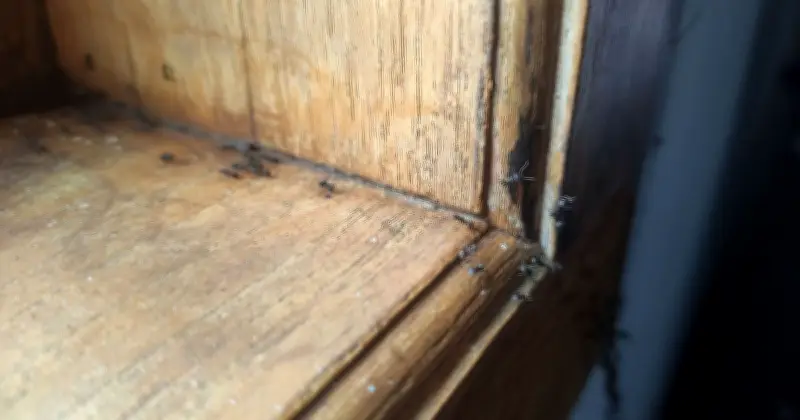
Sprinkling ground cinnamon around doorways, windowsills and other entry points could help deter ants, with the common kitchen spice costing as little as 85p. The strong scent is thought to interfere with the chemical trails ants use to navigate, though it should be viewed as a temporary deterrent rather than a guaranteed way to remove an entire colony.
What the Research Shows
There is some research behind its potential as an ant repellent, although it does not prove that scattering ordinary supermarket cinnamon around a home will make the insects permanently disappear. A study published by the Journal of Emerging Investigators found cinnamon, particularly cinnamon oil, showed repellent effects against ants in controlled experiments.
Another study looking at spices and pest ants found cinnamon showed promise as a repellent in tests involving foraging ants. The research involved specific experimental conditions, however, so it should not be taken as evidence that every ant species will react in exactly the same way.

How to Use It
For a simple household approach, gardeners and homeowners can put a thin line of ground cinnamon across likely entry points rather than covering large areas. The powder may need replacing after rain or when its smell fades, particularly if it is being used around an exterior doorway.
But there is another reason to avoid reaching immediately for stronger treatments. The RHS says ants are an important part of garden biodiversity and should generally be tolerated unless their nests are causing particular problems.
Prevention Over Barriers
Ants can also be useful predators of other invertebrates, although they can disturb soil around plant roots and are associated with aphids because they collect the sugary honeydew those insects produce. This means seeing a few ants outside does not necessarily mean there is a pest problem that needs eliminating.
If ants are repeatedly appearing inside, it is worth looking for the reason they are coming in rather than relying solely on a scented barrier. Cleaning up sugary spills, keeping food sealed and checking around doors and windows for potential entry points can help reduce the attractions drawing them indoors.