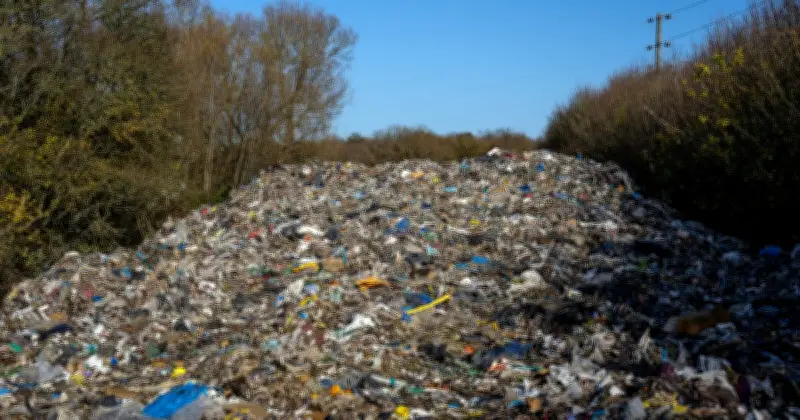
The clean-up of one of England's largest illegal waste tips has been completed at a staggering cost of £6 million to the taxpayer. Around 22,000 tonnes of domestic and commercial rubbish were dumped at the Kidlington site in Oxfordshire in 2025, creating a vast mound of waste between the River Cherwell and the A34.
Supersites identified in BBC investigation
The site is one of almost 30 so-called “supersites” identified in a BBC investigation into the growing scale of illegal waste dumping across England. The Government has vowed to recover the cost of clearing Kidlington and other sites from the criminals responsible, including by seizing their cash, property and other assets.
But figures obtained by the BBC show the Environment Agency has recovered just £7.3 million from waste criminals through confiscation orders under the Proceeds of Crime Act (POCA) over the past five years. Campaigners have branded the amount recovered “derisory” as the cost of illegal waste crime to the economy is estimated at £1 billion a year.

Confiscation orders fall short
The figures were obtained through an Environmental Information Regulations request and cover larger illegal sites overseen by the Environment Agency. Between January 2021 and March 2026, there were 66 confiscation orders worth £7.3 million. However, 14 of those orders have yet to be paid in full, leaving around £1.4 million still to be recovered.
The figures do not include confiscation orders relating to smaller fly-tipping offences, which are dealt with by local authorities. Baroness Sheehan, chairwoman of the House of Lords environment and climate change committee, said the figures showed there was a lack of “consistent, decisive enforcement”.
She said: “With clean-up costs at sites such as Kidlington far exceeding these sums, and enforcement still lagging, the taxpayer continues to foot the bill.” She added: “The Environment Agency must do more to secure and enforce confiscation orders against those responsible, so criminals pay - not communities.”
Other supersites and government action
The Environment Agency has also intervened to clear another major supersite at Hoads Wood, near Ashford in Kent. The two clear-ups have been budgeted at £20 million in total, although the Kidlington operation was completed for less than its original £7.3 million contract.
The Government estimates that around 20% of waste in England is illegally managed. Under its Waste Crime Action Plan, the Environment Agency can intervene in exceptional cases where waste presents an “untenable risk” to the public or environment. Private landowners whose property is used for illegal dumping are normally expected to pay for the clean-up.
Six supersites have now been earmarked for potential clearance using public money, including locations in Kent, Surrey, West Yorkshire, Lancashire, South Yorkshire and Greater Manchester. Environment Secretary Dame Angela Eagle said: “After years of waste crime being allowed to fester, we are taking decisive action.” She added that the Government was deploying more officers on the front line and using drones to catch offenders.
Concerns remain over other sites
But concerns remain over numerous other supersites, including one in Over, Gloucestershire, where local leaders are calling for action. Charlie Coats, chairman of Highnam Parish Council, said money recovered from waste criminals was “derisory” and “acts as absolutely no deterrent whatsoever”. Gavin Lane, president of the Country Land and Business Association, said criminals should have their vehicles seized and money recovered.
“The punishment has to be real: seize their vehicles, recover the money they owe and make waste crime a losing business,” he said. The Environment Agency said some unpaid confiscation orders were still within the six-month payment period allowed for settlement, while failures to pay were matters for the courts. It said further assets could be seized if more information about offenders’ finances emerged. Four men have been arrested over the Kidlington tip. All have been released while the investigation continues.