
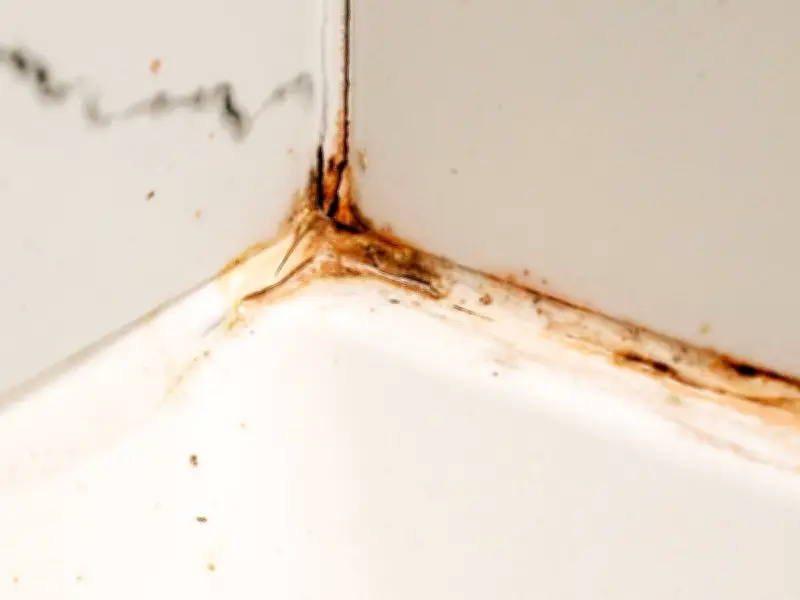
Black mould on silicone sealant can be a health concern, but there is a simple method to tackle it using a 65p natural ingredient that's likely already in your kitchen cupboard. Showers, bathtubs, windows — all of these surfaces are fitted with silicone sealants, a type of adhesive designed to create an airtight and watertight seal where two surfaces meet. These happen to be the very spots that are frequently exposed to damp and moist conditions, as well as a build-up of soap deposits — the perfect recipe for a mould breeding ground.
Why Mould Grows on Silicone Sealant
Cleaning specialists at Drench explain: "Silicone sealant can be a haven for mould due to its porosity and use in areas regularly exposed to water. Mould in silicone is not only an eyesore but it is also bad for your health." On top of this, mould growth on silicone sealants gradually turns them black, making them a real blot on the landscape, reports the Express.
The Natural Solution: Baking Soda
While several mould-removal sprays are readily available in supermarkets to tackle these unsightly black stains quickly, they more often than not contain bleach, which isn't always the safest or most desirable option. The good news is that there are incredibly affordable natural alternatives that prove highly effective in the battle against mould on silicone sealants. One such natural solution costs just 65p and is widely regarded as one of the best ways to sort the problem — and fast.
A 200g pack of baking soda, or bicarbonate of soda, is available for just 65p at Tesco, making it a brilliant kitchen cupboard essential to deploy in your war against mould and those stubborn black spots it leaves behind on silicone sealant. UK sealant firm GT Sealants has shared their top trick for tackling black mould on silicone sealant, describing it as a 'quite easy' process that involves baking soda.
How to Remove Mould with Baking Soda
The sealant specialists explain that all you need to do is whip up a paste using baking soda. Describing it as an "excellent, convenient, and cheap" item to use, they have detailed how mixing baking soda with water is "perfect for removing black mould". To make your baking soda paste, simply take two or three teaspoons of baking soda and blend it with one cup of room temperature water until you achieve a smooth, consistent paste.
Next, take a piece of cloth and scoop out a small amount of the paste, applying it directly to the mould-affected areas of your silicone sealant. It's advisable to wear gloves throughout the process, as you'll want to avoid touching mould-infested surfaces with your bare hands. Once the paste has been applied, leave it to work for at least five minutes on the silicone. You can also wrap the sealant in cling film to lock in the moisture and enhance the paste's effectiveness.
Scrubbing and Rinsing
After around five to 10 minutes, remove the cling film and use a stiff brush, or even an old toothbrush, to scrub away the black mould that has built up. Finally, take some cold water and a sponge, then rinse off the sealant thoroughly to make sure every last trace of mould has been treated with the paste. If stubborn mould stains refuse to budge straight away, you may need to repeat the process a couple of times.
Don't worry though, as silicone is naturally resilient and tough, meaning the mould can sometimes put up more of a fight than you'd expect. Repeated treatments should, however, do the trick. It may be tempting to expect instant results once the paste has been applied, but that simply isn't the case. The experts explain: "The baking soda mixture needs some time to settle on the black mould and do its work."
Drying to Prevent Recurrence
Once all the black mould has been successfully cleared from the affected silicone sealant, it's absolutely essential that you dry the silicone thoroughly using a dry towel or cloth. More often than not, people tend to overlook or skip this step in their haste to finish the job. However, leaving the surface damp and moist will only encourage the mould to return time and again. The experts rule that drying the silicone "prevents any more mould from forming".




