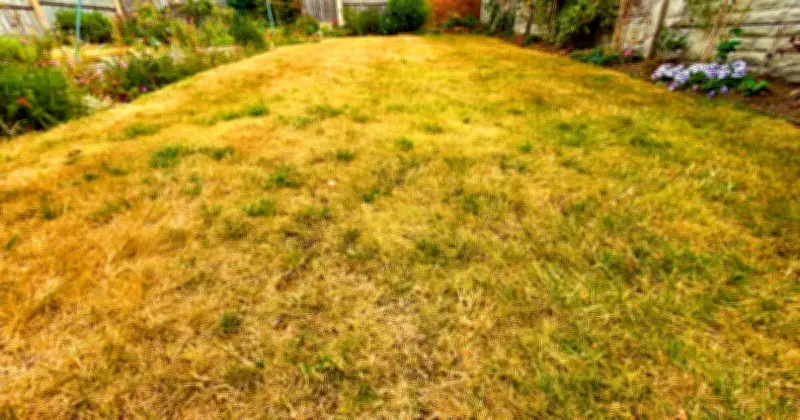
After the UK's driest summer in over 100 years, many lawns are brittle and yellowing. With rain finally returning, gardeners may try to turn them green before autumn. However, flooding the area with fertiliser can burn the grass and cause further damage.
Robbie Lynn from Premier Lawns shared that the best way to help a lawn recover after a drought is to first aerate the soil, rather than focusing on the grass. This helps more rainwater reach the roots.
Aeration helps water reach roots
Lynn said: “My starting point in a drought recovery program is the soil. I want to break that hard surface and get water and nutrients down to where the roots are.”

Aeration is the practice of making small holes in the soil underneath the grass, allowing more water to reach the root system and keeping it properly hydrated. Drought-damaged lawns are likely to be compacted, meaning the soil has become very hard and dry, creating a dense surface barrier. This makes it difficult for water, oxygen and nutrients to penetrate the ground, so much of the rainwater runs off the surface.
If grass roots do not receive enough water, they will not grow properly or hold much moisture, leaving the lawn vulnerable if another dry spell occurs. Shallow roots also cannot store as much energy, preventing growth and making recovery harder when colder weather arrives in autumn.
How to aerate a lawn
The simplest way to aerate a lawn is with a garden pitchfork. Lawn aerator shoes, with large spikes that make holes as you walk across the grass, are another option. For large gardens, a hollow-tine aerator that removes small plugs of soil may be useful. However, a pitchfork is sufficient for most lawns, and many gardeners already have one, so no extra money needs to be spent.
To begin, choose a day after it has rained to aerate the lawn. This softens the soil slightly, but avoid aerating while it is still raining to prevent a muddy lawn. Push the pitchfork into the ground until it is roughly 10 centimetres deep. Wiggle the fork forwards and backwards to open up the soil, then remove it. There is no need to lift out or turn the soil.
Repeat this process across the lawn, aiming to make the holes around 10 centimetres apart. Focus on areas that are walked on frequently, feel particularly hard, or where water appears to be pooling.
Aftercare and what to avoid
Leave the holes open until it rains again. The water should penetrate deeper into the soil and reach the roots more effectively, giving the lawn a better chance of producing healthy green grass before autumn.
Once a lawn is aerated, it can help to give it a tonic, especially a seaweed treatment. However, it is highly recommended not to use any fertilisers in late August, as it can stress a fragile lawn and also burn the grass if it starts getting warm again.