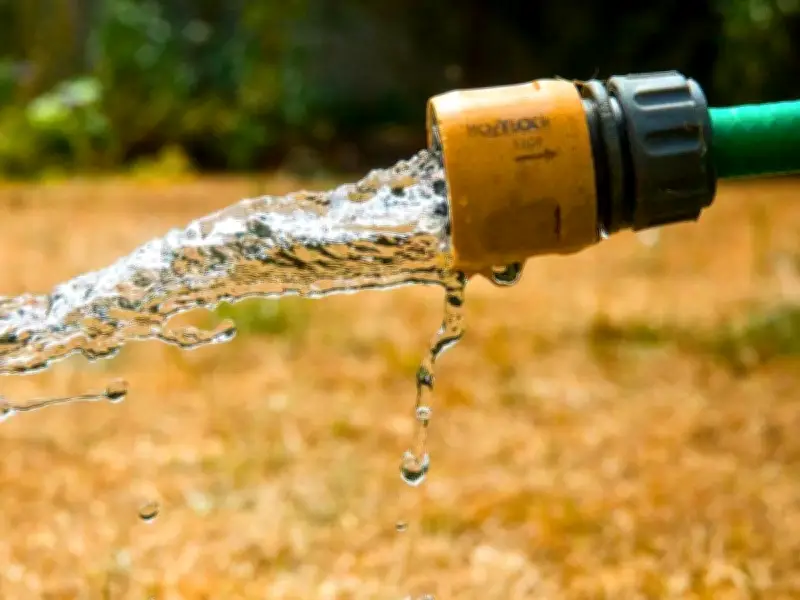
The UK has just endured its driest summer in more than a century, meaning that wherever you venture at present, you're bound to encounter considerable amounts of brittle, yellowing grass. Most lawns will be appearing at their absolute worst right now, though with rainfall having finally returned, numerous gardeners may be attempting to restore their greenery before autumn sets in.
Aeration Over Fertiliser
It can prove incredibly tempting simply to saturate the area with fertiliser to encourage lawn growth, yet this will probably just scorch it and inflict additional harm upon the grass. Rather, Robbie Lynn from Premier Lawns has revealed that the most effective way to help a lawn bounce back following a drought is to begin by aerating the soil, as opposed to concentrating on the grass itself, since this will enable more rainwater to reach the roots.
He said: "My starting point in a drought recovery program is the soil. I want to break that hard surface and get water and nutrients down to where the roots are." Aeration is the straightforward gardening technique of creating small holes in the soil beneath the grass, permitting greater quantities of water to reach the root system and maintaining proper hydration levels.

Why Soil Compaction Matters
Drought-affected lawns are probably compacted at this time, which means the soil has become extremely hard and parched, forming a dense barrier at the surface, reports the Express. This can hinder water, oxygen and nutrients from penetrating the ground, resulting in much of the rainfall a lawn receives simply running off across the surface.
If grass roots are deprived of sufficient water, they will struggle to develop properly or retain adequate moisture, leaving your lawn exposed should another dry spell strike this summer. Shallow grass roots are also unable to store enough energy, which can inhibit growth and make it considerably harder for the lawn to recuperate once the cooler autumn months set in.
How to Aerate a Lawn
Aerating your lawn now that rainfall has returned will enable more water to penetrate the roots, allowing them to grow deeper and stronger while helping the grass restore itself to full health. The most straightforward method of aerating a lawn is with a garden pitchfork, though lawn aerator shoes — which feature large spikes that puncture the soil as you walk across the turf — are another viable option. For those with a larger garden, it may be worthwhile considering a hollow-tine aerator, a specialist gardening tool designed to extract small plugs of soil from the ground.
For most lawns, however, a pitchfork should prove perfectly adequate, and as the majority of gardeners are likely to already own one, there's no need to splash out on additional equipment. To get started, it is advisable to select a day following rainfall to carry out the aeration. This will loosen the soil slightly and make it more manageable, though you should avoid aerating during active rainfall, as this risks leaving you with a waterlogged, muddy lawn.
Next, insert the pitchfork into the ground to a depth of approximately 10 centimetres. Rock the fork gently back and forth to loosen the soil, then withdraw it. There is no requirement to lift or turn over the earth. Repeat this across the entire lawn, spacing the holes roughly 10 centimetres apart. Pay particular attention to areas that experience heavy foot traffic, feel especially compacted, or where water tends to collect.
Leave the holes open until the next rainfall. This will allow water to penetrate more deeply into the soil and reach the roots more efficiently, giving your lawn a greater opportunity to produce lush green grass ahead of autumn. After aerating a lawn, applying a tonic — particularly a seaweed-based treatment — can prove beneficial. However, it is strongly advised to avoid using any fertilisers in late August, as this can place additional stress on an already vulnerable lawn and may even scorch the grass should temperatures rise again.