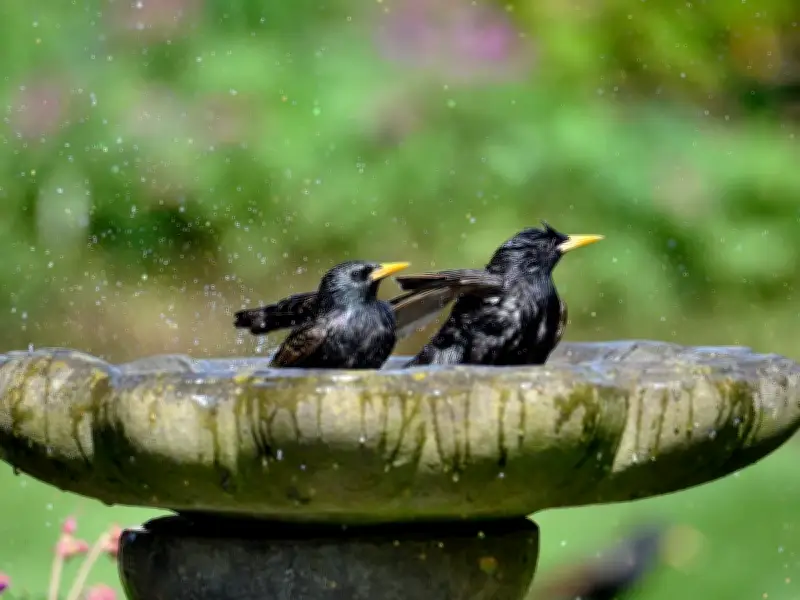
Birdbaths are a valuable resource for birds, but they can quickly become grimy. A home gardener has shared a simple method to keep them clean using a common household item: white vinegar.
Why Vinegar Works for Birdbaths
Birdbaths are amongst the most valuable tools gardeners can use to support birds, offering not just an essential drinking source but also a way to help them stay cool. From August onwards, fledglings generally start leaving their nests, and easily accessible water greatly enhances their survival prospects.
While owning a birdbath is a very considerate act, the main drawback is the substantial maintenance effort they demand. Birdbaths are infamous for quickly developing a murky green appearance, caused by bacterial build-up along with bird droppings, pollen and plant matter.
Many gardeners regard birdbath maintenance as an ongoing struggle, but Mariah, a home gardener who goes by the Country Plant Lady online, has shared that keeping a birdbath clean doesn't have to be laborious, as long as you utilise vinegar.
Mariah said: "Vinegar is gentle, non-toxic, and breaks down algae without any harsh chemicals. Clean water helps keep your local birds healthy, reduce risk of disease spreading, hydrated, and coming back for more little splash baths."
How to Clean a Birdbath with Vinegar
Vinegar is a harmless acidic solution that successfully breaks down dirt, algae and stubborn grime from birdbaths. It's one of the most simple cleaning approaches you can adopt, loosening tough deposits and saving gardeners from extended periods of scrubbing. All you need is affordable white vinegar, usually found in the condiment section of most supermarkets for £2 to £3, though you've likely got some sitting in your cupboard already.
White vinegar is a natural substance with mild antibacterial qualities, making it an effortless remedy for keeping a birdbath spotless, allowing you to sit back and enjoy watching your feathered visitors throughout the rest of the summer.
Step-by-Step Cleaning Guide
Start by tipping the stagnant water out onto the ground. Ideally, this should be carried out every few days to ensure birds have access to fresh drinking water, though the birdbath itself doesn't need a full clean quite as regularly.
Next, mix the vinegar with some clean, warm water and pour a small quantity into the birdbath. Leave it to soak for 20 minutes, giving the solution adequate time to break down any organic residue in the basin.
Should there be any rocks inside your birdbath, pour the mixture over those too and set them aside. Once the time is up, take a bristled brush and gently scrub the birdbath — any marks should come away with ease and without leaving behind any staining.
Rinse the birdbath thoroughly with clean water, refill it and allow it to dry completely before placing it back in the garden. The birdbath will offer birds a safe spot to drink while remaining remarkably straightforward to clean in under 30 minutes.
RSPB Advice on Keeping Birds Safe in Autumn
The RSPB has recently updated its bird-feeding advice, urging people to "feed seasonally". It recommended that people scale back feeding between May 1 and October 31, restricting it during those months to "small amounts of mealworms, fat balls or suet".
The reasoning behind this is that during summer and autumn there is a heightened risk of disease transmission, putting bird populations — which are already in decline — at further risk.
The organisation also halted sales of its flat bird tables amid concerns that they could be contributing to the spread of deadly diseases amongst finches. It recommends cleaning bird feeders and water baths at least once a week to guard against disease, avoiding feeders with flat surfaces, and refreshing the water in bird baths on a daily basis.