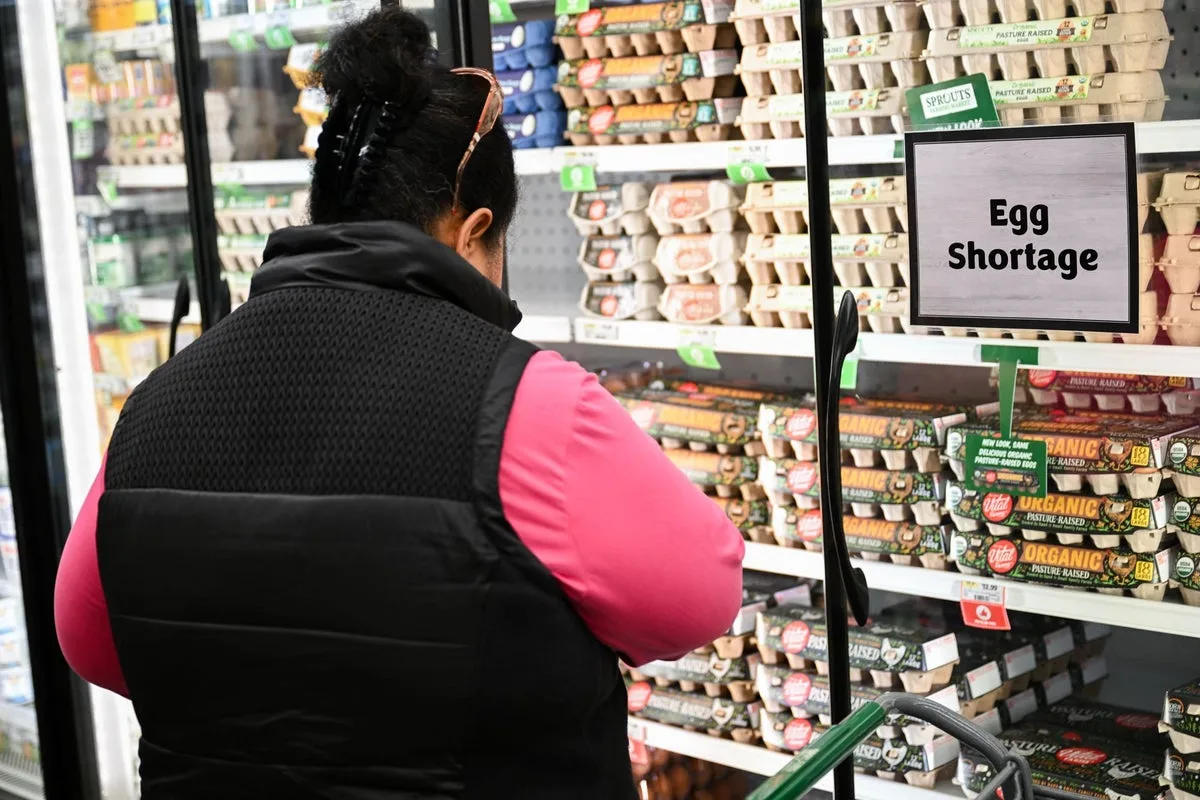
US egg prices are significantly lower this Easter season, falling 60% from last year's record highs. The drop provides relief for consumers filling Easter baskets and Passover Seder plates, though the situation remains challenging for farmers.
The bird flu outbreak, which forced farmers to cull entire flocks of egg-laying hens, was responsible for the soaring prices in early 2025. However, a decline in cases in the second half of last year helped restore egg supplies, according to Mark Jordan, executive director of agricultural research firm LEAP Market Analytics.
Between July 2024 and July 2025, the number of egg-type chicks hatched in the US rose 8%, the first sustained increase since the outbreak began in 2022. The Trump administration's decision to import nearly one billion eggs last year also helped lower prices, although imports have since returned to normal levels.
Despite the price drop, farmers are struggling to cover costs as egg prices have fallen sharply. The average cost to produce a dozen eggs is $1.05, while the national wholesale price in late March was only $1.17 per dozen. 'Farmers are no strangers to volatility, but in recent months, many have been selling eggs at or below the cost of production,' said Emily Metz, president and CEO of the American Egg Board.
As of March, the US had 315.8 million egg-laying hens, 8% more than the previous year. However, the bird flu outbreak continues to affect flocks, with 5.22 million birds lost in March 2026, more than double the number in March 2025. Total bird flu losses since February 2022 stand at 205.7 million.