
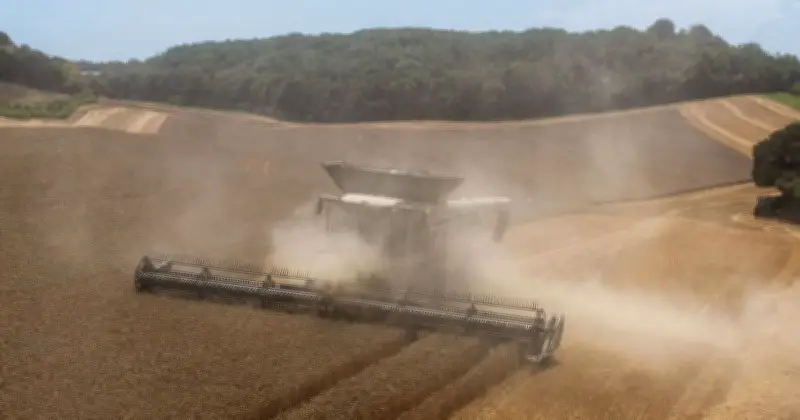
Food prices could rise as the UK braces for its "worst harvest on record", farming bosses have warned. Extreme heat during spring and summer could have cut the country's cereals and oilseed harvest by 2.5 million tonnes compared to earlier forecasts, an analysis by the Energy and Climate Intelligence Unit (ECIU) said.
Harvest shortfall and costs
Wheat, barley and oat yields are all expected to be lower than usual. The shortfall could be costing UK farmers as much as £390 million, and 2026 could be the "worst harvest on record".
Tom Lancaster, land, food and farming analyst at the ECIU think tank, said there was a danger of UK farming entering a "climate doom loop", as the green and pleasant land transforms into a "parched and increasingly unproductive one" in the face of extreme conditions.
He said: "At the start of spring, farmers were hopeful of a better year, but the dry April and July and record-breaking heat have left farmers facing down the barrel of a third awful harvest in a row. Farming is now the sector most exposed to climate change and the risks and damage that it brings."
Impact on yields and imports
The latest harvest data from the Agriculture and Horticulture Development Board suggested that wheat, barley and oat yields will all be down. Wheat yields are expected to be well below the 10-year average, the ECIU said. If the provisional estimates hold, the UK cereal and oilseeds harvest would be 19.5 million tonnes, overtaking 2020 as the worst on record since detailed records began in 1984.
Northamptonshire farmer Ben Aveling said he was concerned that large supermarkets would import cheaper produce rather than raise prices. He added: "All that will happen is that we will have less UK produce available and less being sold."
UK pubs, restaurants and supermarkets are already having to buy lettuce and broccoli from Spain and Holland amid the UK's extreme weather. The wholesale price of tomatoes is up by more than 60%, iceberg lettuce by 90% and potatoes by more than 40%. Olive oil prices are also expected to rise as groves have burned in Greece, Italy and Portugal this summer.
Wider European impact
Gavin Lane, president of the Country Land and Business Association, said: "Across Europe, many farmers are bringing in barely half the crop they expected. Yields, in some cases, are so poor as to make harvesting hardly worth it. That means less British food again this year, less food available to import, and higher prices moving closer to the checkout."
The UK is battling increasingly extreme weather fuelled by climate change. Tinderbox Britain has experienced record-breaking, deadly heatwaves in May and June, followed by heatwaves and the driest July on record for England and Wales, plunging the whole of Wales and half of England into drought.
David Bean, of the Countryside Alliance, said: "It's a sad reality that the price of our Christmas dinners could be threatened by summer drought. Farmers across the country are battling low water availability and doing their heroic best to bring in the harvest, but they can't change the weather."




