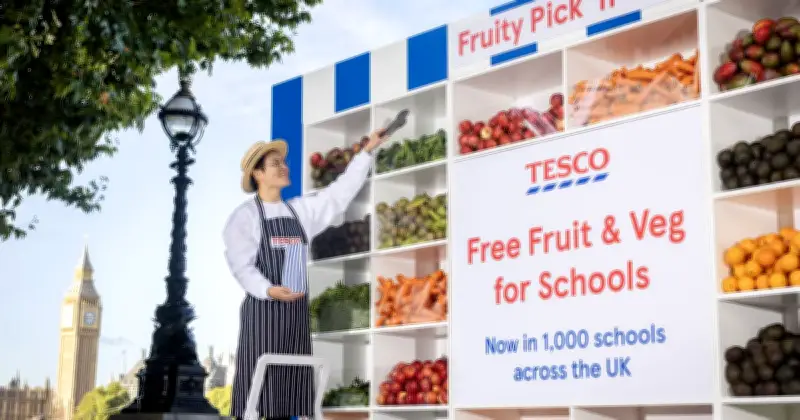
Tesco’s Free Fruit and Veg for Schools programme has expanded to more than 1,000 schools across the UK, with participating pupils consuming nearly 20 million portions of fresh produce.
Up to 186,000 pupils have benefited from the scheme over the past two years, eating over 1,500 tonnes of fruit and vegetables instead of confectionery. On average, each participating pupil consumed 60 portions of fruit and veg.
Behaviour and health benefits reported
Tesco reported that 90% of teachers surveyed indicated that the daily provision of fresh food has directly resulted in enhanced behaviour, increased concentration, and greater vitality during lessons. Teachers questioned during the research confirmed the programme had made a beneficial impact on their students.
An impact assessment of the scheme’s initial two years revealed that children participating experienced a 4.2% rise in Vitamin C consumption last year, while fibre, Vitamin A, and energy-enhancing folate also registered notable gains.
Wider variety of produce tried
With purchasing authority delegated to schools and pupils, receipts demonstrated that youngsters tried 103 distinct varieties of fresh produce. While everyday essentials such as apples, bananas, carrots and cucumbers dominated preference rankings, the initiative has also prompted youngsters to sample more exotic or expensive items that can prove difficult to obtain on a tight budget, including blueberries, asparagus and watermelon.
The produce is supplied via Tesco’s Free Fruit and Veg for Schools programme, supported by the British Nutrition Foundation.
Expansion planned for this academic year
Elaine McCallum, deputy head teacher at Cleeves Primary School in Glasgow, described the daily provisions as vital for certain households: “Having access to fruit every day makes a real difference. For some of our children, it may be the only fruit they have that day, so making sure everyone can have a healthy snack is really important.”
Claire de Silva, head of communities at Tesco, revealed the supermarket is expanding the programme this academic year to benefit additional children in the UK’s most challenged communities. She added: “Schools continue to tell us what a positive impact the programme has made on their children, including sharper focus, more energy and better behaviour.”
Elaine Hindal, chief executive of the British Nutrition Foundation, expressed considerable enthusiasm regarding the outcomes: “We know that eating well can support children’s health, wellbeing and ability to learn, but that access to healthy food can be a challenge. We’re proud to work with Tesco on an initiative that is helping more children enjoy healthy foods and build positive eating habits that can last a lifetime.”