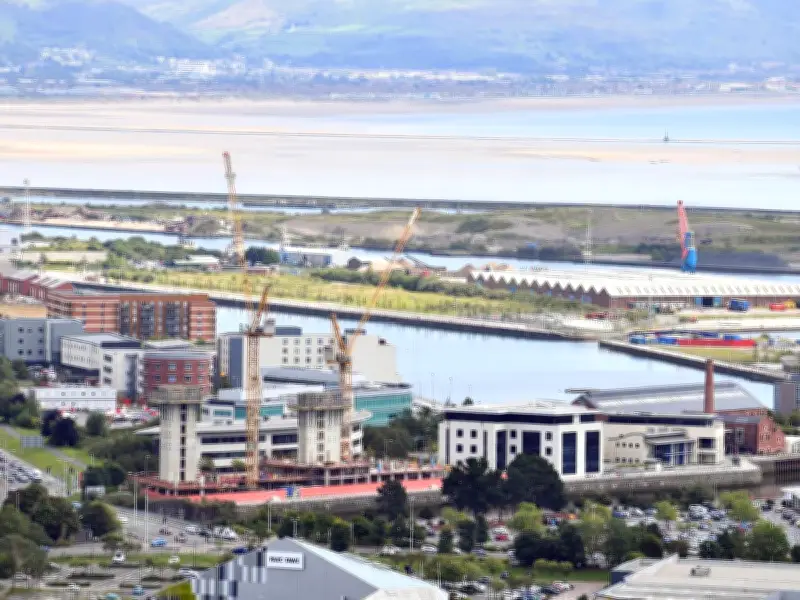
A network of pipes taking spare heat from a wastewater treatment works on the outskirts of Swansea to buildings in and around the city's Maritime Quarter is being explored. Swansea Council commissioned experts to assess the idea after receiving a £218,300 UK Government grant.
Potential heat sources
Two potential sources of spare heat were examined: a data centre planned as part of a wider infrastructure project featuring a Swansea Bay tidal lagoon and housing; and Swansea Bay wastewater treatment works, off Fabian Way. Geoff Bacon, Swansea's head of property services, told a council committee the data centre would provide more spare heat than the Welsh Water works and generate better returns for investors, but the latter was considered preferable as it already exists, while the lagoon would need to be built to power the data centre first.
Feasibility and cost
Mr Bacon said district heating networks existed in the UK, including one in Cardiff piping spare heat from an incinerator to buildings in Cardiff Bay. “It's not something that's straightforward but it's certainly do-able,” he said. He estimated the Swansea network would cost around £100 million and involve disruption to lay pipework from the wastewater treatment works through Swansea docks to buildings mostly south of Fabian Way. He added the council could potentially be one of the buyers of this low-carbon energy but would likely be an “enabler” rather than the lead investor, as it doesn't own the land or behind the planned data centre. “We haven't got any skin in the game,” he said.
Council's position
Cllr Andrea Harrington, cabinet member for transformation, echoed this: “It would be very costly for us to take it on.” A district heating proposal examined in Swansea a decade or more ago, she said, would have cost around £14 million. The new network is not considered suitable for houses unless connected to a new development from scratch, the economy and infrastructure service transformation committee heard. Organisations including dock owners Associated British Ports, Swansea University, and DST – the company leading the lagoon, data centre, and housing project – have been consulted, and DST provided some match-funding for the feasibility study.
Committee reaction
Cllr Philip Downing, chairman of the committee, called it an exciting idea similar to one he had been involved with at a steelworks. He noted that schemes helping the UK towards net zero greenhouse gas emissions “cost a bit”. Mr Bacon said they could be expensive but last, bringing costs down over time. A committee report said an outline business case will be prepared for potential investors based on using the wastewater treatment works as the heat source. It added: “This is simply a feasibility study with no commitment expected at this stage. If at some point a cabinet decision is sought, a formal summary of risk will be undertaken.”