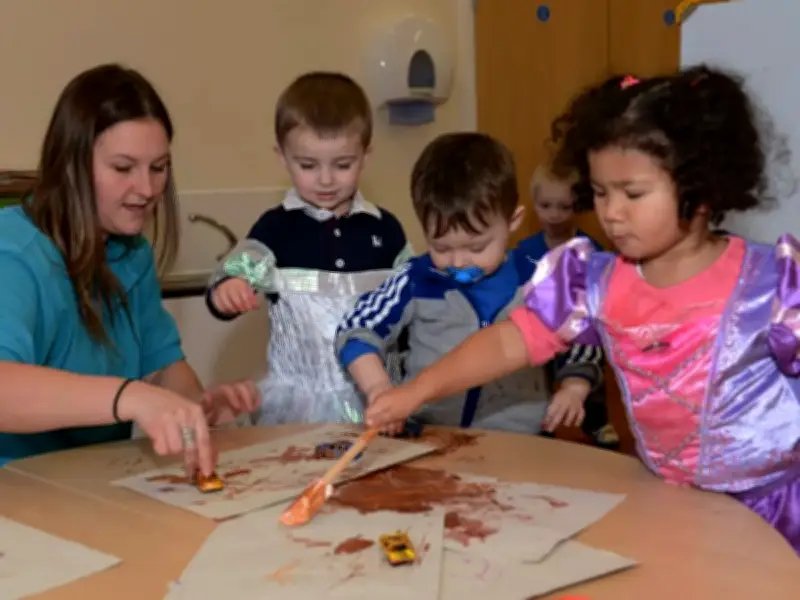
The first detailed academic study of the Flying Start programme has shown that extra support for poorer parents in Wales works. Researchers from Cardiff University and the University of Bristol found that children born in Flying Start areas are significantly less likely to need interventions from social services by the time they are aged four or five, and are less likely to be taken into care.
The findings come as some fear the Welsh Government plans to end Flying Start in order to fund its new programme of universal childcare for two-year-olds. The Welsh Government has denied this is the case.
What is Flying Start?
Flying Start, a flagship anti-poverty policy of the previous Labour administration, is only available in some areas of Wales. Over the last 20 years, the programme has provided services to families with children under the age of four living in some of Wales’ most disadvantaged areas. These include additional free childcare, enhanced health visitor appointments and parent-and-baby groups.
Its impact on outcomes for children’s services has not been studied in detail until now. After two decades, Flying Start is still only fully rolled out in Merthyr Tydfil, Newport, Swansea and Wrexham.
Key findings of the study
Data for more than 126,000 children was looked at for the study. It showed they were less likely to need social services intervention or end up in care. The study shows the impact of being born in a Flying Start area is strongest for mothers aged 21 or under when they gave birth.
Key findings show:
- Children born in Flying Start areas were 35% less likely to have care and support plans by age four to five than those living in almost equally disadvantaged areas.
- Mothers aged under 21 were 42% less likely to have a care and support plan.
- Children born in Flying Start areas were more than 40% less likely to become looked after children. The effects for this were strongest for children of younger mothers.
- Children whose mothers were aged 21 or under when they gave birth experienced approximately 65% lower rates of becoming looked after when born in Flying Start areas.
Academics did not find any positive or negative impact on the numbers of children on the Child Protection Register in Flying Start areas. The researchers compared areas that only just qualified to be Flying Start zones with those that just missed out on qualifying for the programme, meaning all areas in the study had comparable levels of deprivation.
Experts urge expansion
Professor Sally Holland, co-author of the report and former Children's Commissioner for Wales, urged the Welsh Government to take note of its findings. She said it shows Flying Start should be extended. She added that this would save much more money in the long run than would be spent extending the service to more parts of Wales.
However, she admitted the survey did not look at what specific support those children had received under the Flying Start programme. Professor Holland said post natal support is "really lacking in Wales" as midwifery has become more concentrated in hospitals. She said community and mutual support such as parenting and breast feeding classes and community midwives has a huge positive impact.
The report's lead author Dr Meng Le Zhang, based at CASCADE, the Children’s Social Care Research and Development Centre, said: "This is important evidence of a positive impact of neighbourhood-based, joined-up, holistic family support for young families."
Welsh Government response
First minister Rhun ap Iorwerth said in last week's Plenary that Flying Start is not available to some of those in need as it only operates fully in certain areas. He pledged it would not be cut. Quizzed last week on any potential cuts to Flying Start, the First Minister said: "So, there are no cuts to Flying Start. We are building greatly on Flying Start in rolling out the most generous childcare offer anywhere in the UK, and we believe in the principle of universalism."
He added: "Flying Start has done a great job in helping families who are struggling to make ends meet in some parts of Wales. I know of parts in my own constituency, and many others will have their own experiences of families who are outside Flying Start areas, in rural areas who are unable to get that kind of support. What we're doing in building on Flying Start, not cutting it, is making sure that we are expanding this universally to all people, universally to all areas, because we have identified this as something that could be the underpinnings of education, of job opportunities and tackling poverty."
A Welsh Government spokesperson said: "Our new flagship childcare offer will be the most generous anywhere in the UK once fully rolled out, and builds on the childcare model delivered through Flying Start. We have been clear this does not represent a change to the core Flying Start programme as it stands, and families continue to receive Flying Start support and services."
The spokesperson added: "Childcare expansion should not be looked at in isolation and is most effective as part of a wider system that supports children and families. We know that many families facing difficulty and living in poverty do not live in traditional Flying Start areas - we want to build on the programme to ensure that families are getting the support they need. We are committed to working closely with local authorities and early years practitioners as we develop and strengthen early years provision."
Guidance was issued to local authorities in August to use the term 'Welsh Government funded childcare'. This was said to be due to the risk of parents' confusion that they are not eligible for childcare because they do not live within a traditionally Flying Start area. The Welsh Government said all 22 local authorities are now on track to offer 12.5 hours a week of childcare to all two-year-olds by the end of this financial year, compared with just three when it took office in May.