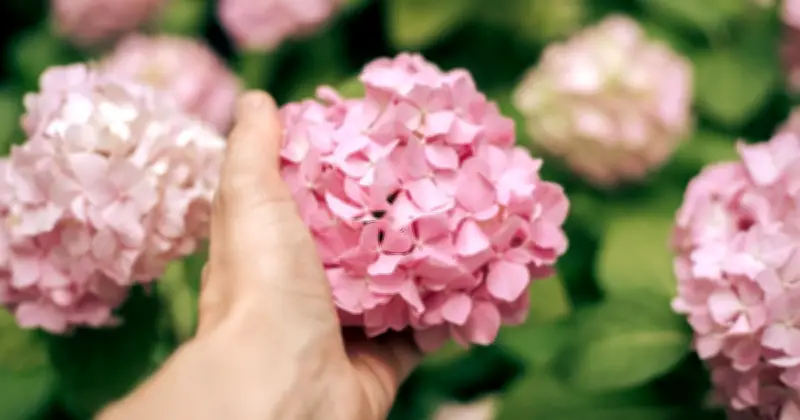
Gardeners who want their hydrangeas to bloom again next season should stop feeding the plants as the weather turns colder, according to experts. Continuing to fertilise hydrangeas in late summer and early autumn can push the plant into producing new growth when it should be slowing down for winter, which may not mature before the cold arrives and could leave the plant more susceptible to winter damage.
Why feeding should stop
Gardening with Ish on Instagram describes hydrangeas as “seriously hardy plants” that will “survive quite well” through autumn and winter. However, as the weather gets colder, he urges gardeners to hold off on feeding to keep the plants “nice and happy.”
Ish shared: “I am going to hold off on feeding. I want to allow this to start to wind down over the next few months and then go dormant in winter. So feeding is not necessary anymore.”

Garden retailers at One Click Plants also agree with this tip and recommend stopping fertilising hydrangeas in late summer and early autumn.
Mulch as an alternative
Rather than reaching for fertiliser, gardeners are advised to add organic matter or mulch around the base of the plant to help insulate the roots and enrich the soil naturally.
According to Backyard Boss, bark and wood chips are among the most common mulch choices, but pine needles offer a longer-lasting alternative. They slowly enrich the soil as they decompose, help regulate soil temperatures and allow air and water to reach the roots without compacting around the plant. Other alternatives include compost, straw, leaves and grass clippings, which can help protect plants while adding nutrients back into the soil.
Watering and deadheading tips
Ish also stressed the importance of watering during this period. He shared: “One (task) that is necessary is watering. By all means, make sure these stay hydrated, otherwise they are going to stress out before they go dormant, and you don't want any of that. It's still a little bit warm, so make sure the soil is staying hydrated. Otherwise, it will dry out, and it won't be too happy.”
Ish also advised that it is not necessary to deadhead all flowers at this time. However, he urged that if any stems have snapped, the flowers should be deadheaded to prevent infections.
When asked in the comments whether there are different rules for different hydrangeas, Ish replied: “Not really - they generally fall under the same care guide!”